Lesson 1: What is DeFi?
🎧 Lesson Podcast
🎬 Video Overview
Lesson 1: What is DeFi?
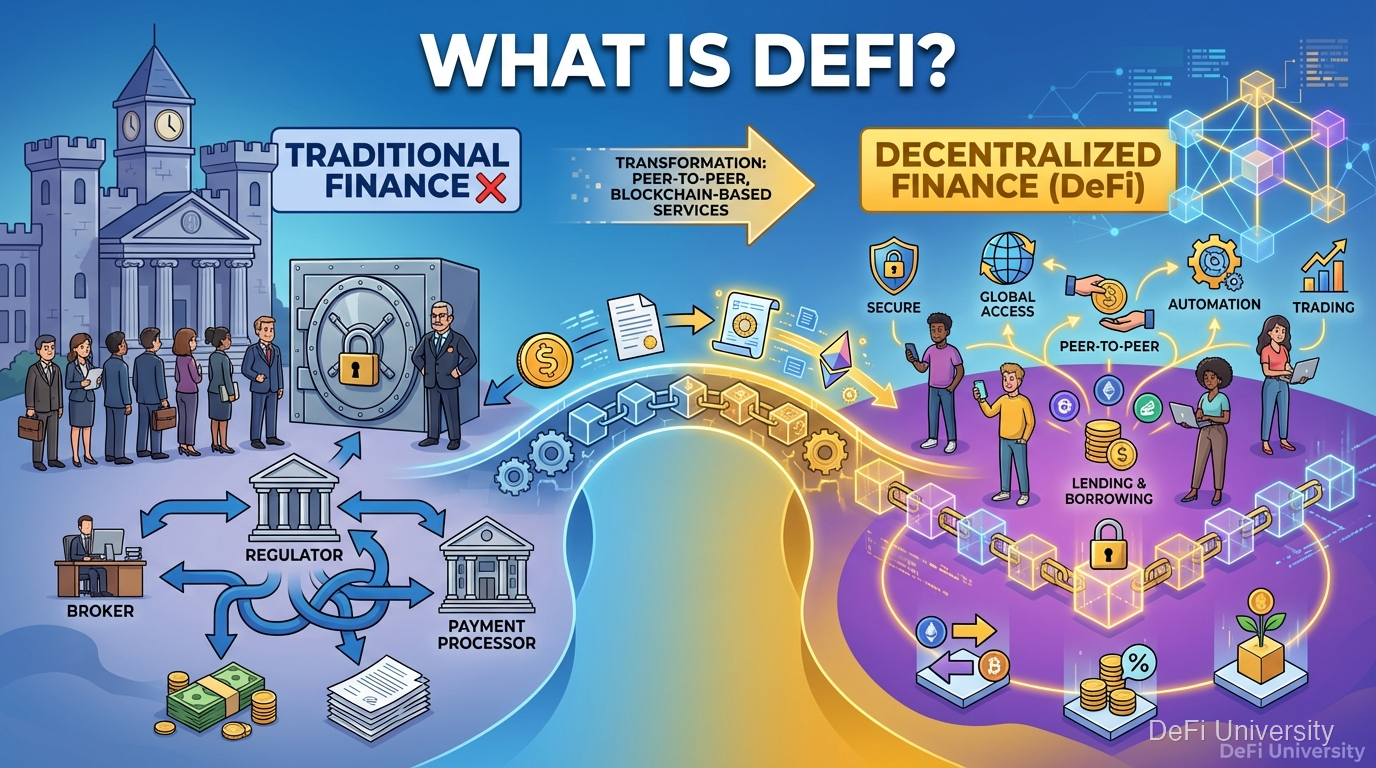
Core concept: DeFi (Decentralized Finance) is a system of financial services—like borrowing, lending, and trading—that operates on blockchain without traditional banks or intermediaries.
Vending Machine Banking
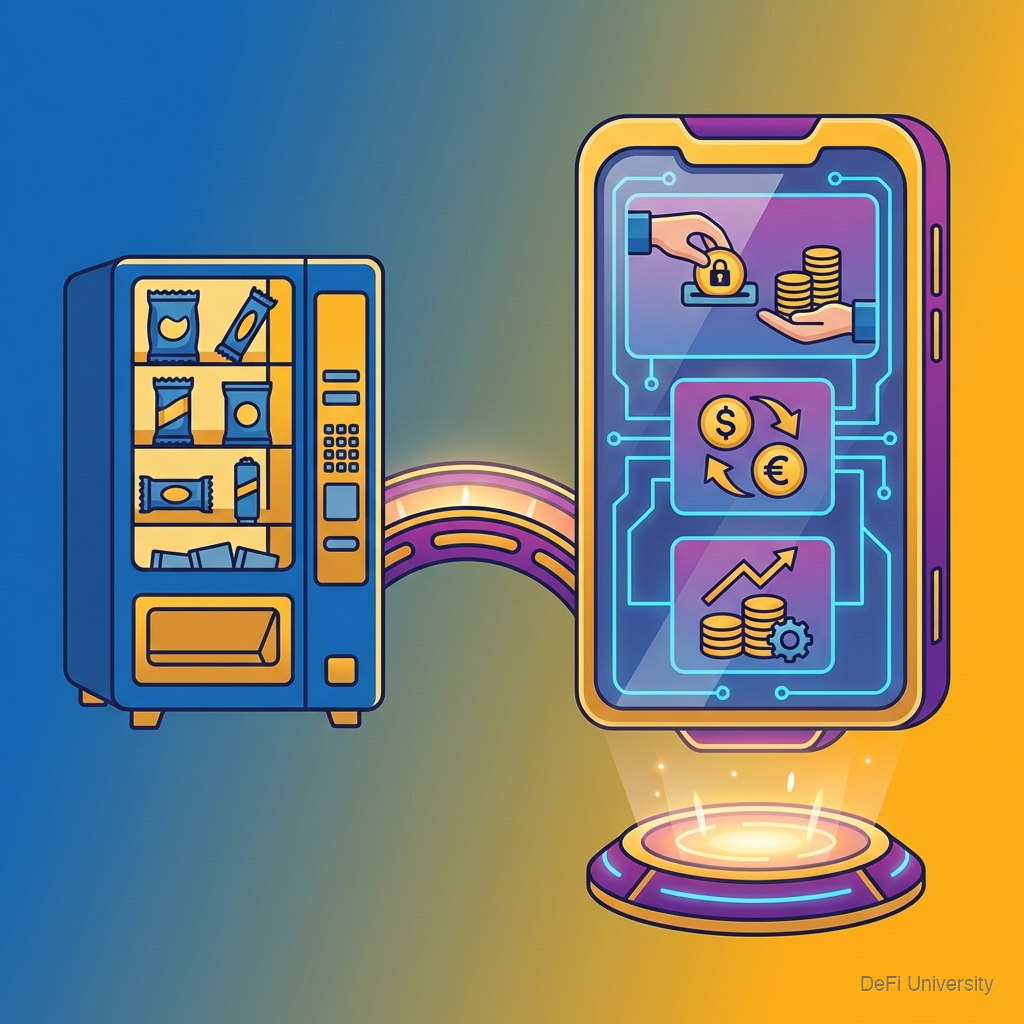
Remember comparing crypto to vending machines earlier? DeFi takes this further.
Imagine if instead of just snacks, vending machines could:
Give you a loan (put in collateral, get money)
Let you exchange currencies
Pay you interest on deposits
All without any human banker
That's DeFi. Financial services that work like vending machines: put in the requirements, get the result. No applications. No waiting. No banker saying yes or no.
The "vending machine" is a smart contract on blockchain. The rules are code. Anyone who meets the requirements can use the service.
What DeFi Replaces
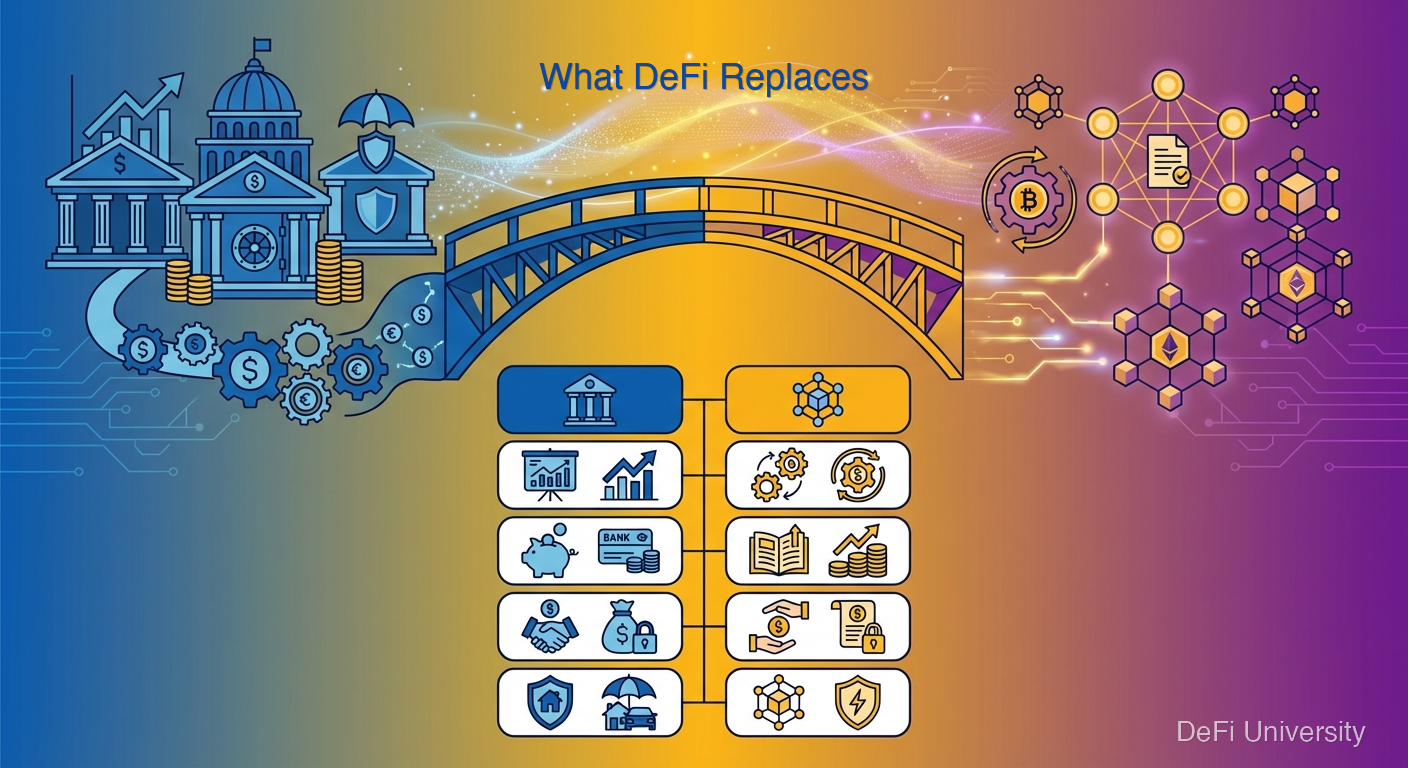
DeFi recreates traditional financial services:
Stock exchange
Decentralized exchange (DEX)
Bank savings account
Lending protocol
Bank loan
Collateralized borrowing
Insurance
DeFi insurance protocols
Investment funds
Yield aggregators, DAOs
The services are similar. The mechanism is completely different.
Instead of companies and employees processing your requests, smart contracts execute automatically based on code.
Why "Decentralized" Matters
Centralized (traditional):
One company controls the service
They decide who can participate
They set the rules
They can freeze accounts, deny service
They profit from being in the middle
Decentralized (DeFi):
No single entity controls
Anyone can participate (if you have crypto)
Rules are transparent (open source code)
No one can freeze your access
Protocol fees, if any, often distributed to users
Decentralization isn't about being anti-bank. It's about having options that don't require trusting a single intermediary.
The Building Blocks
DeFi is built on:
Blockchain: The shared, public ledger recording all transactions.
Smart contracts: Self-executing programs that run on blockchain.
Tokens: Digital assets that can be traded, lent, borrowed, and used as collateral.
Wallets: Your interface to interact with DeFi protocols.
These pieces combine like Lego blocks. DeFi protocols can plug into each other, creating complex financial tools from simple components.
What You Can Do With DeFi
Common DeFi activities:
Swap tokens: Trade one cryptocurrency for another without an exchange account.
Earn yield: Deposit assets to earn interest (often higher than traditional savings).
Borrow: Put up collateral and borrow other assets.
Provide liquidity: Supply assets to trading pools and earn fees.
Stake: Lock tokens to help secure a network and earn rewards.
Each of these would require applications, approvals, and accounts in traditional finance. In DeFi, they're available to anyone with a wallet.
Why DeFi Is Exciting
Accessibility: Anyone with internet and crypto can use it. No credit checks, no minimum balances, no geographic restrictions.
Transparency: All transactions are public. Protocol rules are open source. You can verify everything.
Composability: Protocols can work together. Innovation happens fast because builders don't need permission.
Control: You maintain custody of your assets. No company can freeze your DeFi activity.
Why DeFi Has Risks
Smart contract bugs: Code can have vulnerabilities. Exploits have cost billions.
Complexity: More moving parts = more ways things can go wrong.
Volatility: Assets used in DeFi are often highly volatile.
Irreversibility: Mistakes can't be undone. No customer support.
Regulatory uncertainty: Laws around DeFi are still developing.
Understanding both the potential and the risks is essential before participating.
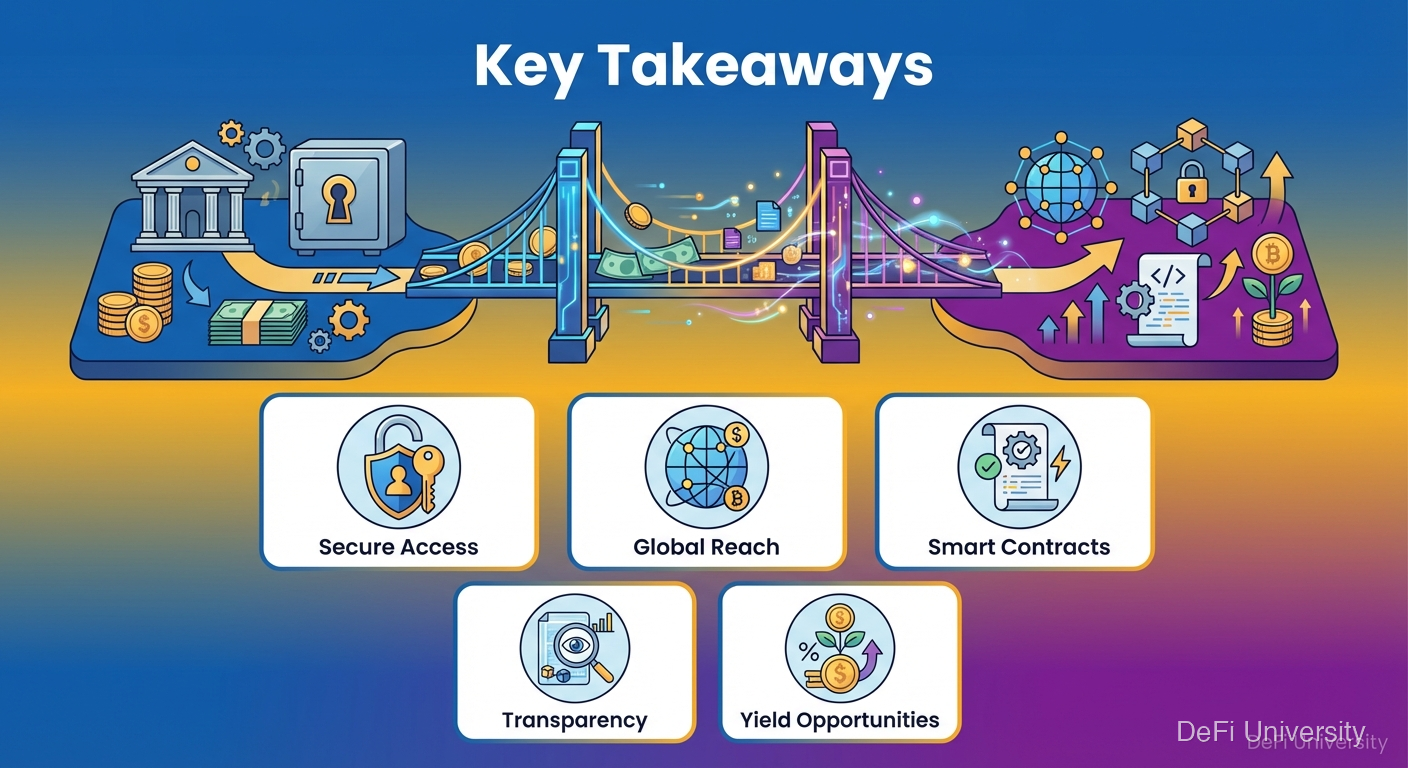
Key Takeaways
DeFi is decentralized financial services—banking without banks
Smart contracts act like vending machines—automatic execution based on code
It recreates traditional services (exchanges, loans, savings) without intermediaries
Decentralization means: anyone can participate, no single point of control
Benefits include accessibility, transparency, composability, and user control
Risks include smart contract bugs, complexity, and irreversibility
Last updated