Lesson 3: Traditional vs Decentralized
🎧 Lesson Podcast
🎬 Video Overview
Lesson 3: Traditional vs Decentralized
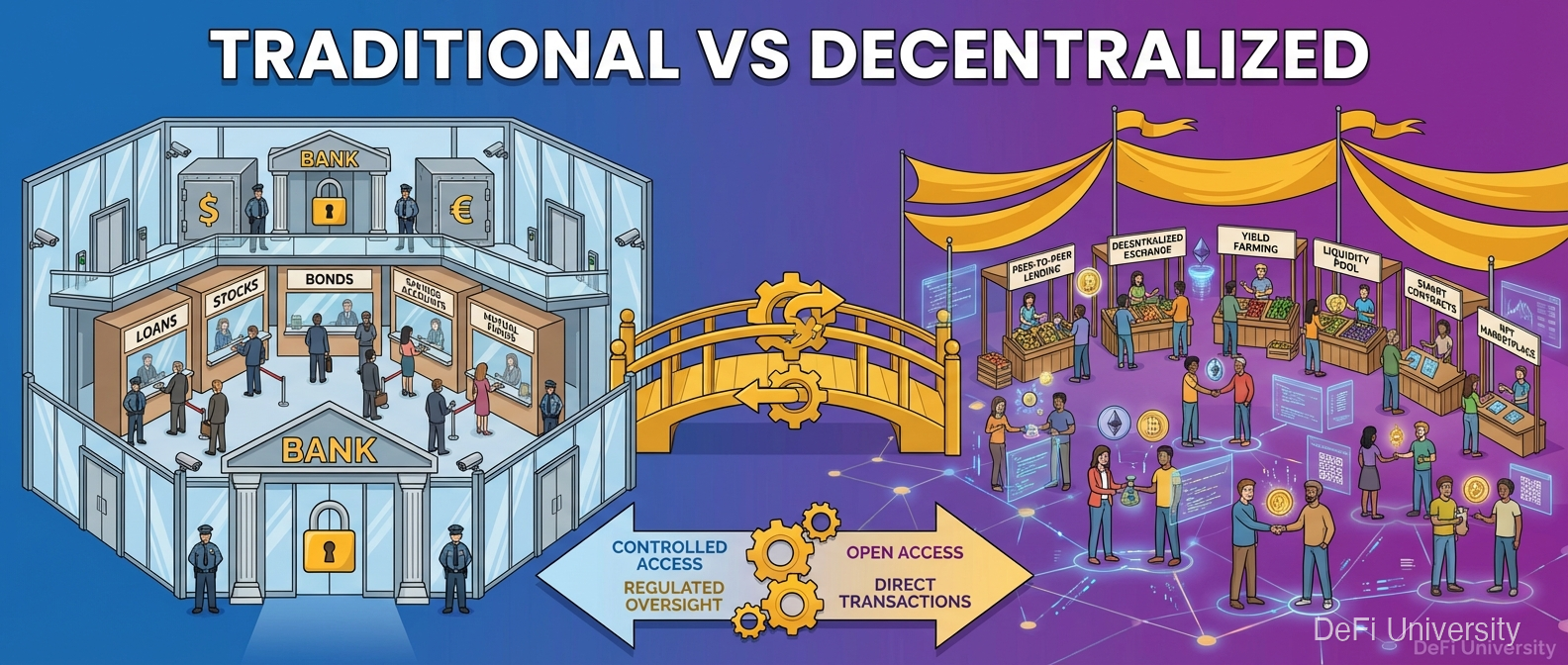
Core concept: Traditional finance is like a mall (controlled space with managed stores), while DeFi is like a farmers market (open access, direct transactions, less oversight).
Mall vs Farmers Market

Shopping mall:
One owner controls who can have a store
Security and rules enforced by management
Stores must follow mall policies
Hours determined by mall
You trust the mall to maintain standards
Farmers market:
Anyone can set up a stall (usually)
Buyers deal directly with sellers
Quality varies—buyer must evaluate
More flexible hours and arrangements
You evaluate each vendor yourself
Both have advantages. Malls offer consistency and protection. Farmers markets offer variety and directness.
DeFi is the farmers market of finance—more open, more direct, more personal responsibility.
How They Differ
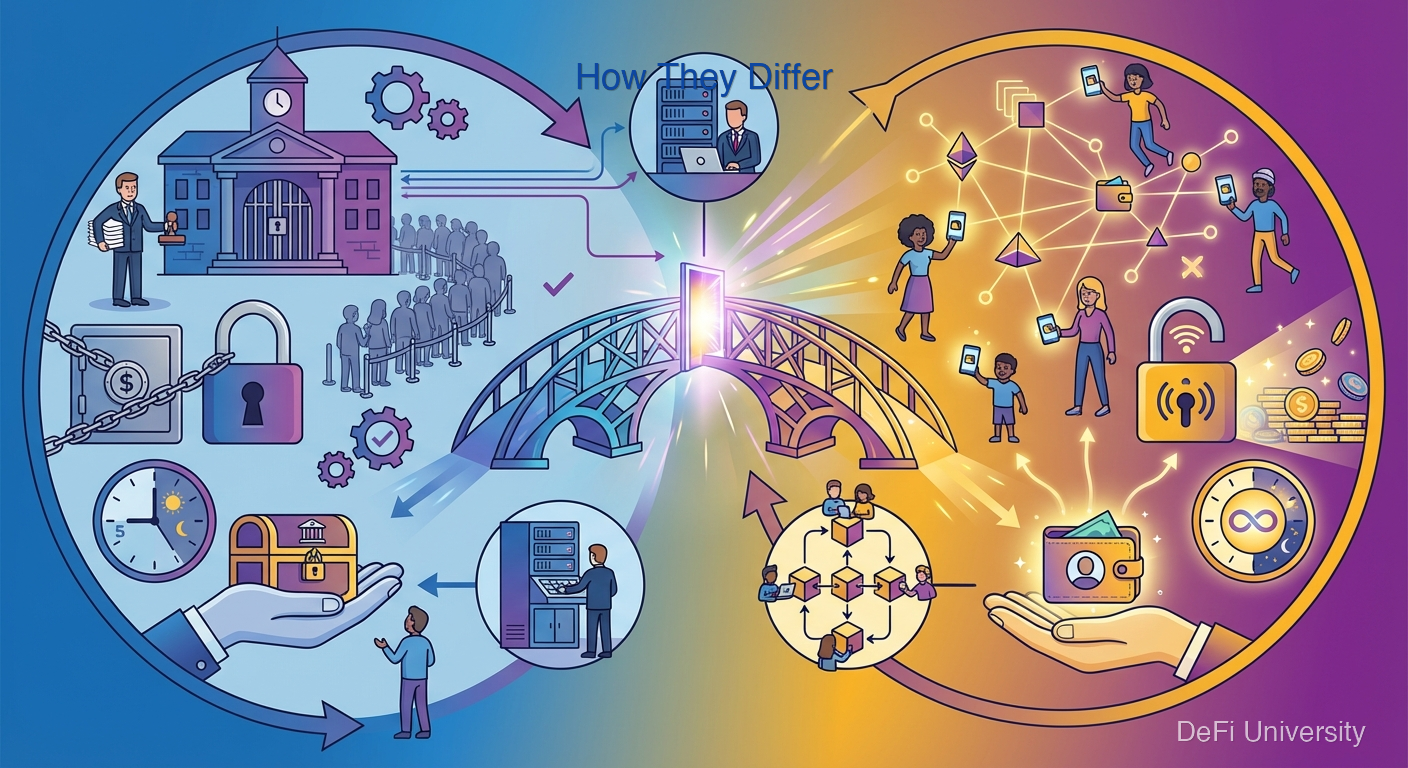
Access
Applications, approvals
Anyone with wallet
Hours
Business hours
24/7/365
Control
Institutions hold assets
You hold assets
Privacy
Full identity required
Pseudonymous possible
Speed
Days for settlement
Minutes to hours
Fees
Hidden and varies
Transparent (gas + protocol)
Protection
Regulations, insurance
Your own security
Recourse
Courts, customer service
Very limited
Neither is universally better. Each suits different needs.
Traditional Finance Advantages
Consumer protection: Banks can reverse fraudulent charges. Credit card disputes favor consumers. Insurance covers many losses.
Regulatory oversight: Laws require certain behaviors. Bad actors face legal consequences. Standards are enforced.
Simplicity: Most people know how banks work. Interface is familiar. Less technical knowledge required.
Recovery: Forgot your password? Customer service can help. Sent money wrong? Sometimes recoverable.
Integration: Works seamlessly with taxes, payroll, mortgages, and the rest of economic life.
DeFi Advantages
Accessibility: No applications, credit checks, or geographic restrictions. Anyone with internet can participate.
Transparency: All transactions public. Protocol rules visible. No hidden fees or terms.
Control: You hold your assets. No one can freeze your account or deny service.
Innovation: Protocols compose together. New services launch permissionlessly. Fast iteration.
Global: Same system everywhere. No international transfer complications.
Yield potential: Often higher returns than traditional savings (with higher risk).
Who Benefits Most from Each
Traditional finance works best for:
Those wanting consumer protections
People who prefer institutional trust
Situations requiring legal recourse
Integration with existing financial life
Those not wanting to manage their own security
DeFi works best for:
Those excluded from traditional banking
People wanting full control of assets
Cross-border transactions
Those comfortable with technical complexity
Situations where censorship resistance matters
Yield-seeking with appropriate risk tolerance
The Hybrid Future
Many people use both:
Traditional for:
Daily expenses (credit cards for protection)
Payroll and taxes
Mortgages and large purchases
Insurance
DeFi for:
Crypto-native activities
Higher yield on crypto holdings
Global transfers
Experimentation and learning
This isn't an either/or choice. Understanding both lets you use each where it's strongest.
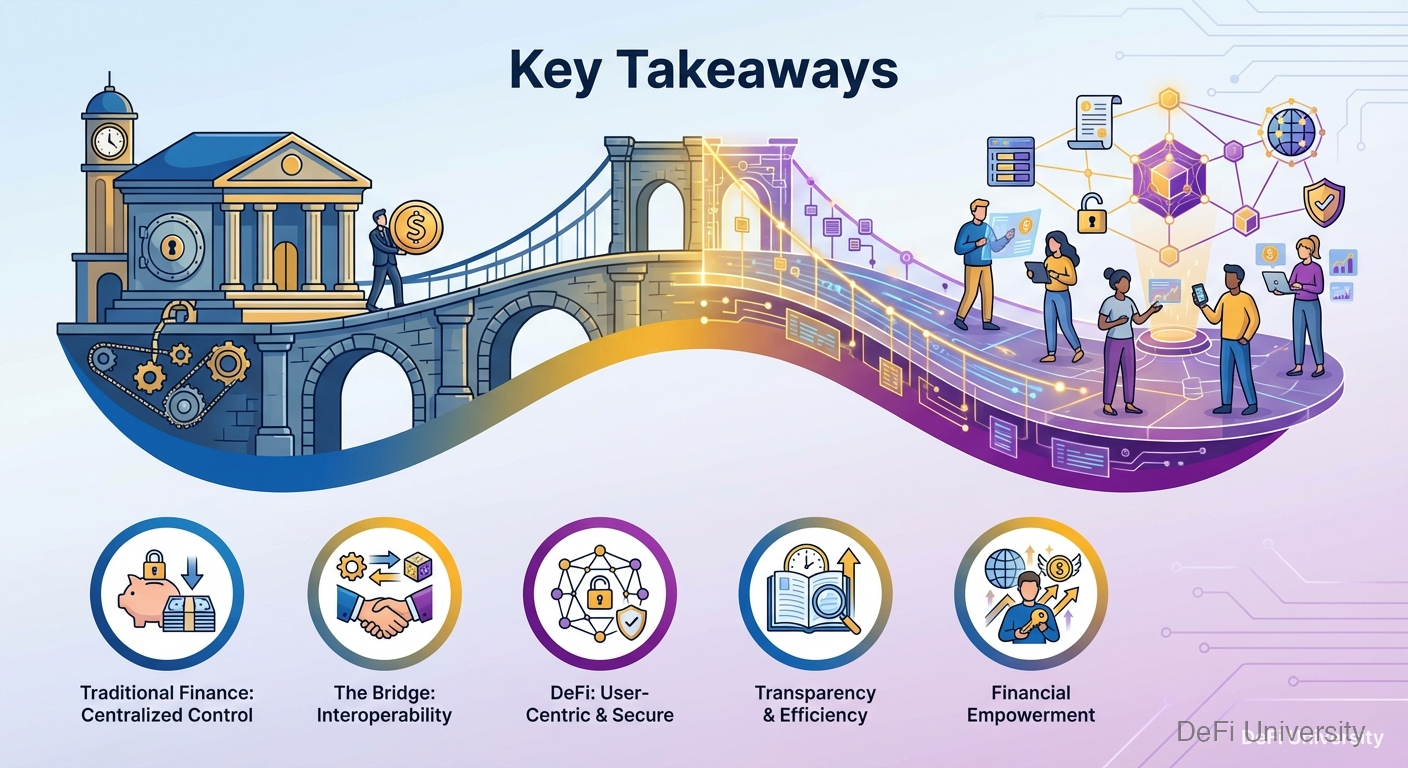
Key Takeaways
Traditional finance is like a mall—controlled, protected, managed
DeFi is like a farmers market—open, direct, self-responsible
Traditional advantages: protection, oversight, simplicity, recovery
DeFi advantages: accessibility, transparency, control, innovation
Neither is universally better—each suits different needs and situations
Many people use both—leveraging strengths of each system
Last updated