Lesson 4: Why DeFi Exists
🎧 Lesson Podcast
🎬 Video Overview
Lesson 4: Why DeFi Exists
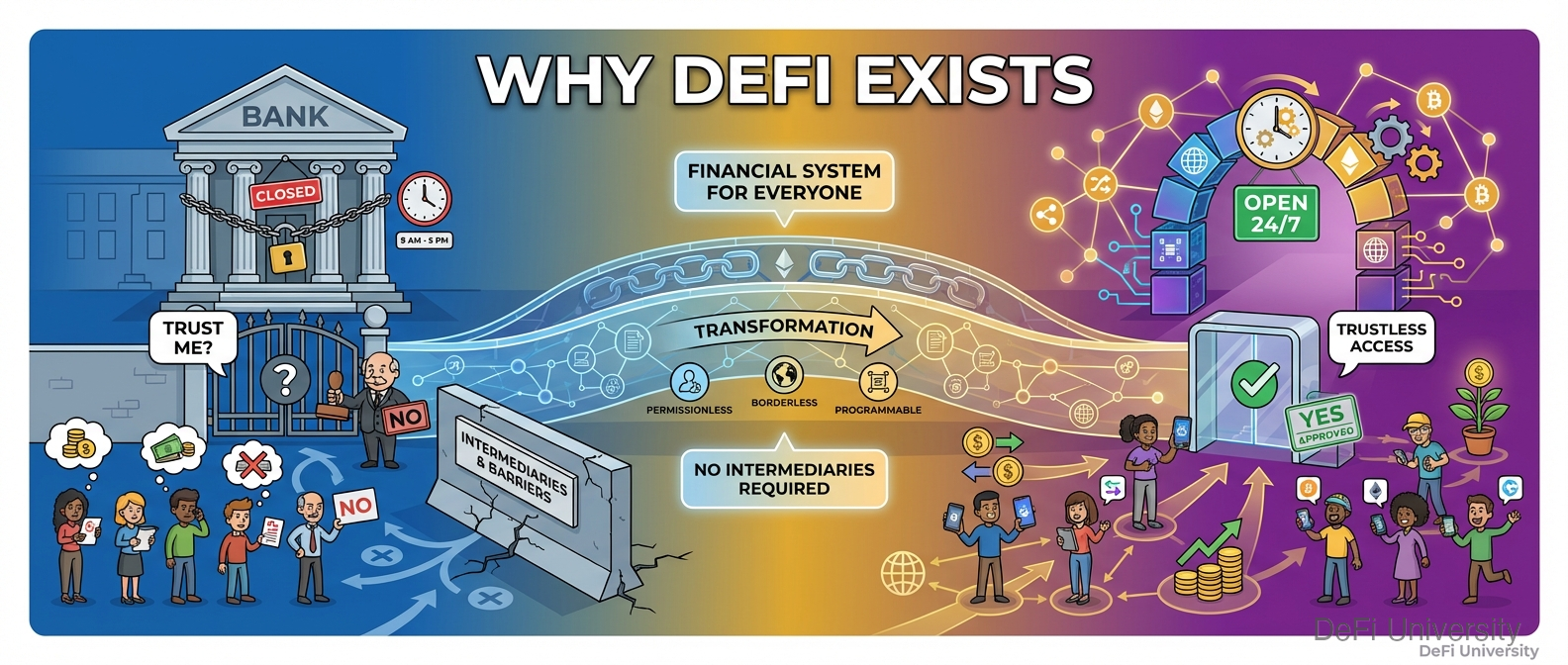
Core concept: DeFi emerged to create a financial system that's open to everyone, operates 24/7, and doesn't require trusting intermediaries who can say "no."
24/7 Global Access Story

Imagine it's Sunday night. You need to:
Exchange some currency urgently
Access a line of credit for an emergency
Move money internationally for a time-sensitive deal
In traditional finance:
Banks are closed
International transfers wait until Monday
Loan applications take days or weeks
You're stuck
In DeFi:
Swaps execute immediately
Collateralized loans available instantly
Global transfers in minutes
No waiting, no asking permission
This isn't a hypothetical. For businesses, travelers, and people in crisis situations, the inability to access financial services outside business hours causes real problems.
The Inclusion Problem
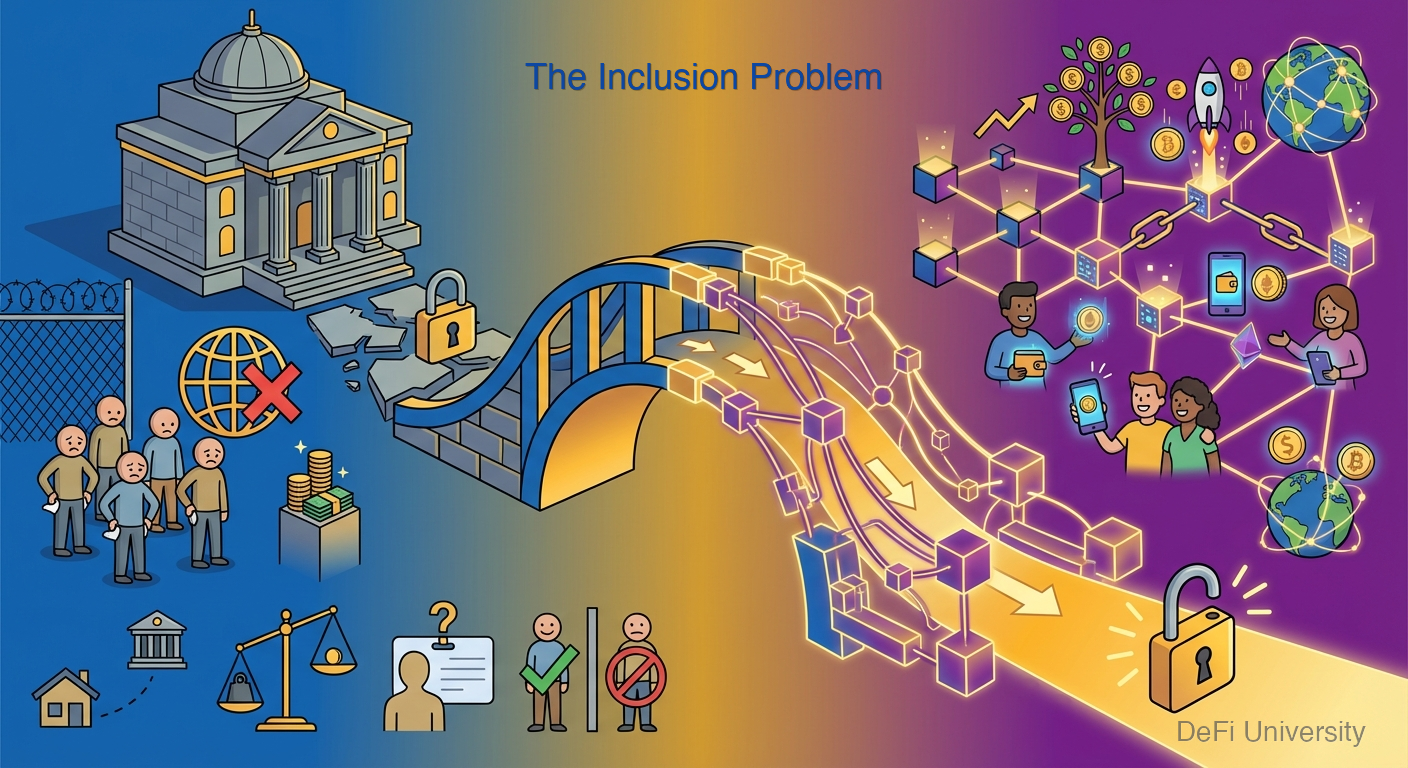
1.4 billion adults globally are "unbanked"—no bank account at all.
Another 2+ billion are "underbanked"—limited access to financial services.
Why?
No nearby bank branches
Can't meet minimum balance requirements
Lack required documentation
Discriminated against
In countries with unstable banking systems
DeFi's answer: Anyone with a smartphone and internet can access:
Savings accounts (lending protocols)
Currency exchange (DEXs)
Loans (collateralized borrowing)
Investment tools
No applications. No minimums. No credit checks. No discrimination.
The Trust Problem
Traditional finance requires trusting:
Banks to hold your money safely
Governments to maintain currency value
Institutions to follow their stated rules
Companies not to freeze your account
This trust is usually well-placed. But not always:
Bank failures: Cyprus 2013—bank accounts over €100,000 partially seized.
Currency collapse: Venezuela, Zimbabwe—life savings evaporated.
Account freezes: Legal but controversial activity leading to accounts closed.
Deplatforming: Payment processors refusing service for political reasons.
DeFi offers an alternative: instead of trusting institutions, you verify code. Rules are transparent, execution is automatic, and no single entity can deny you access.
The Efficiency Problem
Traditional finance is expensive and slow because of all the intermediaries:
International transfer:
5-7 intermediary banks
3-5 business days
$30-50 in fees
Exchange rate markup
Getting a loan:
Application forms
Credit checks
Human underwriting
Days to weeks of waiting
DeFi streamlines this:
Crypto transfer:
Direct wallet to wallet
Minutes to hours
Usually under $1-10
Market exchange rates
DeFi loan:
Deposit collateral
Borrow instantly
No applications or approval
Available 24/7
The Innovation Problem
Traditional finance innovation is slow:
Regulations require approval for new products
Legacy systems are hard to change
Incumbents have little incentive to disrupt themselves
Permission required at every step
DeFi is permissionless:
Anyone can build new protocols
Protocols can compose with each other
Innovation happens in public, rapidly
Good ideas spread fast
This has led to entirely new financial products in years that traditional finance hasn't developed in decades.
What DeFi Doesn't Solve (Yet)
Be honest about limitations:
Consumer protection: No safety nets for mistakes.
Complexity: Requires technical understanding.
Volatility: Built on volatile assets.
Regulatory status: Legal framework still developing.
Scaling: Can get expensive during high demand.
Real-world integration: Can't pay rent or taxes with DeFi yields (easily).
DeFi solves some problems while creating others. Understanding both helps you decide when it's appropriate.
Key Takeaways
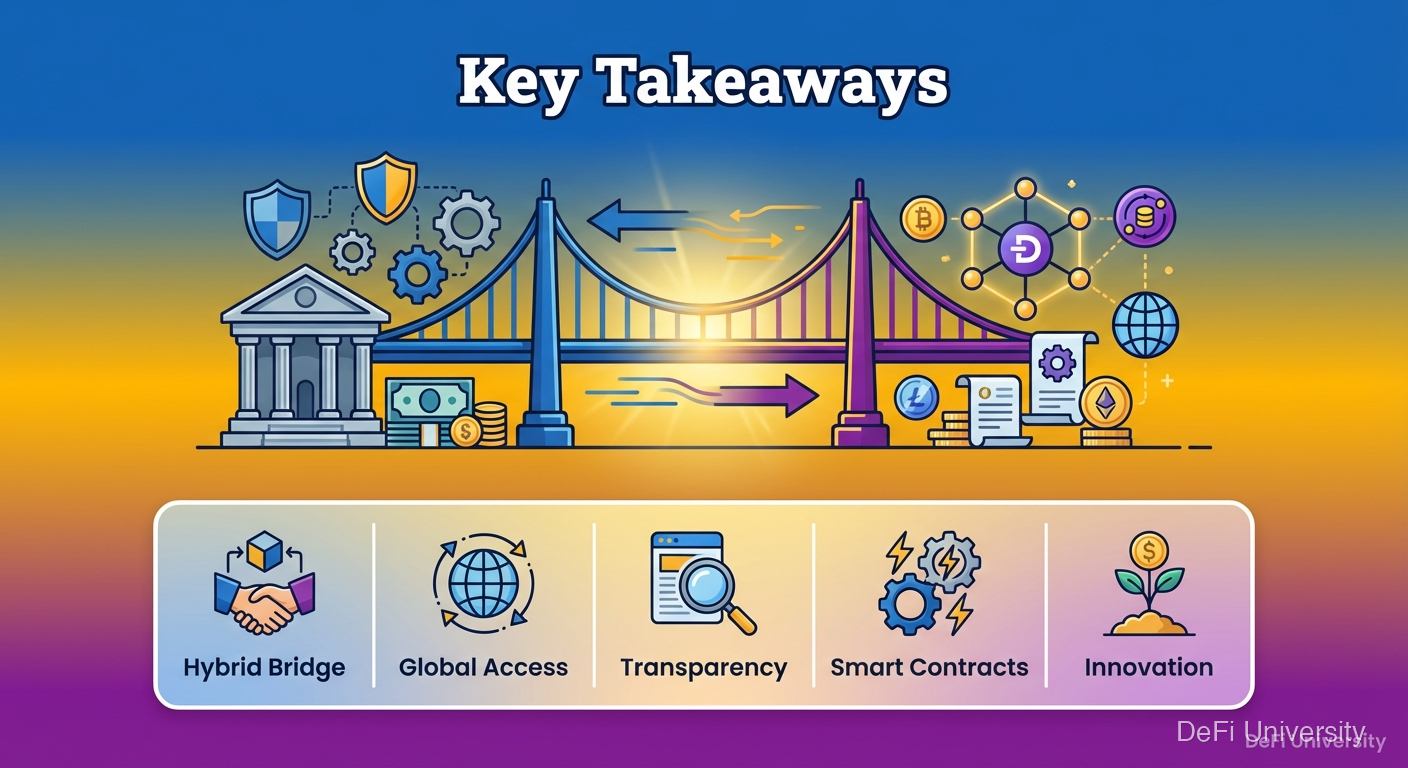
DeFi exists because traditional finance has gaps: excluded populations, limited hours, trust requirements
24/7 access solves real problems for global users
Financial inclusion reaches the unbanked and underbanked
Trust in code vs. institutions offers an alternative for those who need it
Efficiency gains reduce time and costs for certain operations
Permissionless innovation enables rapid development of new tools
Trade-offs exist—DeFi solves some problems while creating others
Last updated