Lesson 7: Yield and APY Explained

🎧 Lesson Podcast

🎬 Video Overview

Lesson 7: Yield and APY Explained
Header

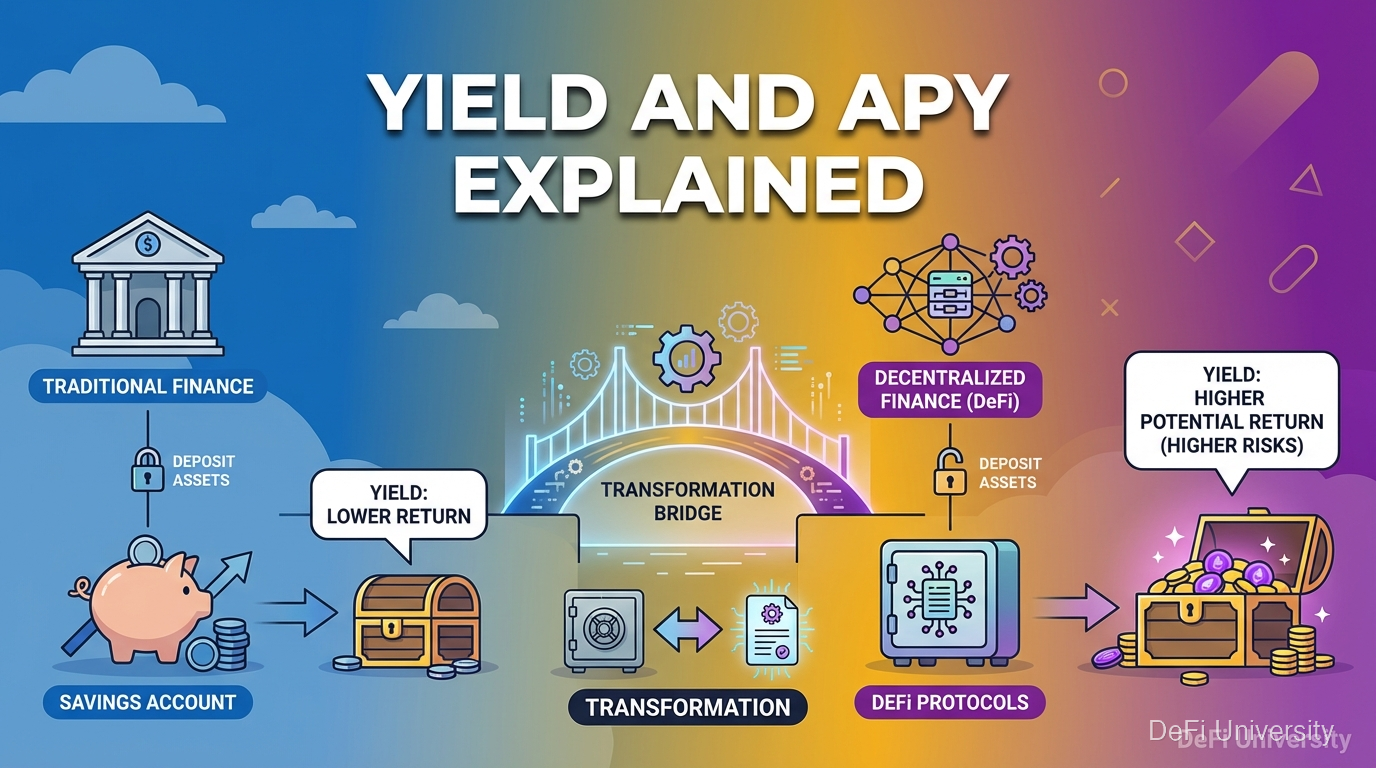
Core concept: "Yield" in DeFi is the return you earn on deposited assets—like interest on a savings account, but often much higher (and with higher risks).


Interest on Steroids

Inline Analogy

Traditional savings accounts pay maybe 0.5-4% annually. Boring but stable.

DeFi yield can be:

  • 5-15% on stablecoin lending

  • Higher on riskier assets

  • Sometimes hundreds of percent on new protocols (very risky!)

Why so much higher? Several reasons:

  • No bank's profit margin to cut through

  • Higher-risk environments demand higher returns

  • New protocols offer incentives to attract users

  • Crypto volatility creates trading opportunities

But remember: higher returns always mean higher risks. There's no free lunch.


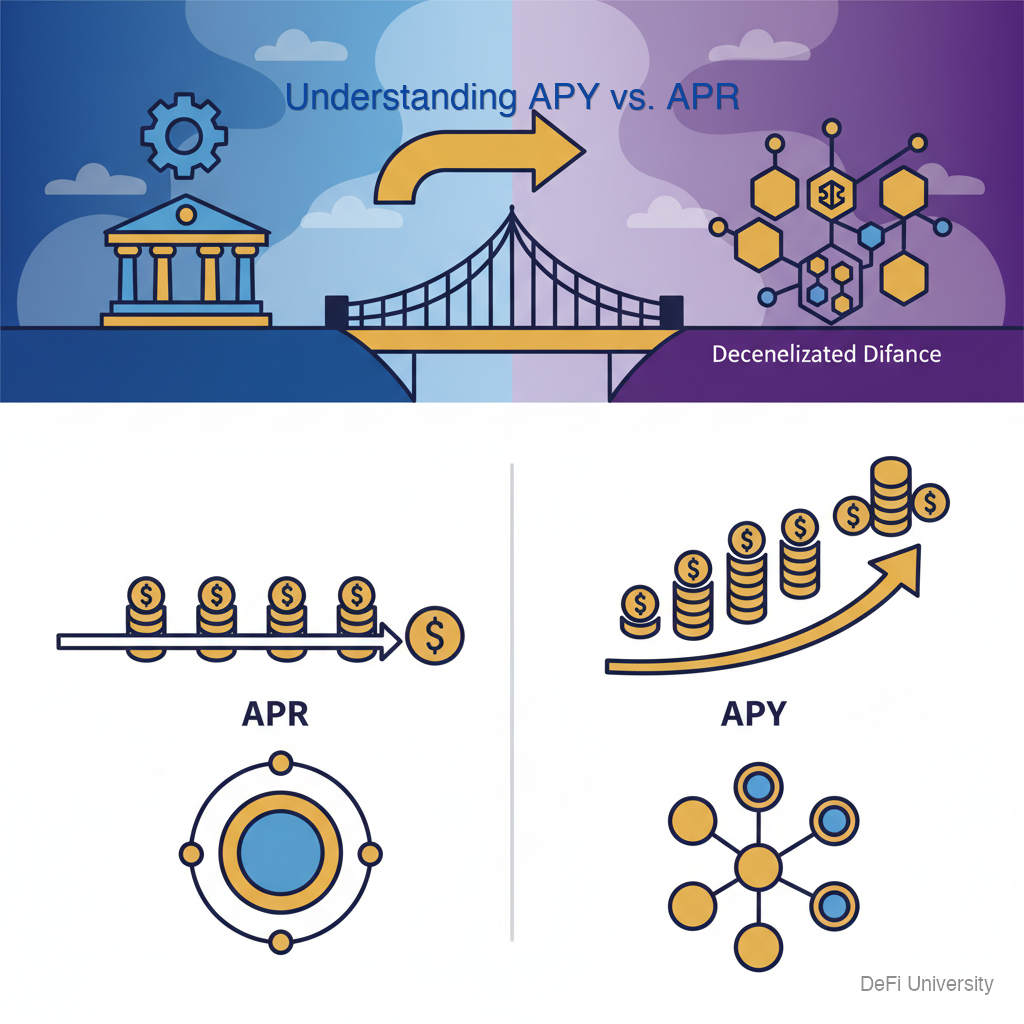
Understanding APY vs. APR

Infographic

APR (Annual Percentage Rate): The simple annual interest rate. If APR is 12%, you earn 1% per month on your original deposit.

APY (Annual Percentage Yield): Includes compound interest. Your returns get reinvested and earn returns themselves.

Example: $1,000 at 12% for one year:

  • APR: $1,000 + $120 = $1,120

  • APY (compounded monthly): $1,000 + $126.83 = $1,126.83

The more frequently yield compounds, the bigger the difference. DeFi often compounds very frequently, making APY numbers look impressive.

Rule of thumb: APY numbers are always larger than APR for the same rate. Compare like to like.


Where Yield Comes From

DeFi yield has several sources:

Lending interest: Borrowers pay interest to borrow your deposited assets. You earn a share.

Trading fees: Liquidity providers earn a cut of fees from trades in their pools.

Token incentives: Protocols give out their tokens to attract users. (Can be temporary and unsustainable.)

Staking rewards: Some blockchains reward users who stake tokens to secure the network.

Understanding the source helps you assess sustainability. If yield comes from borrowers paying interest, that's probably sustainable. If it comes purely from new token emissions, it might not last.


Reading Yield Numbers Critically

When you see "500% APY!" ask:

Is it real yield or inflation? If a protocol pays you in its own tokens and those tokens lose value, your "yield" is worth less than shown.

How is it calculated? Is this rate based on today's conditions? Rates change. Yesterday's 500% might be today's 50%.

Is it sustainable? Token incentives often decrease over time. Early high yields often fall dramatically.

What are the risks? Smart contract risk, liquidation risk, impermanent loss (for liquidity providers).

Is it too good to be true? Extremely high yields often indicate extremely high risks—or scams.


Common Yield Strategies

Simple lending: Deposit stablecoins (USDC, DAI) on Aave or Compound. Earn 3-8% depending on market conditions. Lowest risk for DeFi.

Liquidity providing: Supply token pairs to DEXs. Earn trading fees. Subject to impermanent loss (covered in next lesson).

Yield farming: Deposit in protocols offering token rewards. Higher yields, more complexity, requires managing positions.

Staking: Lock tokens to help secure a network or protocol. Earn rewards.

Each strategy has different risk/reward profiles. Start simple before exploring complex strategies.


Sustainability Check

Sustainable yield sources:

  • Lending interest from borrowers

  • Trading fees from real volume

  • Staking rewards from blockchain inflation (designed into the system)

Potentially unsustainable:

  • Token emissions that dilute existing holders

  • Ponzi-like structures paying old users with new user deposits

  • "Yield" that comes from price appreciation assumptions

Asking "where does this money actually come from?" is essential due diligence.


Summary

Key Takeaways

  • DeFi yields can be significantly higher than traditional finance—but so are risks

  • APY includes compounding, APR doesn't—compare like to like

  • Yield comes from lending interest, trading fees, token incentives, or staking rewards

  • Read numbers critically—is it sustainable? What are the risks?

  • Higher yields = higher risks—there's no free lunch

  • Start with simple strategies—don't jump into complex yield farming first

Last updated