Lesson 11: Understanding DeFi Risks

🎧 Lesson Podcast

🎬 Video Overview

Lesson 11: Understanding DeFi Risks
Header

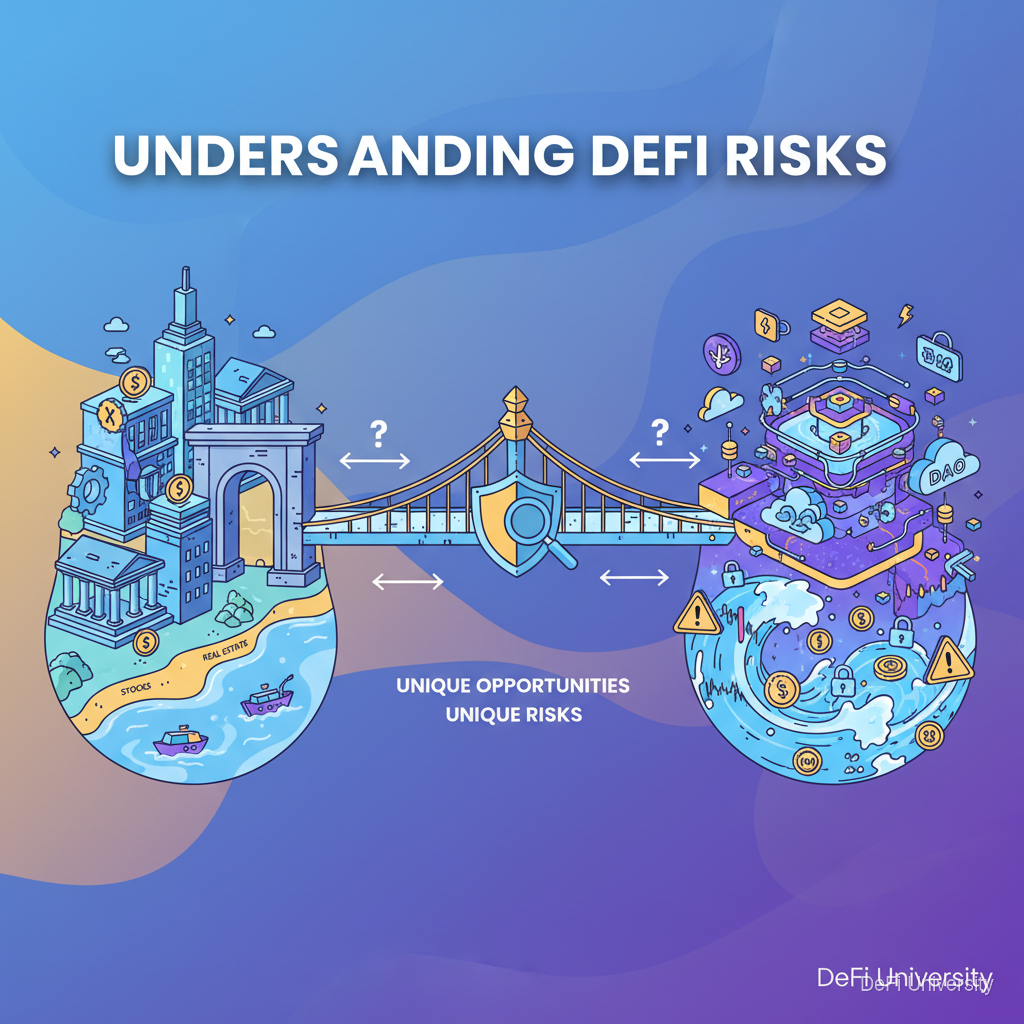
Core concept: DeFi offers unique opportunities but also unique risks that don't exist in traditional finance—understanding them is essential before participating.


New Restaurant vs Chain

Inline Analogy

Trying a new restaurant is exciting:

  • Might discover amazing food

  • Might get food poisoning

  • Less track record to judge

Chain restaurants are safer:

  • Know what to expect

  • Health inspections, standards

  • Less chance of bad surprise

DeFi protocols are like new restaurants. Exciting, potentially rewarding, but also riskier. Traditional finance is the chain—boring but predictable.


Smart Contract Risk

Infographic

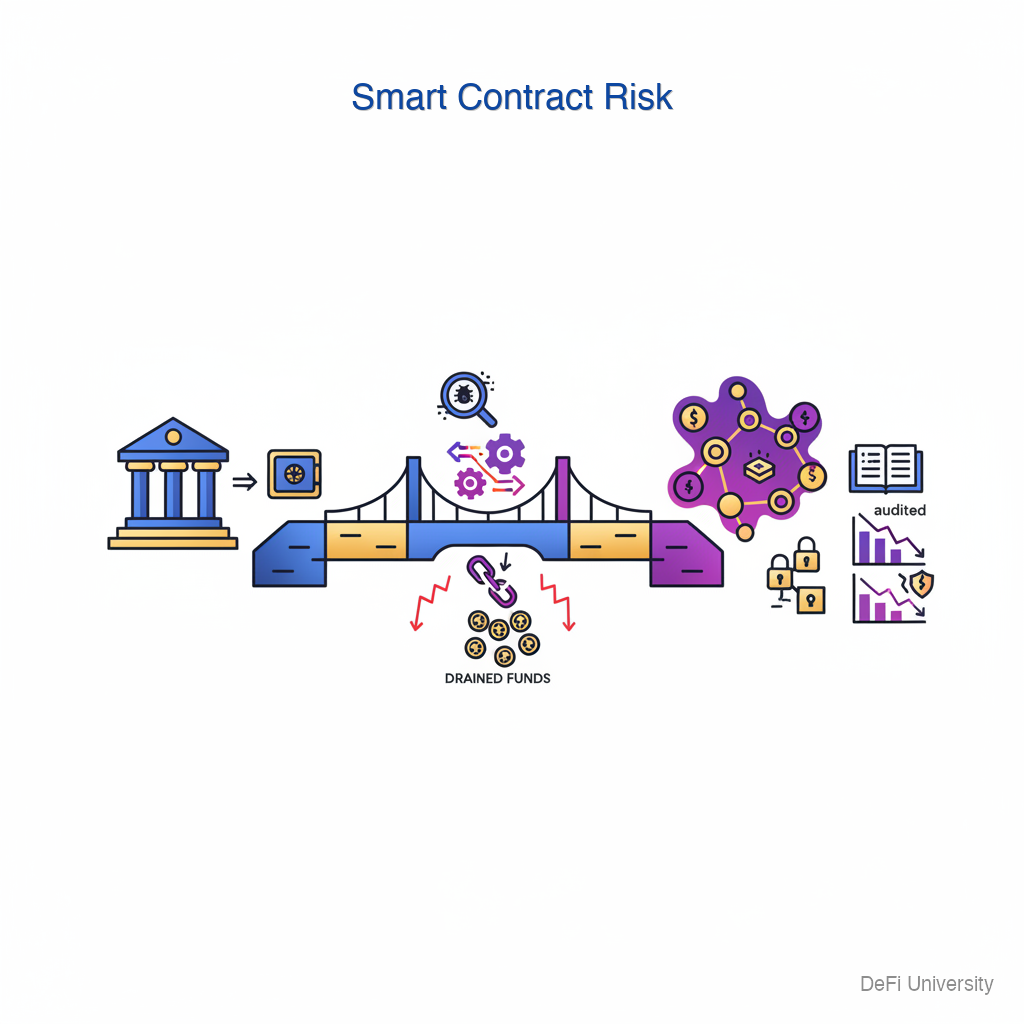
The risk: All DeFi runs on code. Code can have bugs. Bugs can be exploited. Exploits drain funds.

Real examples:

  • $600M stolen from Ronin bridge (2022)

  • $200M+ from various DeFi hacks annually

  • Even audited contracts get exploited

Mitigation:

  • Use established, battle-tested protocols

  • Check for audits (but know audits aren't guarantees)

  • Diversify across protocols

  • Don't put more than you can afford to lose


Liquidation Risk

The risk: If you borrow in DeFi and your collateral value drops, you can be automatically liquidated—losing your collateral.

How it happens:

  • You borrow $8,000 against $10,000 collateral

  • Collateral drops to $9,000

  • Protocol liquidates you (sells collateral to cover debt)

  • You might get back $500-1,000, losing $8,000-9,000

Mitigation:

  • Keep collateral ratio well above minimum

  • Monitor positions actively

  • Set alerts for price movements

  • Don't use maximum borrowing capacity


Impermanent Loss

The risk: Providing liquidity to pools can result in less value than just holding, if token prices diverge significantly.

How it happens: Pool mechanics automatically rebalance your position. When prices move, you end up with more of the less-valuable token.

Mitigation:

  • Understand IL before providing liquidity

  • Use stable pairs for lower IL exposure

  • Factor IL into expected returns

  • Fees earned should exceed IL for profit


Oracle Manipulation

The risk: DeFi protocols rely on price feeds (oracles). Manipulated prices can cause improper liquidations or exploits.

How it happens: Attacker manipulates price on a smaller exchange that the oracle uses. DeFi protocol acts on false price.

Mitigation:

  • Use protocols with robust oracle implementations

  • Protocols using Chainlink or multiple sources are safer

  • Be cautious with protocols using single-source oracles


Rug Pulls and Exit Scams

The risk: Project creators disappear with user funds.

How it happens:

  • Project collects deposits

  • Creators drain funds

  • Project abandoned

Mitigation:

  • Research team thoroughly

  • Check for liquidity locks

  • Avoid protocols with single points of failure

  • Be extremely cautious with new/unaudited protocols


User Error

The risk: You make a mistake. There's no undo button.

Common mistakes:

  • Sending to wrong address

  • Approving malicious contracts

  • Not understanding what you're signing

  • Losing seed phrase

Mitigation:

  • Double-check everything

  • Use small test transactions

  • Understand what you're doing before doing it

  • Follow security best practices


Risk Management Framework

Size positions appropriately: Never put more than you can afford to lose in any single protocol.

Diversify: Don't keep everything in one protocol or one chain.

Stay informed: Follow protocol updates, security disclosures, and community discussions.

Have an exit plan: Know how to withdraw quickly if needed.

Learn continuously: DeFi evolves fast. Keep learning.


Summary

Key Takeaways

  • DeFi has unique risks not present in traditional finance

  • Smart contract bugs can drain funds instantly

  • Liquidation risk is real with borrowing—monitor positions

  • Impermanent loss affects liquidity providers

  • Oracle manipulation can cause improper protocol behavior

  • User error is unforgiving—no customer support, no undo

  • Risk management includes sizing, diversification, and continuous learning

Last updated