Lesson 6: Lending and Borrowing

🎧 Lesson Podcast

🎬 Video Overview

Lesson 6: Lending and Borrowing
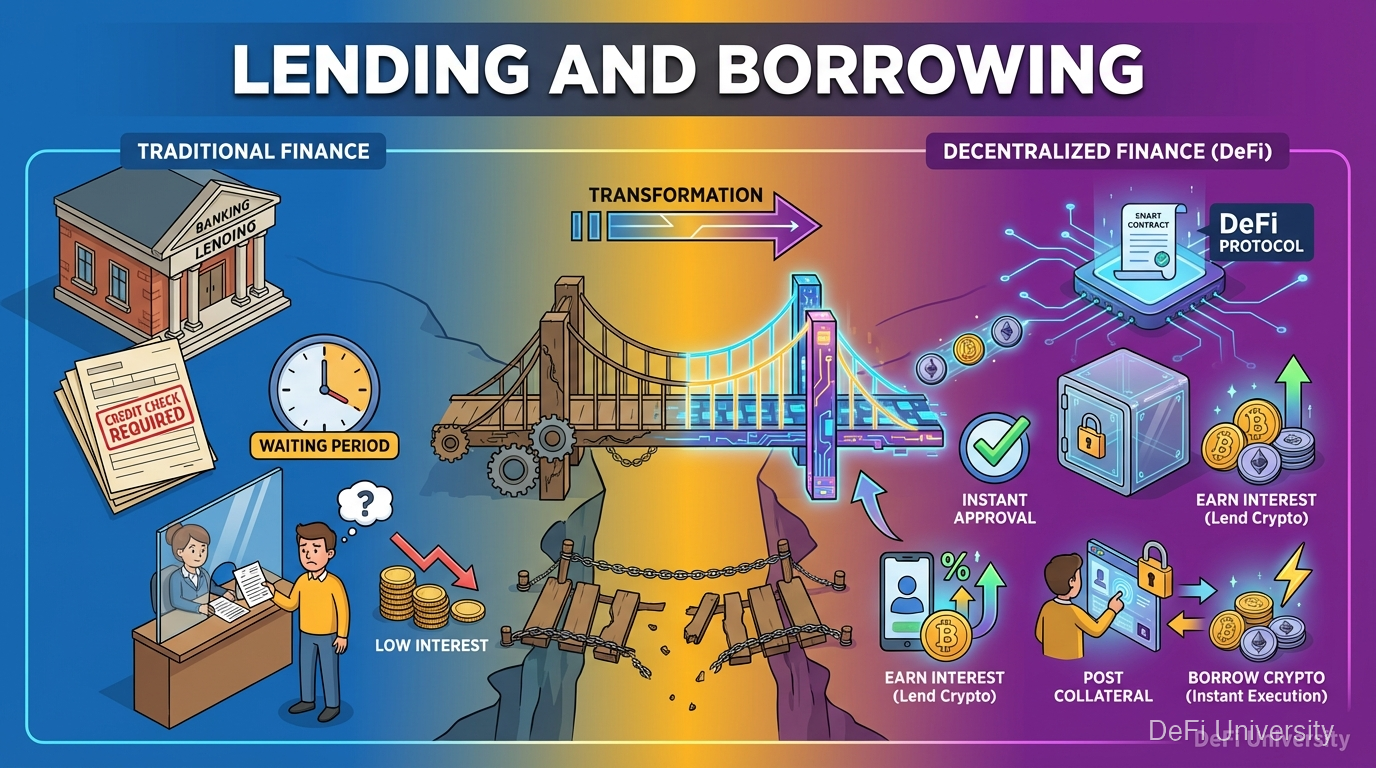
Header

Core concept: DeFi lending protocols let you earn interest by lending crypto or borrow crypto by posting collateral—no credit checks, no applications, instant execution.


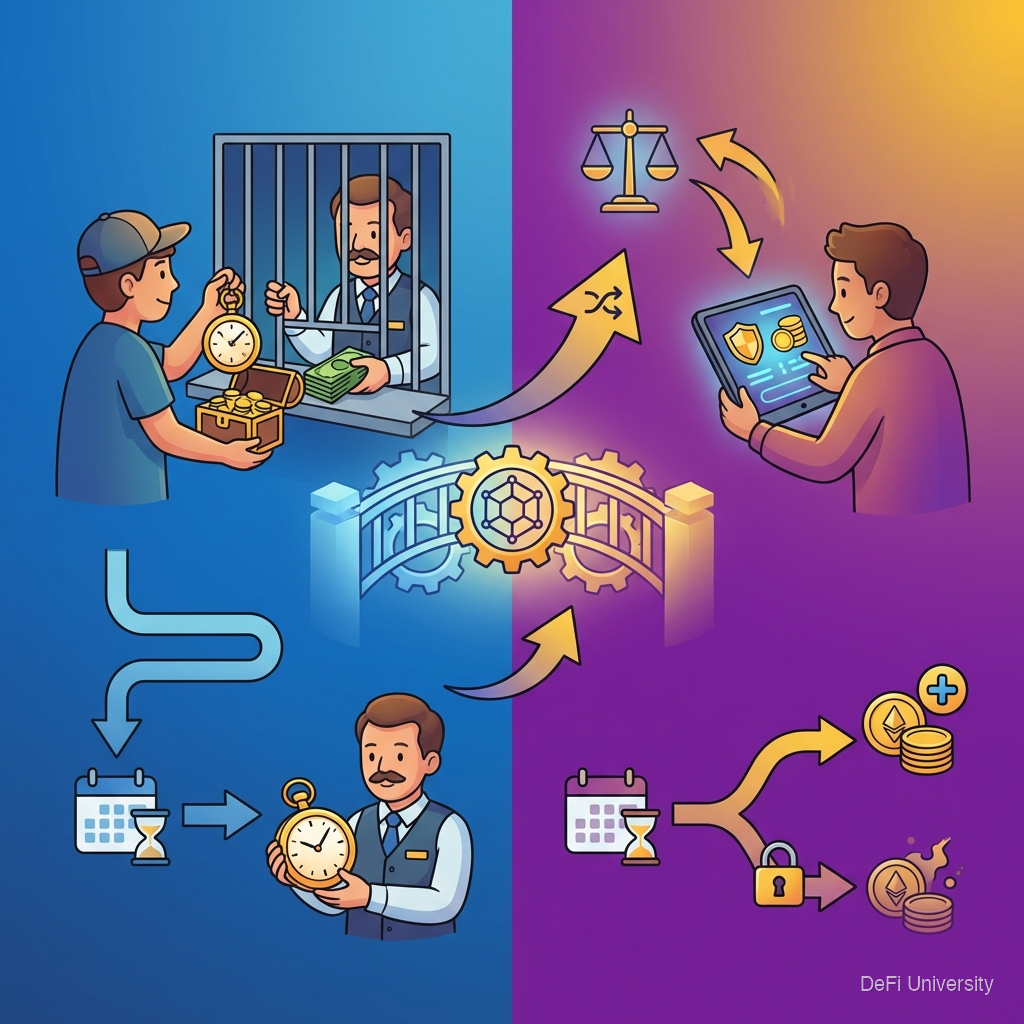
Pawn Shop with Code

Inline Analogy

Think about how a pawn shop works:

  • You bring valuable items (collateral)

  • They give you cash (loan)

  • You pay interest over time

  • Pay back the loan + interest, get your items back

  • Don't pay back? They keep your items

DeFi lending works similarly:

  • You deposit crypto (collateral)

  • Smart contract lets you borrow other crypto

  • You pay interest over time

  • Repay loan + interest, get collateral back

  • If collateral value drops too much? Automatic liquidation

The "pawn shop" is a smart contract. No negotiation. No credit check. Just math.


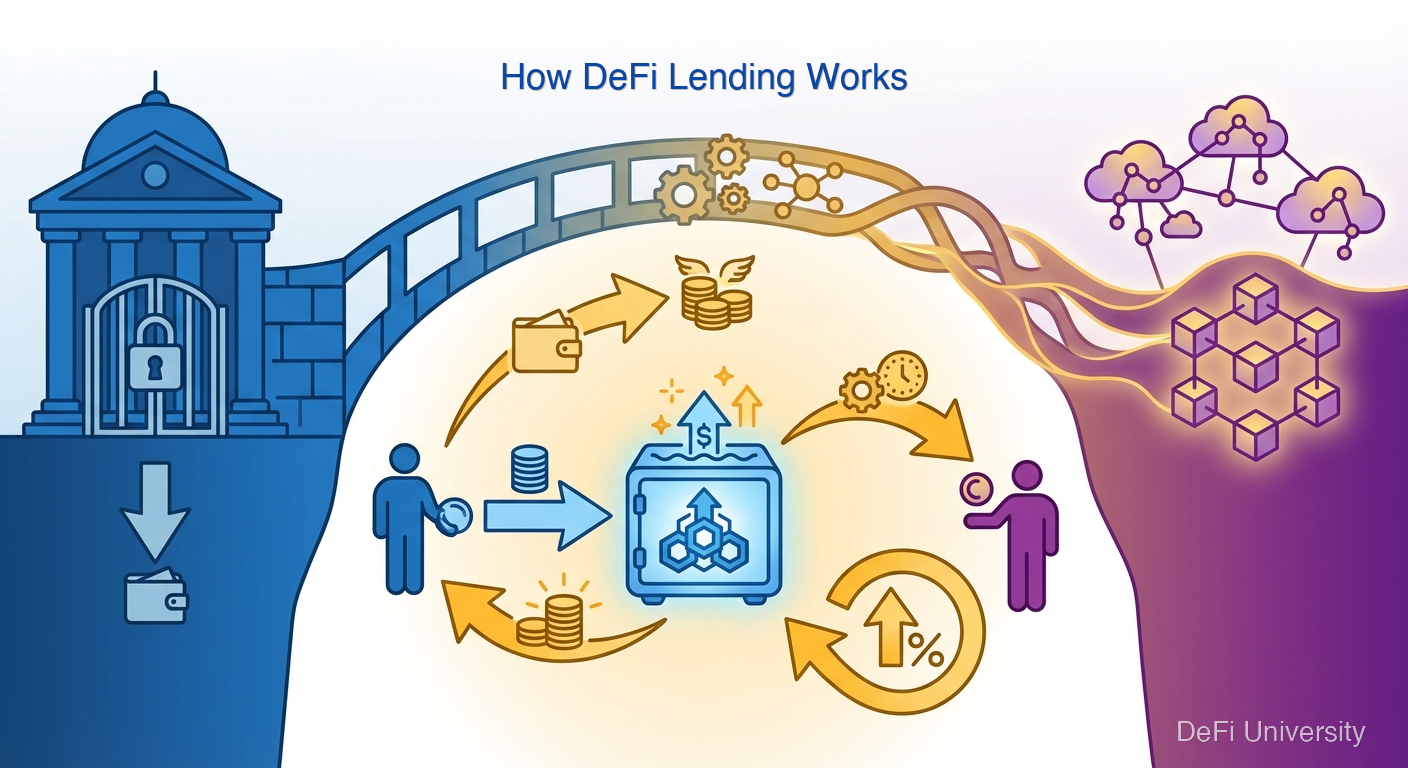
How DeFi Lending Works

Infographic

For Lenders (Depositors):

  1. You deposit crypto into a lending protocol

  2. Your deposit joins a lending pool

  3. Borrowers pay interest on what they borrow

  4. You earn a portion of that interest

  5. Withdraw your deposit + earned interest anytime

For Borrowers:

  1. You deposit collateral (usually more than you borrow)

  2. Protocol lets you borrow up to a certain percentage of collateral value

  3. You pay interest on borrowed amount

  4. Repay anytime to get collateral back

  5. If collateral value drops, you might get liquidated


The Overcollateralization Requirement

Unlike traditional loans (where you might borrow $250,000 for a $300,000 house), DeFi requires more collateral than what you borrow:

Example:

  • You want to borrow $1,000 USDC

  • Protocol requires 150% collateralization

  • You must deposit $1,500 worth of ETH

  • If ETH price drops and your collateral falls to $1,200, liquidation may occur

Why so much collateral? Because:

  • No credit checks to assess risk

  • No legal system to chase you for repayment

  • Smart contracts can't send debt collectors

Overcollateralization is how DeFi manages risk without knowing who you are.


Why Would You Borrow?

If you need to deposit more than you borrow, why borrow at all?

Keep asset exposure: You want to hold ETH but need cash. Instead of selling, you borrow against it. If ETH goes up, you still benefit.

Tax efficiency: In some jurisdictions, borrowing against assets isn't a taxable event, but selling is.

Leverage: Advanced users borrow to increase their position. (High risk—not for beginners!)

Access different assets: Your wealth is in ETH but you need stablecoins for something.


Aave: Multi-chain lending protocol. Supports many assets. Variable and stable rates.

Compound: Pioneer in DeFi lending. Primarily on Ethereum.

MakerDAO: Create DAI stablecoin by depositing collateral. Unique model.

Morpho: Peer-to-peer layer on top of Aave/Compound for better rates.

Each has different rates, supported assets, and risk profiles.


Risks of DeFi Lending

Liquidation risk: If collateral value drops, you can lose it. Market volatility is real.

Smart contract risk: Bugs in lending protocol code could result in lost funds.

Interest rate volatility: Rates can change rapidly based on supply/demand.

Oracle risk: Protocols rely on price feeds (oracles). Faulty prices can cause improper liquidations.

Opportunity cost: Funds locked as collateral can't be used for other purposes.


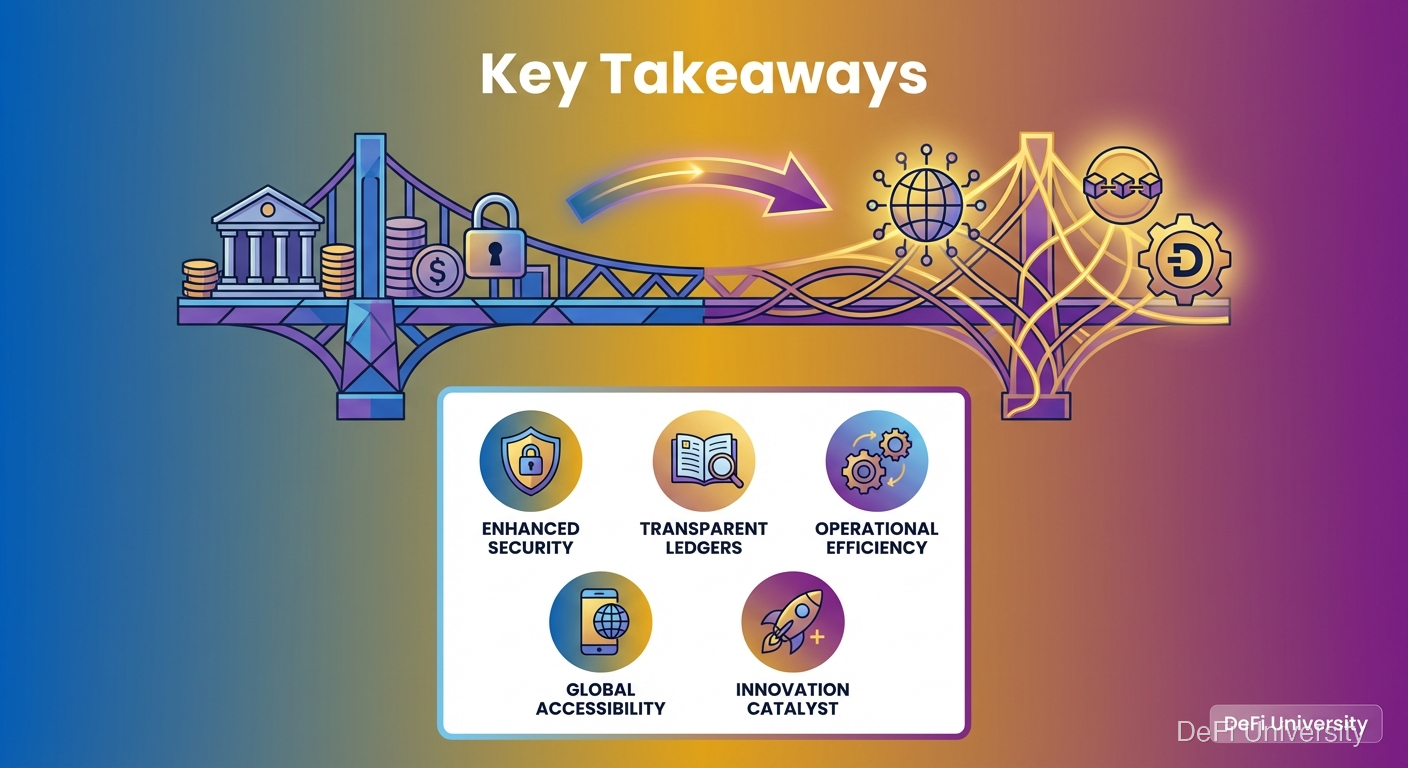
Summary

Key Takeaways

  • DeFi lending lets you earn interest by depositing crypto into lending pools

  • Borrowing requires overcollateralization—deposit more value than you borrow

  • No credit checks or applications—smart contracts enforce rules automatically

  • Liquidation is automatic if collateral value drops below threshold

  • Use cases include maintaining exposure, tax efficiency, and accessing different assets

  • Significant risks exist—liquidation, smart contract bugs, and rate volatility

Last updated