Lesson 1: No Middleman Required
🎧 Lesson Podcast
🎬 Video Overview
No Middleman Required
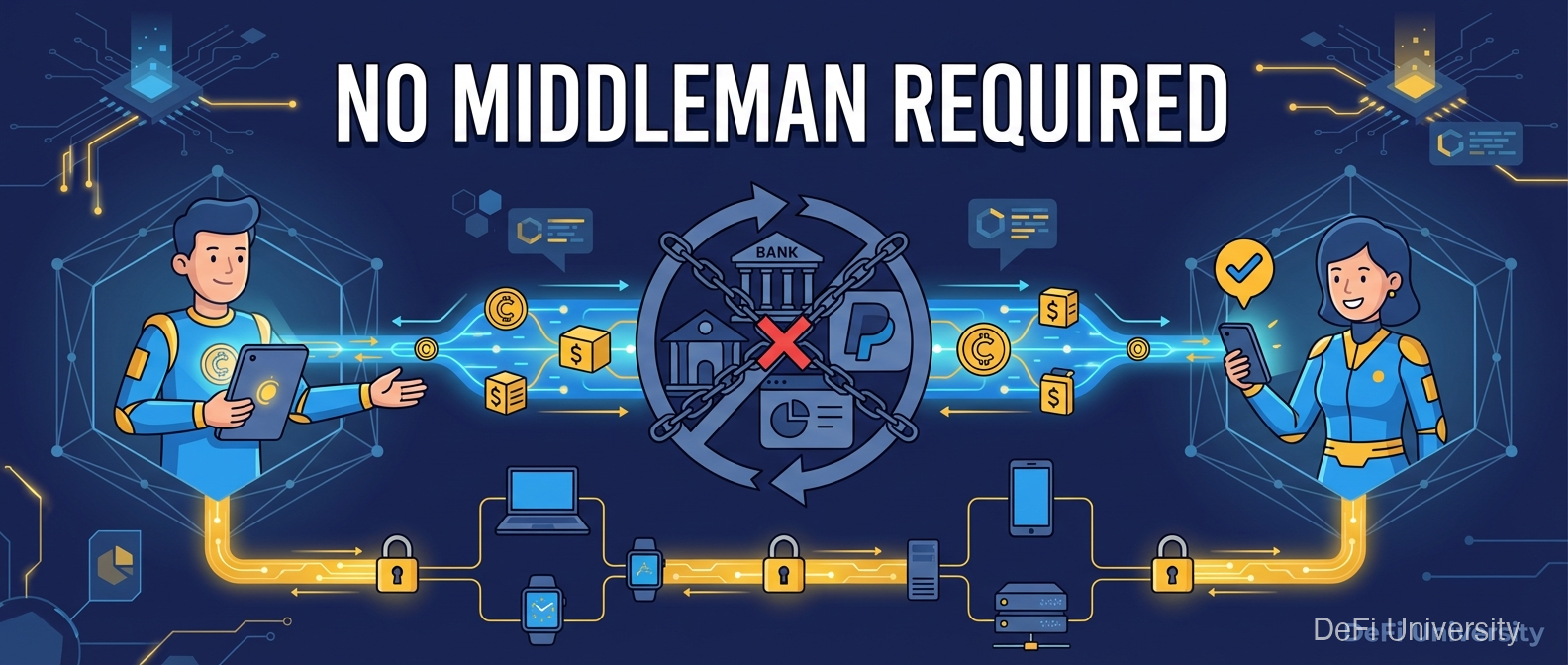
Core concept: Cryptocurrency lets you send value directly to another person without needing a bank, PayPal, or any company in the middle.
The Vending Machine vs. The Bank Teller
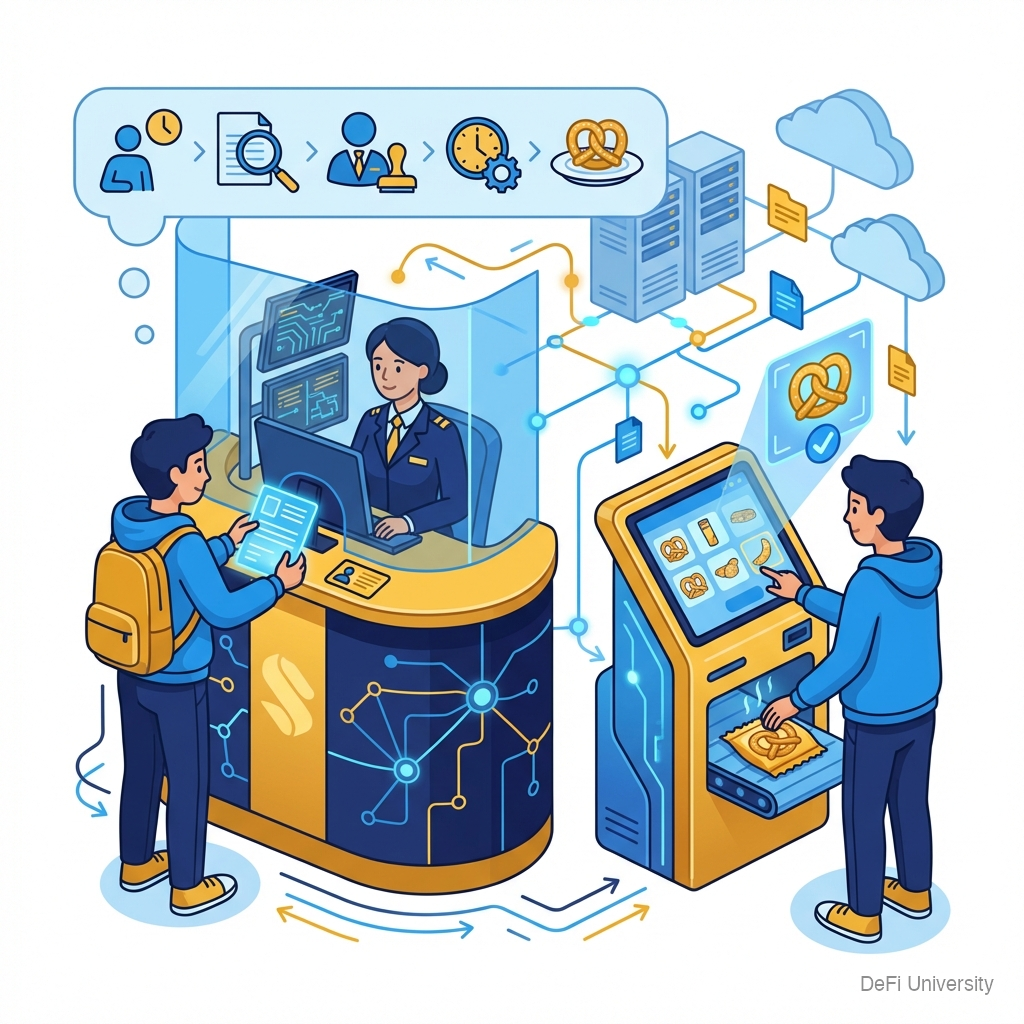
Picture two ways to get a snack:
Option A (Bank Teller): Walk up to a counter. Fill out a form. Show your ID. Wait for someone to check your information. Wait for them to get approval. Wait while they process your request. Finally receive your snack. Come back Monday if you arrive after 5 PM.
Option B (Vending Machine): Walk up. Put in money. Press button. Get snack. Done. Works at 3 AM. Works on holidays. Works whether anyone approves of your snack choice.
Traditional banking is like Option A. Every transaction needs permission, processing, and people in the middle.
Cryptocurrency is like Option B. The rules are built into the system. If you meet the requirements (you have the funds, you enter the right address), the transaction happens. No approval needed. No business hours. No one to say no.
What "Peer-to-Peer" Really Means
When crypto people say "peer-to-peer," they mean direct person-to-person transactions.
Traditional transfer: You → Your Bank → Payment Network → Their Bank → Them
Each arrow is a company that can say "no," charge fees, or delay things.
Crypto transfer: You → Them
The blockchain handles the record-keeping, but no company sits between you and the recipient with power to block, reverse, or charge extra.
It's the difference between handing someone cash directly versus going through multiple intermediaries. Crypto recreates the directness of cash, but digitally and globally.
Why Middlemen Exist (And What They Cost)
Middlemen aren't useless. Banks provide:
Fraud protection
Account recovery if you forget passwords
Dispute resolution
Insurance on deposits
These services have value. They also have costs:
Fees (explicit and hidden)
Delays (processing time)
Restrictions (who can participate)
Control (they can freeze accounts)
Cryptocurrency makes a different trade-off: you get directness and control, but you're responsible for your own security. No one can freeze your account—but no one can recover it if you lose access either.
Neither approach is universally better. They're different tools for different situations.
Real-World Impact
Removing middlemen matters most when middlemen are:
Slow: International transfers that take days can happen in minutes.
Expensive: Remittance fees of 5-10% for sending money abroad can drop to under 1%.
Restrictive: People without bank accounts (1.4 billion adults globally) can participate in the financial system with just a smartphone.
Risky: In countries with unreliable banks or governments, having money outside institutional control matters.
For someone in a stable country with good banking, the middleman cost might be acceptable. For someone in an unstable country paying 8% to send money home to family, middleman-free transfers are life-changing.
The Trade-Off You're Making
Without middlemen, you gain:
Speed (minutes, not days)
Lower fees (often)
Access (no applications or approvals)
Control (no one can freeze your funds)
Without middlemen, you lose:
Fraud protection (transactions are irreversible)
Account recovery (lose your keys, lose everything)
Dispute resolution (no one to complain to)
Simplicity (more responsibility on you)
This trade-off is the fundamental choice of cryptocurrency. The rest of this course will help you understand how it works, so you can decide when it makes sense for you.
Key Takeaways
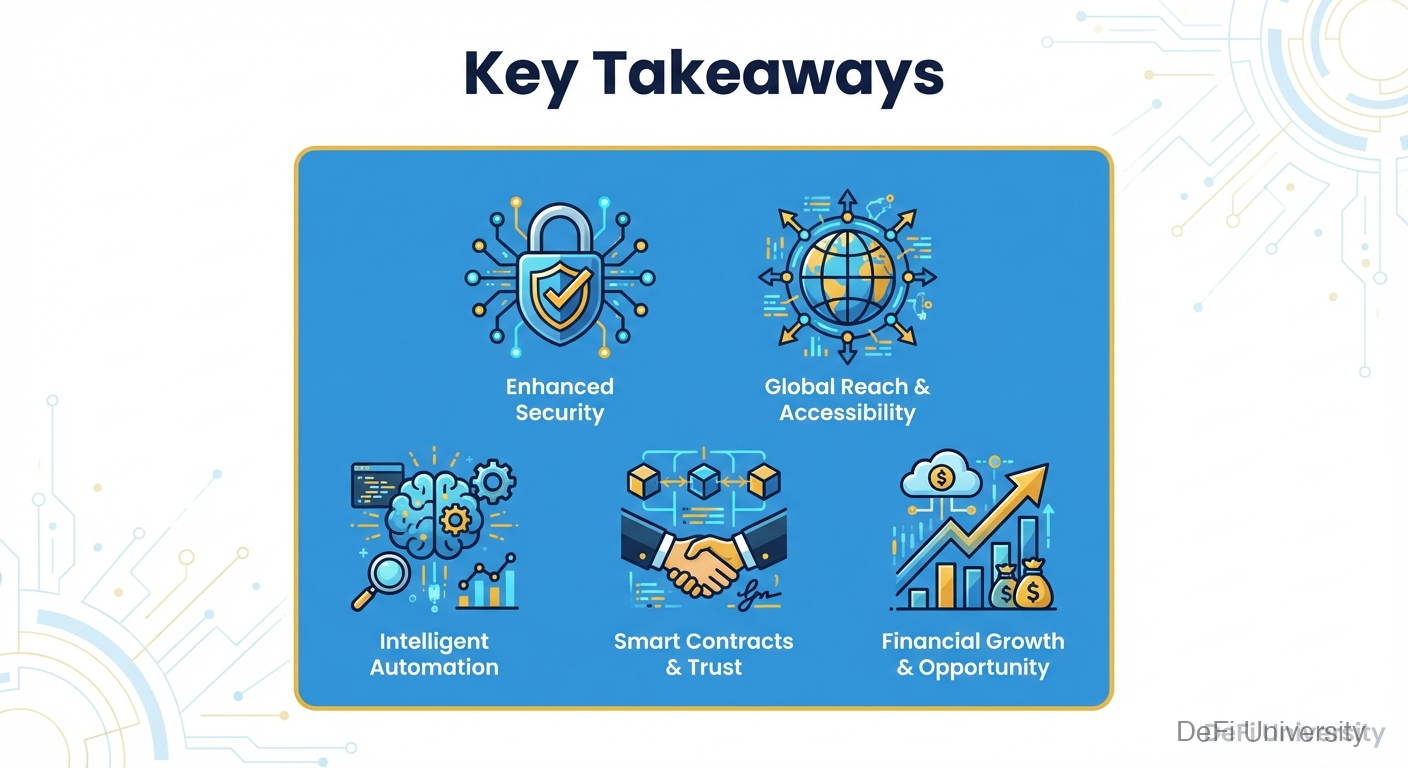
Cryptocurrency removes financial middlemen—no banks or companies sit between sender and receiver
Peer-to-peer means direct—You → Them, not You → Bank → Bank → Them
Middlemen provide services but add costs—fees, delays, restrictions, and control
Different people value this differently—the unbanked care more than the well-banked
It's a trade-off, not a free lunch—more control means more responsibility
Last updated