Lesson 10: Public Keys and Addresses
🎧 Lesson Podcast
🎬 Video Overview
Public Keys and Addresses
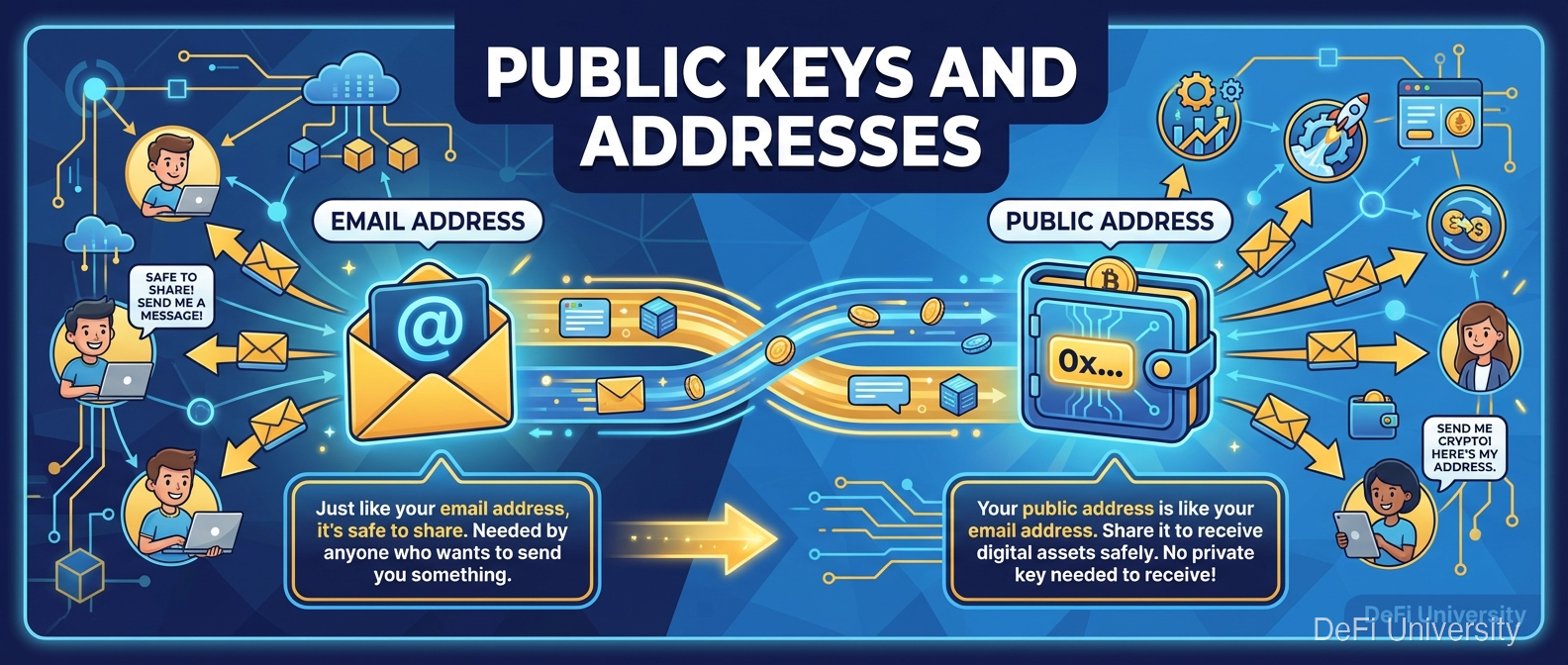
Core concept: Your public address is like your email address—safe to share, needed by anyone who wants to send you something.
Email Address vs. Email Password
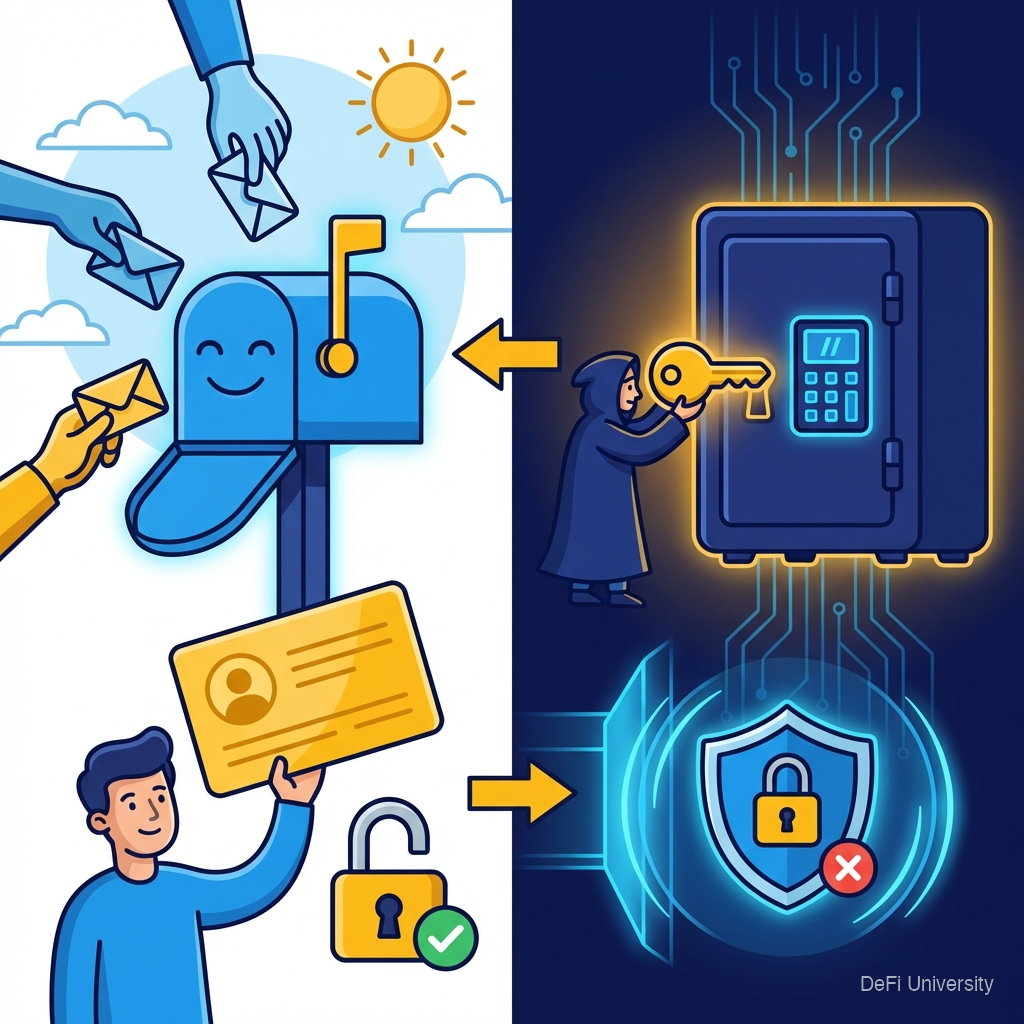
Your email has two components:
Email address (e.g., [email protected]):
Safe to share publicly
Anyone can send you messages using it
Knowing it doesn't let them read your emails
You print it on business cards
Email password:
Must be kept secret
Gives full access to your account
Sharing it is a security disaster
Crypto works similarly:
Public address:
Safe to share publicly
Anyone can send you crypto using it
Knowing it doesn't let them spend your crypto
You share it to receive payments
Private key:
Must be kept secret
Gives full access to your funds
Sharing it means losing everything
What Addresses Look Like
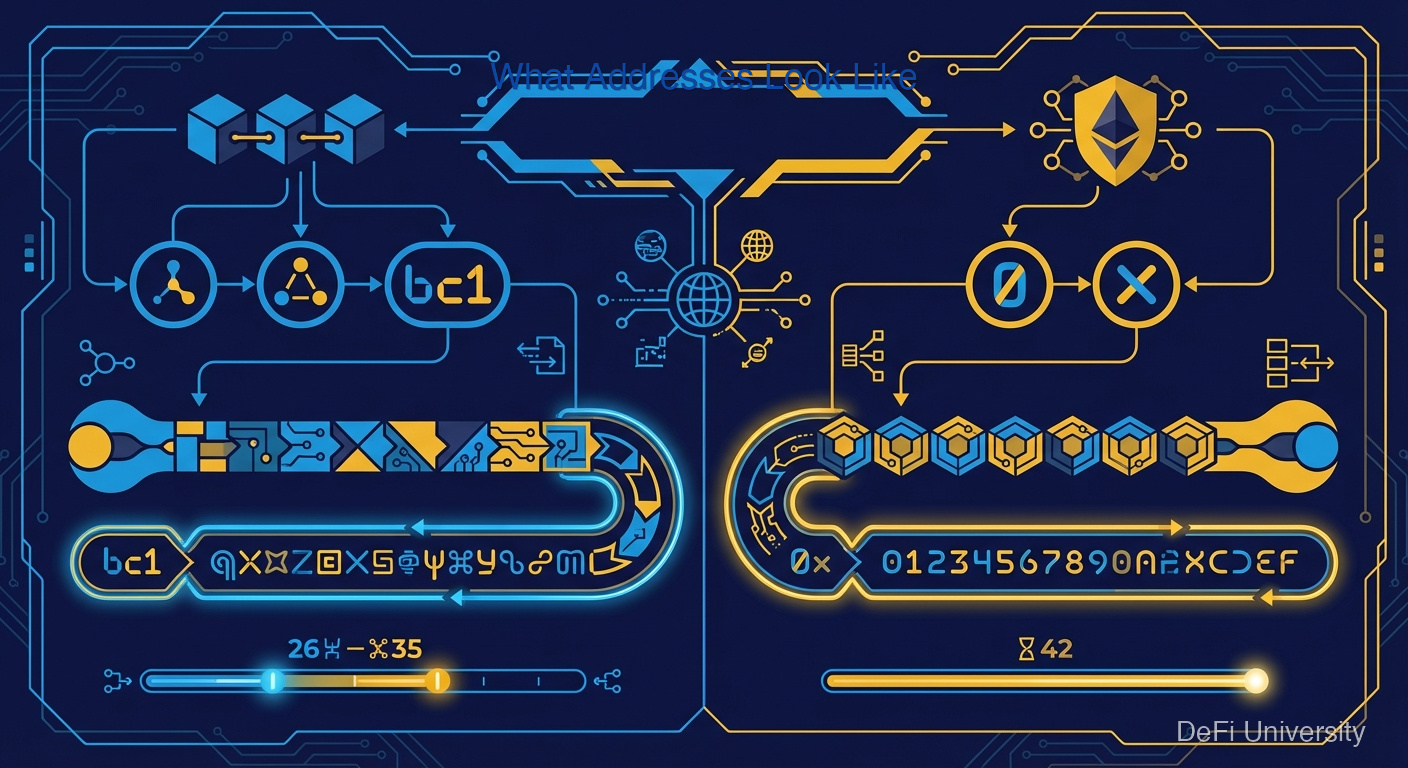
Different blockchains have different address formats:
Bitcoin:
Starts with 1, 3, or bc1
Example: bc1qxy2kgdygjrsqtzq2n0yrf2493p83kkfjhx0wlh
26-35 characters
Ethereum (and compatible chains):
Starts with 0x
Example: 0x71C7656EC7ab88b098defB751B7401B5f6d8976F
Always 42 characters
Solana:
Base58 encoded
Example: 7xKXtg2CW87d97TXJSDpbD5jBkheTqA83TZRuJosgAsU
32-44 characters
The format tells you what blockchain the address belongs to. Sending to the wrong type of address = lost funds (usually).
Addresses Are One-Way
The security of crypto relies on one-way mathematical functions:
From private key, you can calculate public key and address
From address, you CANNOT calculate public key or private key
From public key, you CANNOT calculate private key
This is like how you can crack an egg but can't uncrack it. The math is easy in one direction, practically impossible in reverse.
This means:
Sharing your address reveals nothing dangerous
Someone watching the blockchain sees addresses but can't derive private keys
Your funds remain secure even though your address is public
Address Privacy Considerations
While sharing your address is safe cryptographically, there are privacy implications:
Blockchain is public: Anyone can see all transactions to/from any address. If they know your address, they can see your balance and transaction history.
Address linking: If someone knows one of your addresses and sees you send to another, they might figure out both are yours.
Real-world connections: If you receive payment from someone, they now know at least one of your addresses and can see related activity.
This is why many people:
Generate new addresses for each transaction
Use multiple wallets for different purposes
Consider privacy-focused cryptocurrencies for sensitive transactions
Addresses vs. Usernames
Some services offer human-readable addresses:
ENS (Ethereum Name Service): Instead of 0x71C765... you can register "yourname.eth"
Similar services exist on other chains (Solana Name Service, etc.)
These work like domain names—easy to remember, resolve to the underlying address. But they're optional additions, not replacements for the cryptographic address underneath.
Checking Addresses Carefully
When sending crypto, always verify addresses carefully:
Copy-paste carefully: Malware exists that swaps addresses in your clipboard
Double-check first and last characters: Most people verify just these
Use QR codes when possible: Reduces typing/copy errors
Send small test amount first: Especially for large transfers
Unlike bank transfers, crypto transactions are irreversible. Wrong address = lost funds, usually permanently.
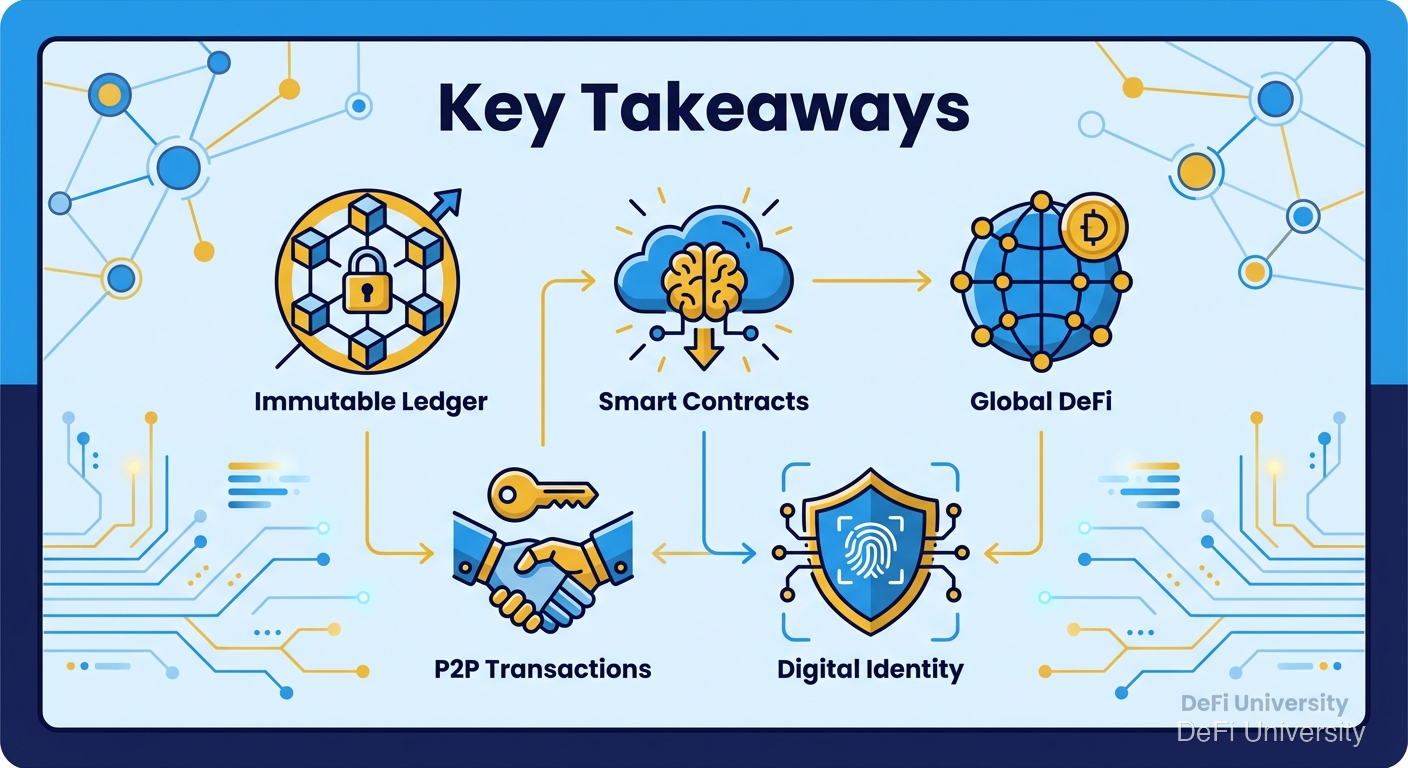
Key Takeaways
Public addresses are like email addresses—safe to share, needed to receive funds
Different blockchains have different address formats—sending to wrong format = lost funds
Addresses are one-way derived—from private key, not reversible
Blockchain is public—anyone can see transactions to/from known addresses
Human-readable names (ENS) can map to addresses but are optional
Always verify addresses carefully—mistakes are usually irreversible
Last updated