Lesson 6: How Transactions Get Verified
🎧 Lesson Podcast
🎬 Video Overview
How Transactions Get Verified
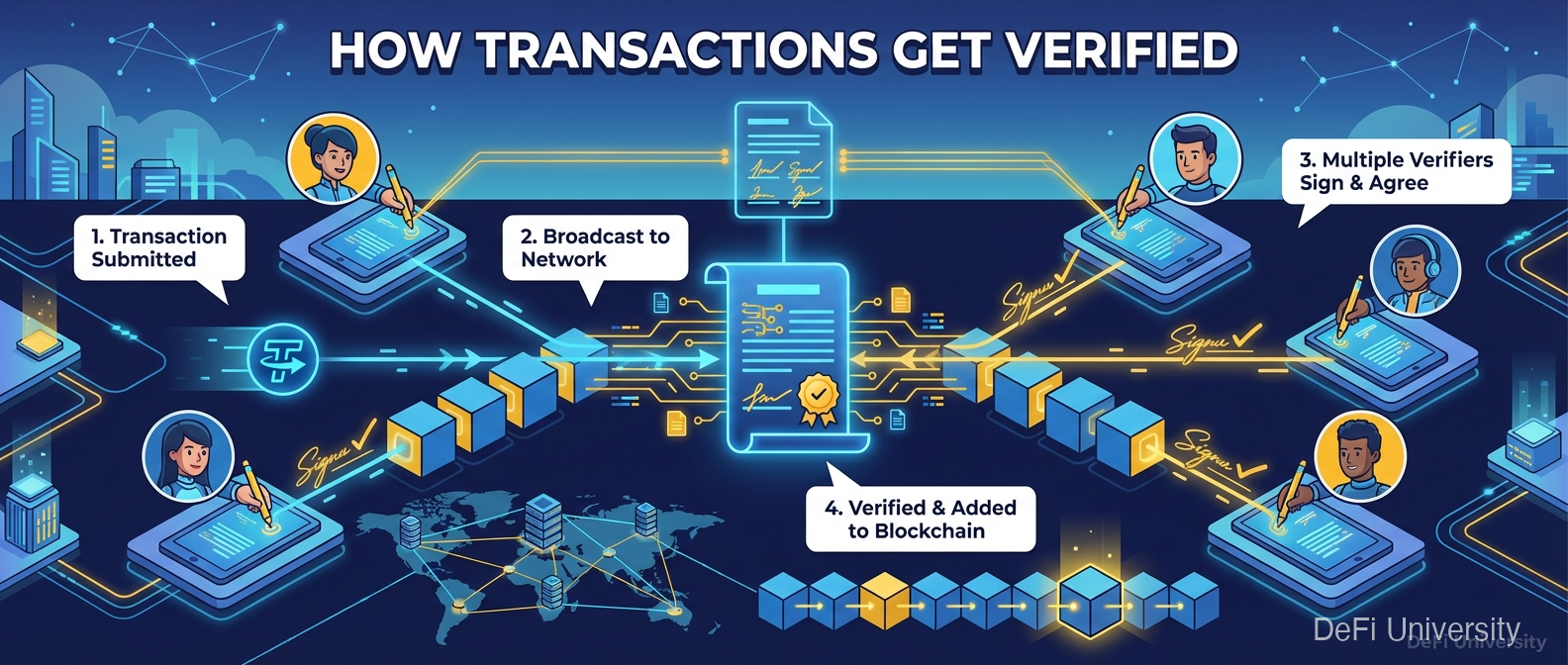
Core concept: Blockchain transactions are verified by multiple independent parties agreeing on what happened—like having multiple witnesses sign a document.
Multiple Witnesses Signing a Document

Imagine you're signing an important contract. Instead of one notary, you have 1,000 independent notaries who all:
Watch you sign
Check that your signature is valid
Record the signing in their own records
Compare notes with each other
For the contract to be "official," the majority of these witnesses must agree it happened correctly. No single witness can fake your signature because all the others would notice and disagree.
This is how blockchain verification works. Many independent parties (called validators or miners) check every transaction. Only when enough of them agree does the transaction become "confirmed."
What Gets Checked
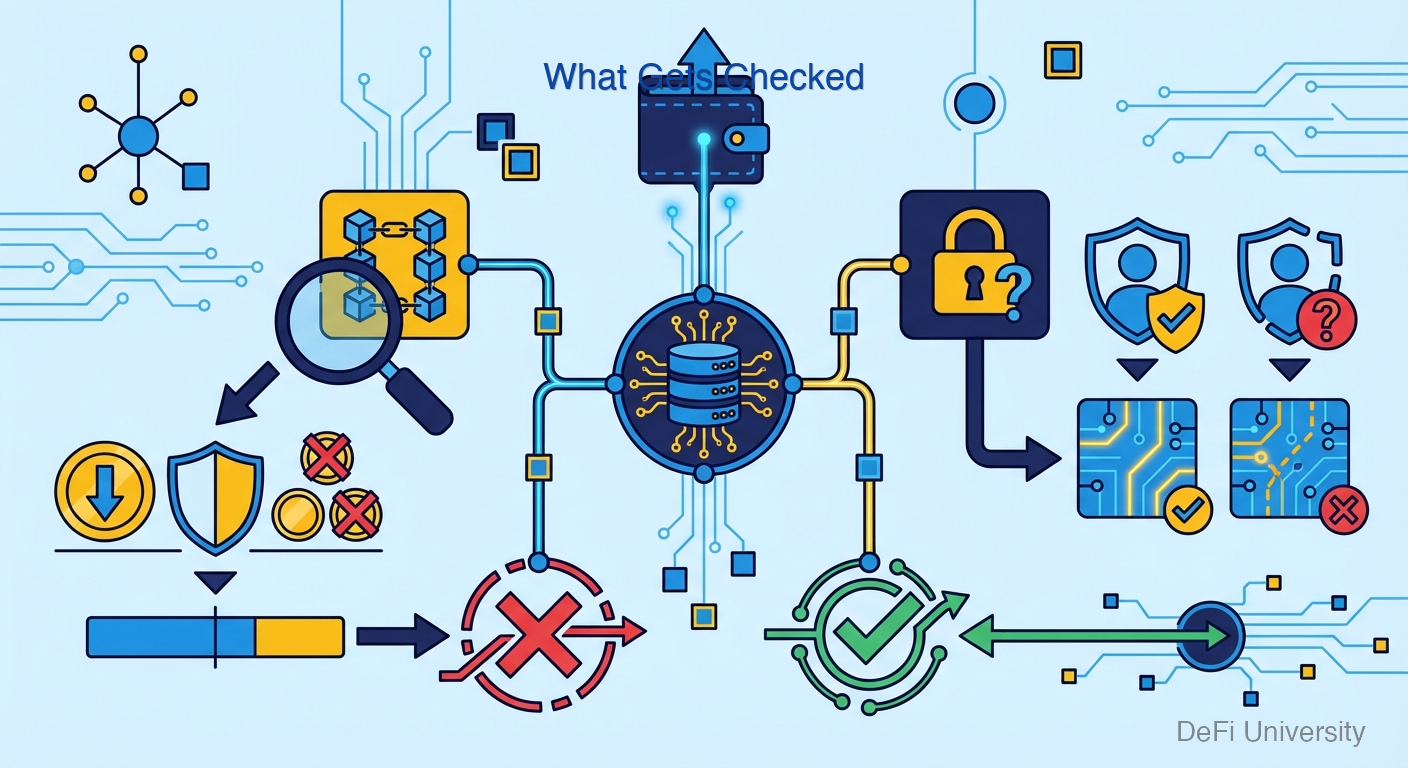
When you send cryptocurrency, validators verify:
Do you have enough? They check your address's balance in the blockchain history. If you're trying to send 5 BTC but only have 2 BTC, the transaction is rejected.
Is your authorization valid? The transaction includes a cryptographic signature proving you control the sending address. Validators verify this signature matches the public key.
Are there any conflicts? They check that you're not trying to spend the same funds twice (called "double-spending"). This is the core problem blockchain solves.
Does it follow the rules? Each blockchain has rules (like maximum transaction size). Validators ensure transactions comply.
Proof of Work: Bitcoin's Approach
Bitcoin uses "Proof of Work" for verification. Here's the simple version:
Miners are people running powerful computers that:
Collect pending transactions into a block
Race to solve a mathematical puzzle
The winner adds their block to the chain
The winner gets newly created Bitcoin as reward
The puzzle requires enormous computing power to solve but is easy to verify once solved. This makes cheating expensive (you'd need more computing power than everyone else combined) while keeping verification cheap.
Downsides: Uses significant electricity. Can be slow. Limited transactions per second.
Proof of Stake: Ethereum's Approach
Ethereum (and many newer blockchains) use "Proof of Stake":
Validators put up cryptocurrency as collateral ("stake"). They:
Get chosen to propose blocks (probability based on stake size)
Verify transactions and create blocks
Other validators check their work
Earn rewards for honest behavior
Lose stake if they act maliciously
The security comes from having "skin in the game." Cheating means losing your staked funds, which could be worth millions.
Upsides: Far less energy use. Faster. Can handle more transactions.
Downsides: Critics argue it favors the wealthy. Different security assumptions.
Why Multiple Verification Matters
Traditional verification relies on trusting one party (your bank). Problems:
Single point of failure
Must trust they're honest
Must trust they're competent
If compromised, whole system fails
Blockchain verification distributes trust across thousands of parties:
No single point of failure
Don't need to trust any individual
Majority must be honest (easier threshold)
Compromising the system requires compromising the majority
It's the difference between trusting one security guard versus having a crowd where any witness can blow the whistle.
Confirmation Times and Finality
After your transaction is included in a block, you wait for "confirmations":
1 confirmation: Included in most recent block. Good for small amounts.
3-6 confirmations: Standard for medium amounts. Very unlikely to be reversed.
12+ confirmations: High security for large amounts. Reversing would be practically impossible.
Each new block added makes reversing old blocks harder. Time = security.
Different blockchains have different confirmation times:
Bitcoin: ~10 minutes per block
Ethereum: ~12 seconds per block
Solana: ~0.4 seconds per block
Faster isn't always better—there are trade-offs between speed and security.
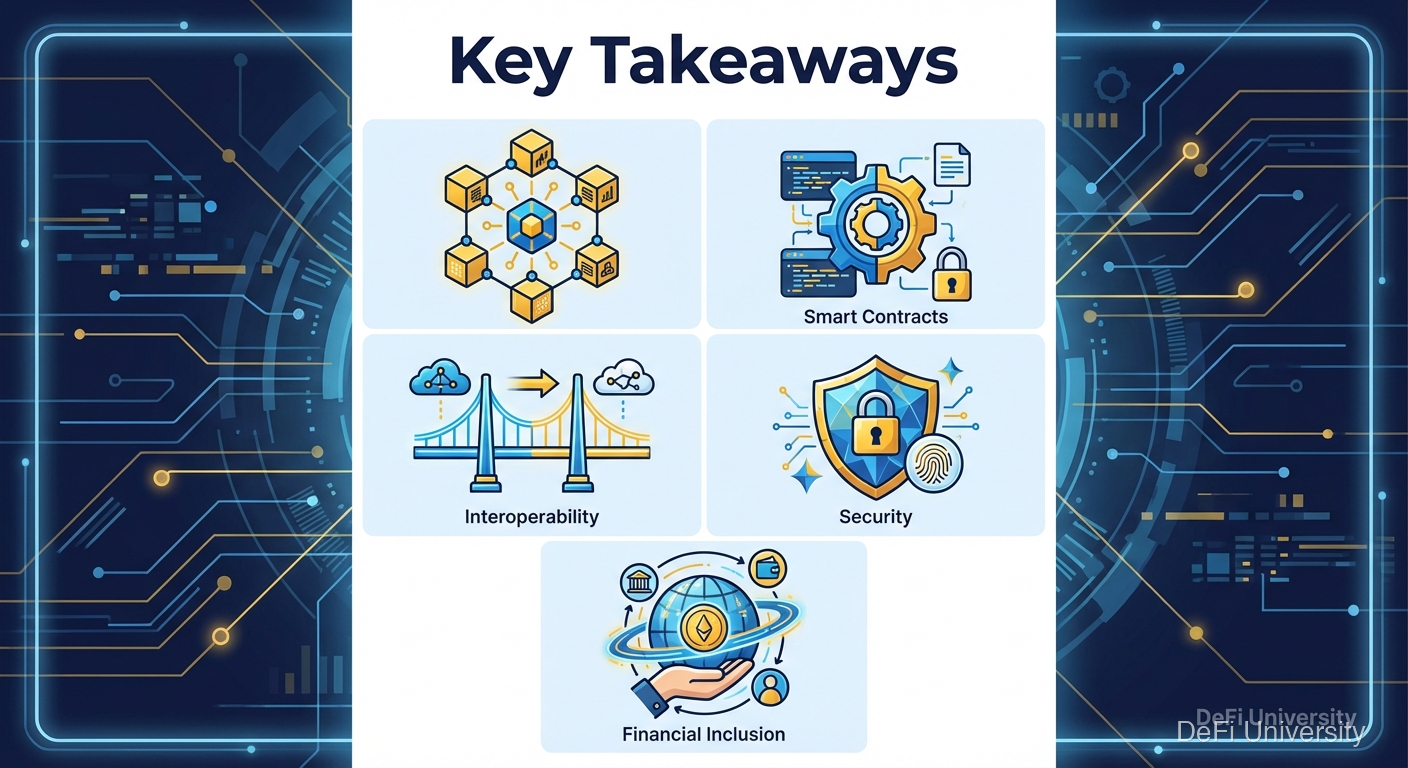
Key Takeaways
Transactions are verified by many independent parties reaching consensus, not a single authority
Validators check: funds available, valid signature, no double-spending, rule compliance
Proof of Work (Bitcoin): Miners compete by solving puzzles, expensive to cheat
Proof of Stake (Ethereum): Validators stake collateral, lose it if they cheat
Multiple confirmations increase security—more blocks = harder to reverse
Different blockchains make different speed/security trade-offs
Last updated