Lesson 2: True Ownership Explained
🎧 Lesson Podcast
🎬 Video Overview
True Ownership Explained

Core concept: With cryptocurrency you can own and control, you actually hold the asset—like cash in your pocket—rather than an IOU from a company.
Cash in Your Pocket vs. Money in a Vault
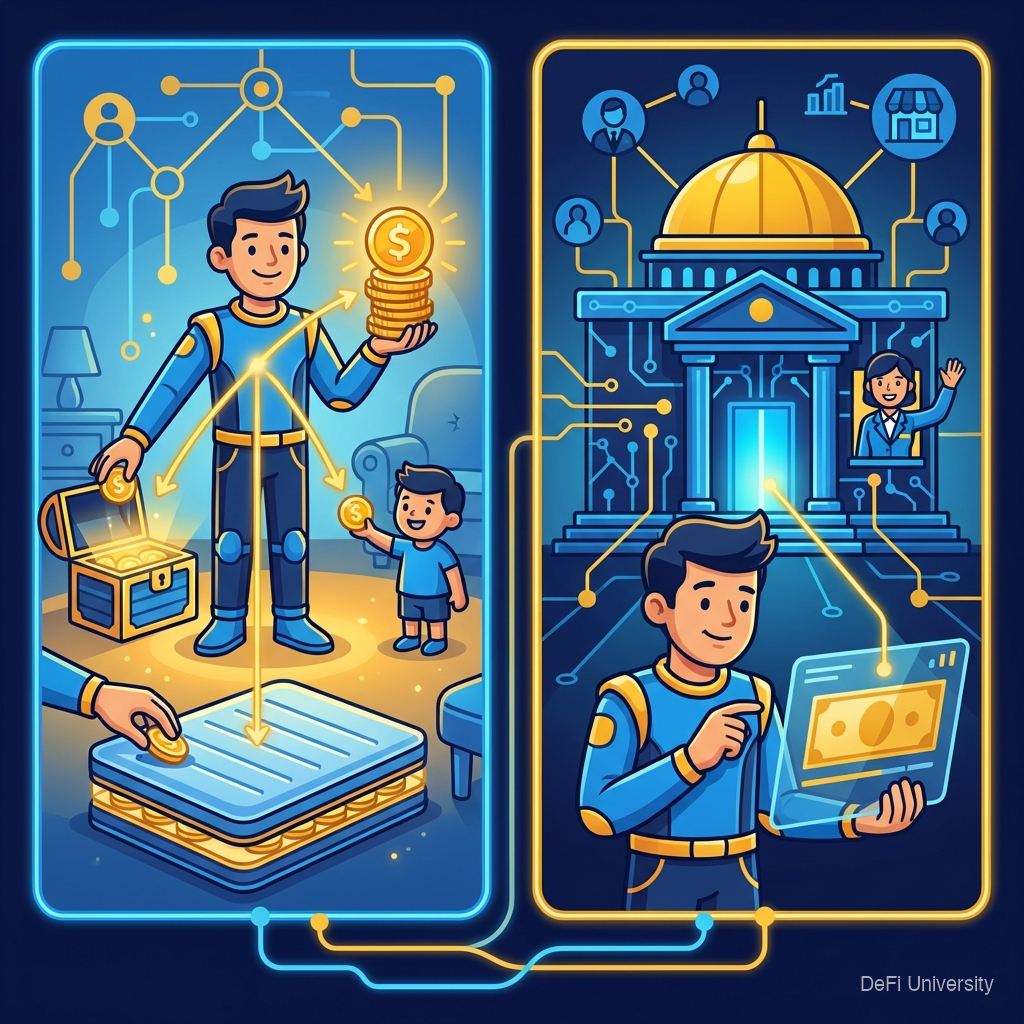
Imagine two scenarios:
Scenario A: You have $100 cash in your pocket. It's yours. You can spend it, give it away, or hide it under your mattress. No one can stop you.
Scenario B: You have $100 in a bank account. The bank holds your money in their vault. You can usually access it, but sometimes:
The ATM is down
The bank is closed
There's a limit on daily withdrawals
Your account gets flagged for "suspicious activity"
The bank decides to close your account
In Scenario A, you have possession. In Scenario B, you have a promise.
Cryptocurrency can work like Scenario A—but digitally. When you hold crypto in your own wallet, you have the actual asset, not someone's promise to give it to you.
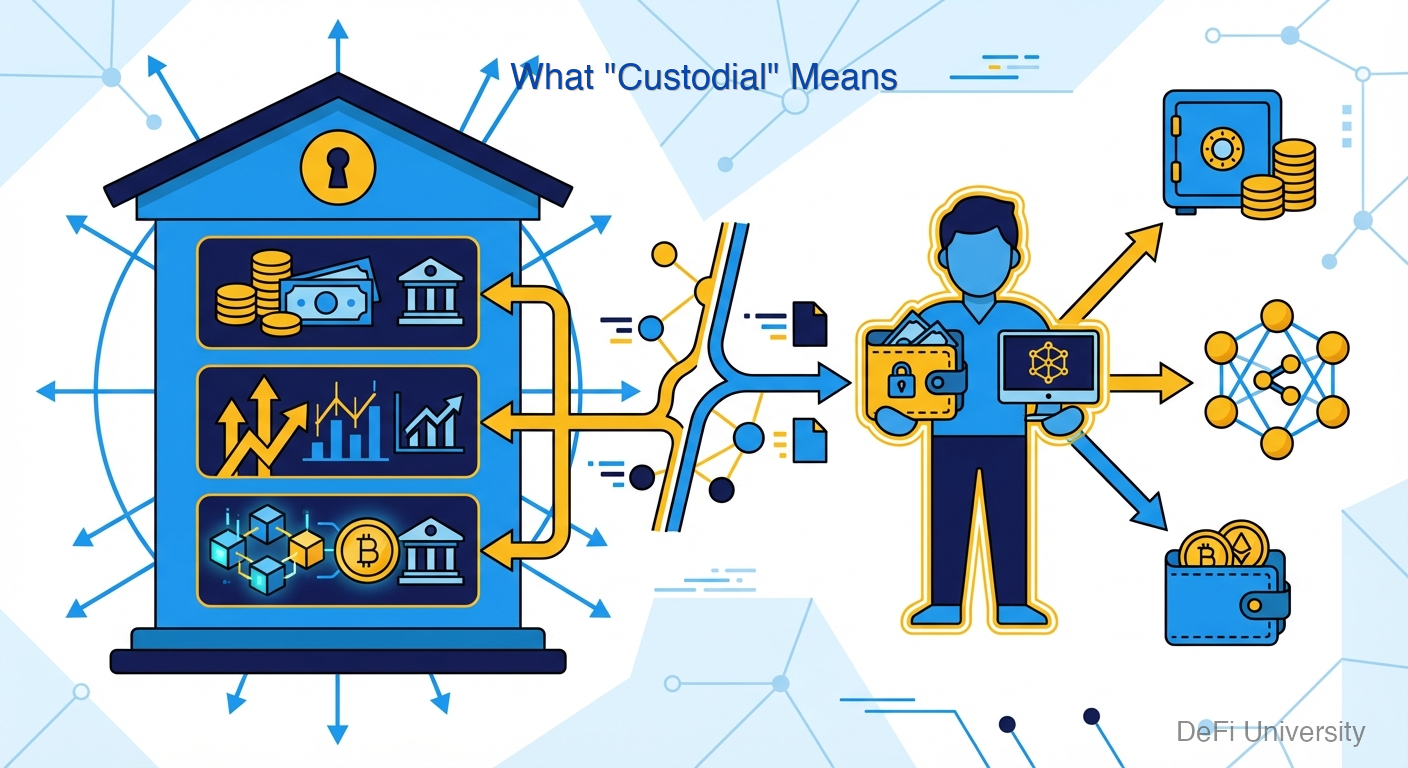
What "Custodial" Means
In finance, "custody" means holding assets on someone's behalf.
Custodial: Someone else holds your stuff. Banks are custodians of your money. Stock brokers are custodians of your shares. Crypto exchanges can be custodians of your crypto.
Self-Custodial (or Non-Custodial): You hold your own stuff. Cash in your pocket. Gold in your safe. Crypto in your own wallet with keys only you control.
When people say crypto enables "true ownership," they mean self-custody—you hold the actual asset, not an IOU.
The Exchange Trap
Here's something that confuses newcomers:
Buying crypto on an exchange (Coinbase, Kraken, Binance) and leaving it there is not self-custody. The exchange holds your crypto, just like a bank holds your money.
Your "balance" on an exchange is their promise to give you that crypto when you ask. If the exchange:
Gets hacked → your funds may be gone
Goes bankrupt → you're a creditor in line
Freezes your account → you can't access your funds
Gets shut down by regulators → complicated legal situation
This isn't theoretical. The crypto exchange FTX collapsed in 2022, and customers lost billions. The exchange Mt. Gox was hacked in 2014, and some customers are still trying to recover funds a decade later.
The crypto community saying "not your keys, not your coins" exists because of these disasters.
What True Ownership Looks Like
True crypto ownership means:
You control the private keys. A private key is like a password that can never be changed or recovered. Whoever has it controls the crypto.
No one can stop you. No company, government, or hacker with access to a company's systems can prevent you from using your funds.
No one can recover it for you. If you lose your keys, there's no customer support to call. This is the price of true ownership.
It's bearer-like. Similar to cash or gold, possession (of the keys) is ownership. There's no title registry or account system determining who owns what—you prove ownership by having the keys.
The Responsibility Shift
True ownership shifts responsibility from institutions to you:
Bank stores your money
You store your keys
Bank secures against theft
You secure against theft
Bank can recover your access
No recovery possible
Bank can freeze your account
No one can freeze it
Bank is liable if hacked
You're liable if hacked
This isn't better or worse—it's different. Some people want institutions handling security. Others want full control.
Many people use both: exchanges for convenience and trading, self-custody wallets for long-term storage.
Why This Matters
True ownership matters when:
You don't trust institutions (by choice or because institutions in your country are unreliable)
You want censorship resistance (no one can block your transactions)
You're storing significant value (higher stakes = more reason for direct control)
You want privacy (self-custody can be more private than accounts)
True ownership matters less when:
Convenience is priority (exchanges are easier)
You're learning (mistakes are more costly with self-custody)
You're trading frequently (keeping funds on exchanges is practical)
Understanding the difference helps you make informed choices about where to keep your crypto.

Key Takeaways
True ownership means holding the actual asset, not an IOU or promise
Self-custody = you control the keys, which means full control and full responsibility
Exchanges are custodians—leaving crypto there means trusting them, similar to trusting a bank
"Not your keys, not your coins" reflects real history of exchange failures
There's a trade-off: more control means more responsibility for security
Most people use a mix of custodial and self-custodial depending on needs
Last updated