Lesson 1: What is a Crypto Exchange?
🎧 Lesson Podcast
🎬 Video Overview
Lesson 1: What is a Crypto Exchange?
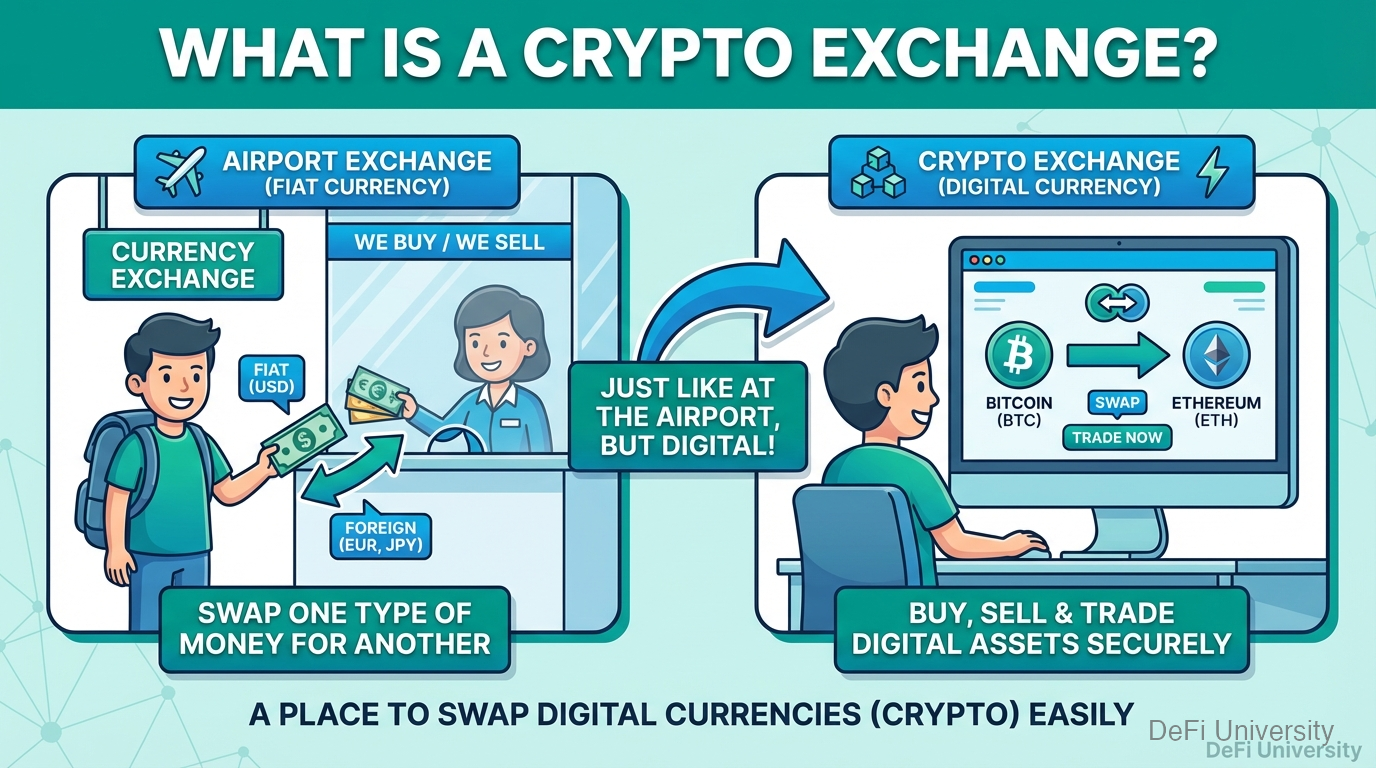
Core concept: A cryptocurrency exchange is like a currency exchange at the airport—a place to swap one type of money for another.
Currency Exchange at the Airport
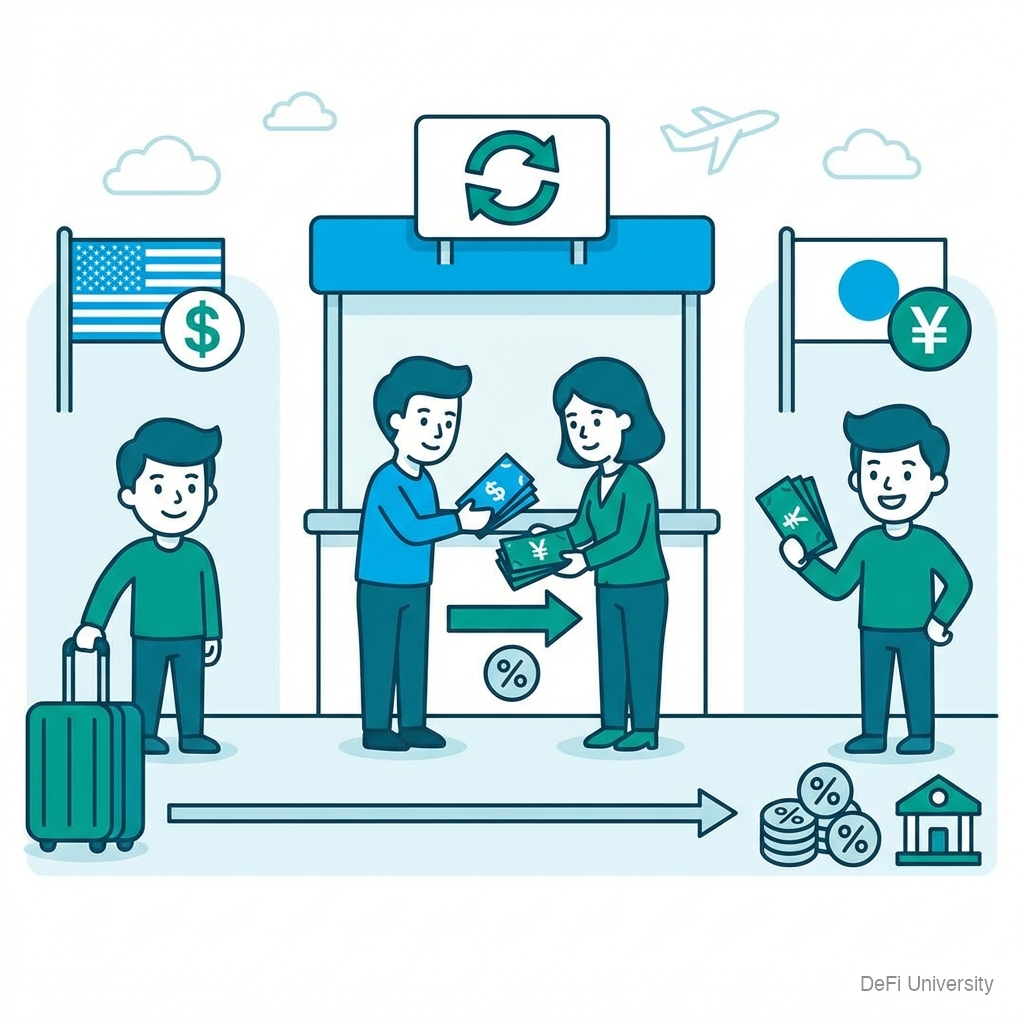
You're traveling from the US to Japan. At the airport, you find a currency exchange booth:
You hand them US dollars
They give you Japanese yen
They charge a fee for the service
They set the exchange rate
Cryptocurrency exchanges work similarly:
You give them regular money (dollars, euros)
They give you cryptocurrency (Bitcoin, Ethereum)
They charge fees for the service
They determine exchange rates based on supply and demand
The main difference? Crypto exchanges are digital platforms, not physical booths.
What Exchanges Actually Do
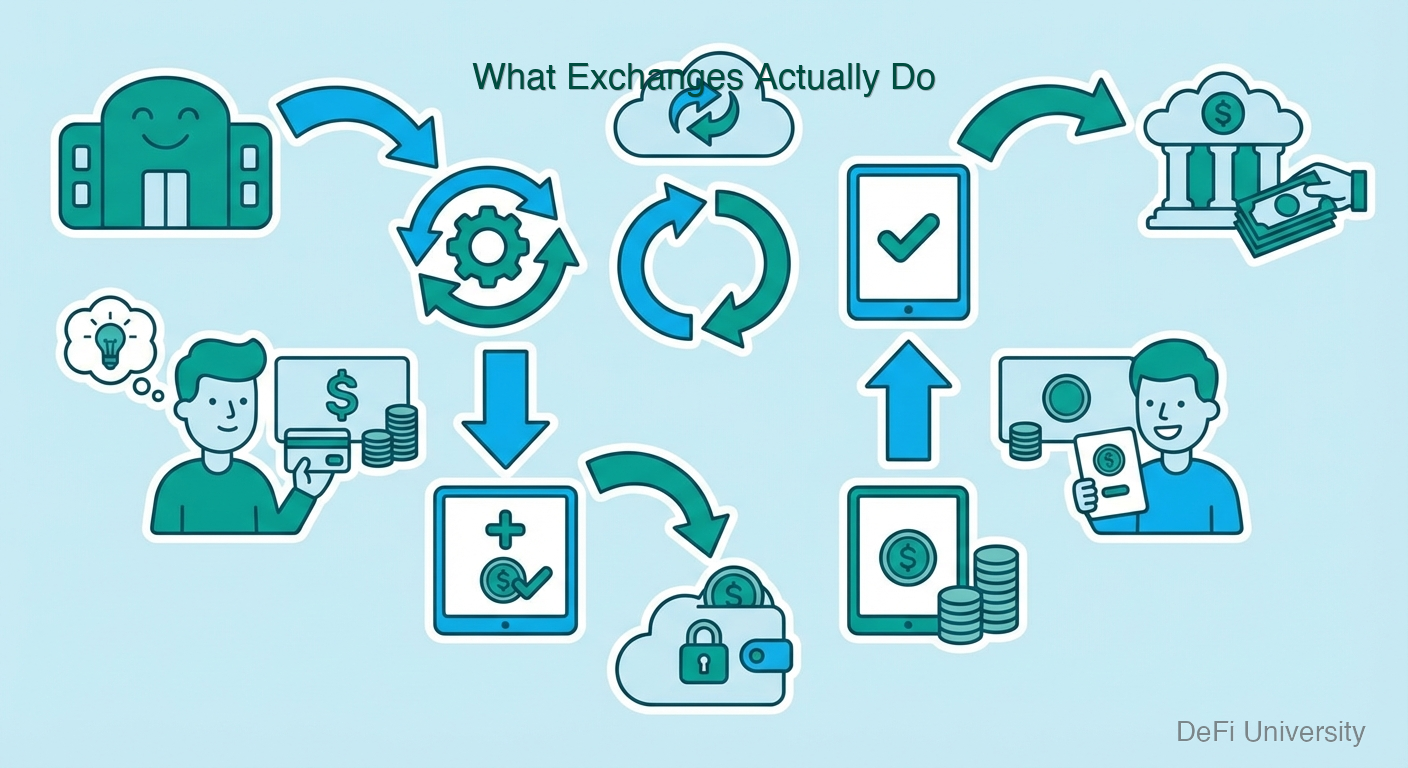
Exchanges provide several services:
Buy crypto with regular money: The primary function for newcomers. Connect your bank or card, purchase cryptocurrency.
Sell crypto for regular money: The reverse—convert your crypto back to traditional currency when needed.
Trade crypto for crypto: Swap Bitcoin for Ethereum, Ethereum for Solana, etc.
Hold your crypto: Exchanges provide wallets to store what you buy (though self-custody is generally recommended for significant amounts).
Price discovery: By matching buyers and sellers, exchanges establish what crypto is "worth" at any moment.
Centralized vs. Decentralized Exchanges
Two types of exchanges exist:
Centralized Exchanges (CEX)
Companies that operate like traditional brokerages.
Examples: Coinbase, Kraken, Binance, Gemini
How they work:
Create an account (with identity verification)
Deposit money
The exchange matches your orders with other users
The exchange holds your funds until you withdraw
Pros: Easy to use. Fiat on-ramps. Customer support. Familiar interface.
Cons: Requires identity verification. The exchange holds your keys. Can freeze accounts.
Decentralized Exchanges (DEX)
Smart contracts that enable direct wallet-to-wallet trading.
Examples: Uniswap, Jupiter, Raydium
How they work:
Connect your own wallet
Trade directly from your wallet
No account creation needed
You keep custody of your funds
Pros: No identity verification. You control your keys. Permissionless.
Cons: More complex. Can't buy with regular money directly. No customer support if you make mistakes.
For beginners: Start with centralized exchanges. Move to DEXs after you understand wallets and transactions.
Choosing an Exchange
When selecting a centralized exchange, consider:
Reputation: How long have they operated? Any major security incidents? What do users say?
Jurisdiction: Are they licensed in your country? Following regulations often means more protections.
Fees: What do they charge for buying, selling, withdrawing? Fees vary significantly.
Ease of use: Is the interface beginner-friendly? Some exchanges are designed for traders, others for newcomers.
Available cryptocurrencies: Do they support what you want to buy?
Security features: 2-factor authentication? Withdrawal confirmations? Cold storage for funds?
Fiat options: Do they accept your payment method? Bank transfer, credit card, etc.
Popular beginner-friendly options include Coinbase (US), Kraken, and Gemini—but research what's available and well-regarded in your country.
What Exchanges Are NOT
Common misconceptions:
Exchanges are not wallets: While they provide wallet-like functionality, leaving crypto on an exchange means trusting them with your keys.
Exchanges are not the blockchain: The exchange is an intermediary. Your crypto only truly moves to your control when withdrawn to your own wallet.
Exchanges are not regulated like banks: In most countries, crypto exchange deposits aren't insured like bank deposits. If the exchange fails, you might not get funds back.
All exchanges are not equal: Security, reliability, and customer service vary dramatically. Do your research.
Key Takeaways
Exchanges are platforms to buy, sell, and trade cryptocurrency
Like airport currency exchanges but digital and for crypto
Centralized exchanges (CEX) are companies that hold your funds—easier for beginners
Decentralized exchanges (DEX) are smart contracts—you keep custody but more complex
Choose carefully based on reputation, fees, security, and ease of use
Exchanges aren't wallets—consider withdrawing to your own wallet for significant amounts
Last updated