Lesson 7: What Are Gas Fees?
🎧 Lesson Podcast
🎬 Video Overview
Lesson 7: What Are Gas Fees
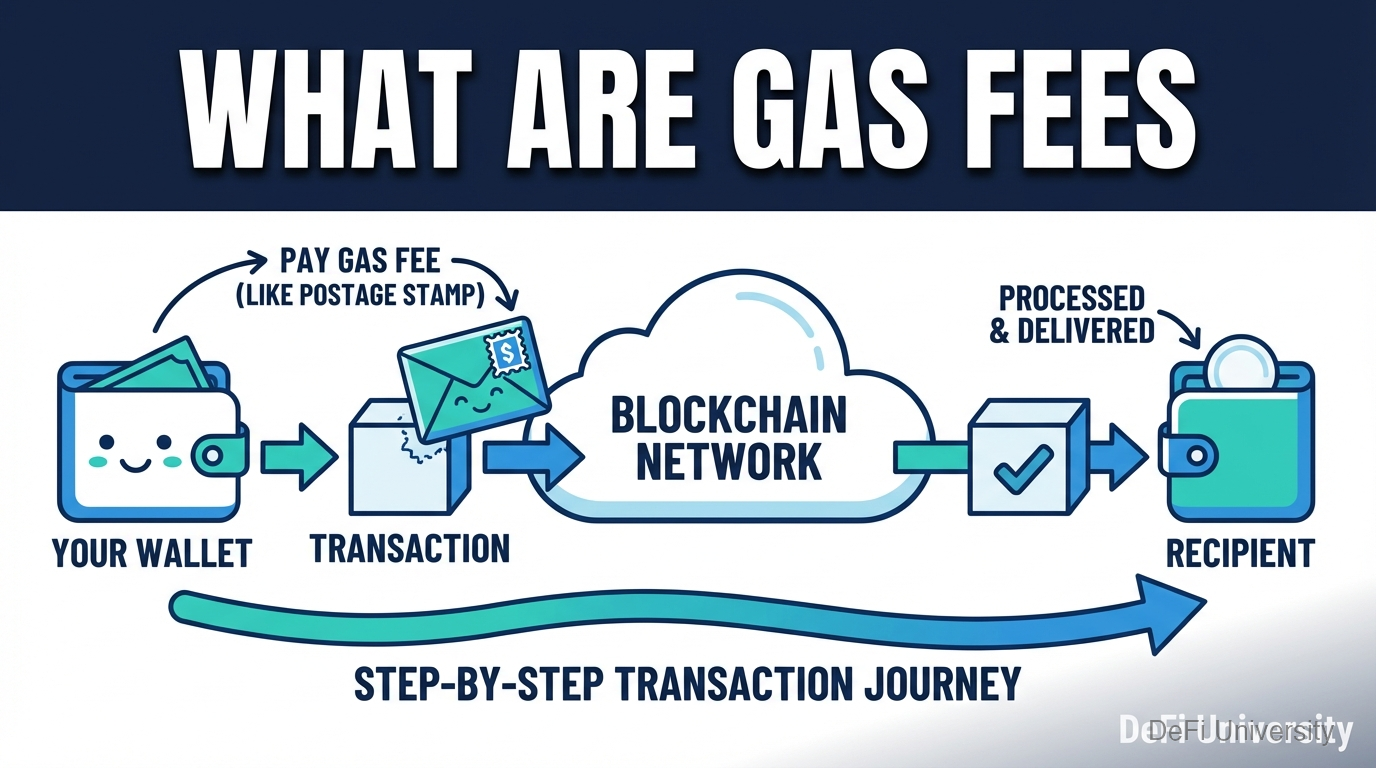
Core concept: Gas fees are like postage stamps for blockchain transactions—you pay them to get your transaction processed and delivered.
Postage Stamps for Transactions

When you mail a letter:
You buy a stamp based on size/weight
The stamp pays the postal service to deliver
Without a stamp, your letter doesn't move
Blockchain gas fees work similarly:
You pay a fee based on transaction complexity
The fee pays validators/miners to process your transaction
Without sufficient fees, your transaction doesn't process (or waits forever)
The name "gas" comes from the idea of fuel—like paying for gasoline to move your car, you pay gas to move your transaction.
Why Gas Fees Exist
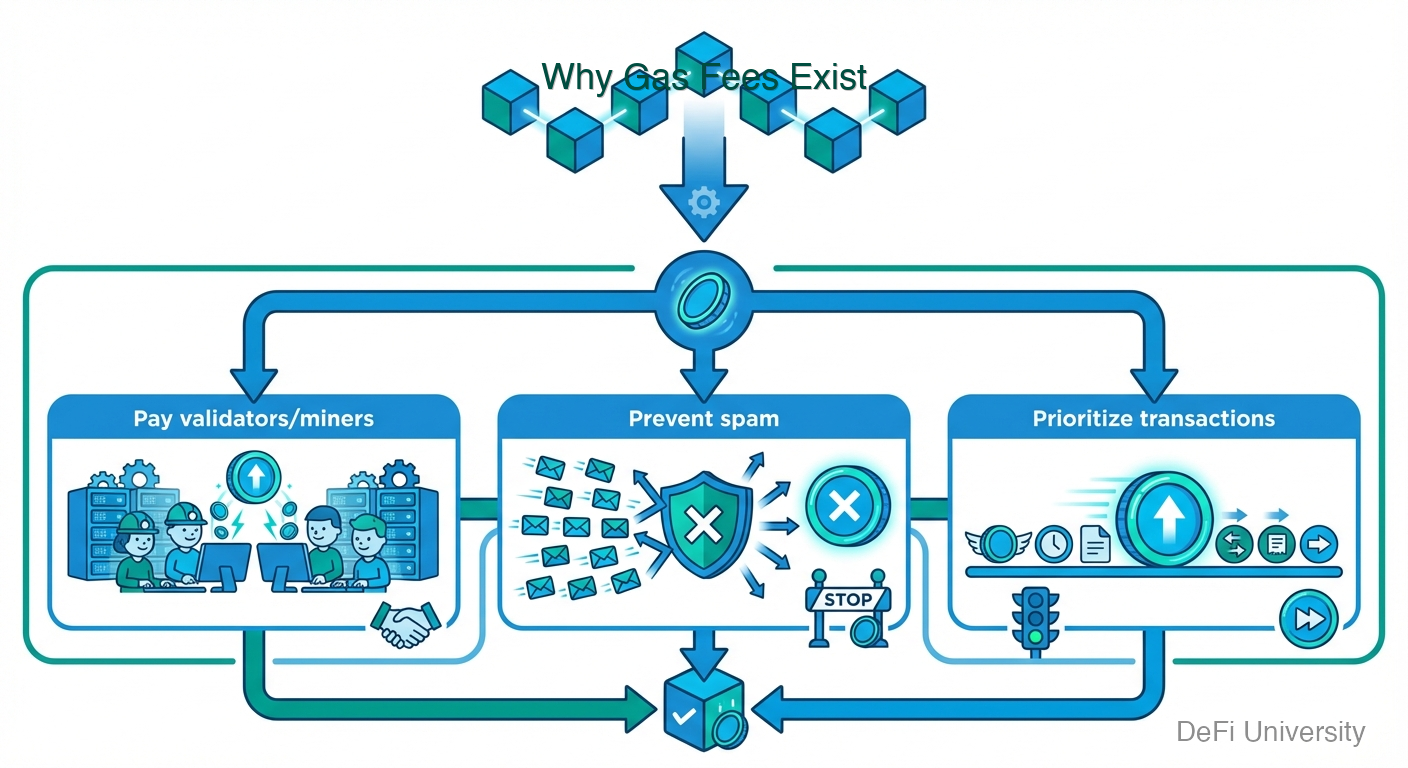
Blockchain processing isn't free. Fees serve several purposes:
Pay validators/miners: The people running computers that verify transactions need compensation.
Prevent spam: If transactions were free, attackers could flood the network. Fees make spam expensive.
Prioritize transactions: When the network is busy, higher fees get priority. It's supply and demand.
Resource allocation: Complex operations (smart contracts) cost more than simple transfers because they use more computational resources.
How Fees Are Determined
Gas fees vary based on:
Network congestion: More demand = higher fees. During popular NFT drops or market panic, Ethereum fees can spike dramatically.
Transaction complexity: Sending ETH costs less than executing a complex smart contract.
Gas limit: Maximum computational work you're willing to pay for.
Gas price: How much per unit of computation (often in "gwei" on Ethereum).
Total fee = Gas Used × Gas Price
Most wallets estimate fees automatically. You often can choose:
Slow: Lower fee, longer wait
Standard: Balanced fee and time
Fast: Higher fee, quicker processing
Fees on Different Networks
Fee levels vary dramatically by blockchain:
Ethereum (high demand periods):
Simple transfer: $1-50+ (varies wildly)
Smart contract interaction: $5-100+
Ethereum Layer 2s (Arbitrum, Optimism, Base):
Most transactions: $0.01-0.50
Much more affordable for regular use
Solana:
Most transactions: $0.00025-0.001
Extremely cheap
Bitcoin:
Transfer: $0.50-20+ depending on congestion
These are rough ranges—actual fees change constantly based on network demand.
When Fees Catch You Off Guard
Common surprises:
Network congestion spikes: An NFT launch or market crash can 10x fees within minutes.
Complex operations cost more: A simple transfer costs less than swapping tokens, which costs less than complex DeFi operations.
Need native token for fees: To pay Ethereum gas, you need ETH. If you have only tokens but no ETH, you can't transact.
Low fee = stuck transaction: Setting fees too low might mean waiting hours or days—or the transaction times out.
Tips for Managing Gas Fees
Time your transactions: Weekends and late nights (US time) often have lower Ethereum fees.
Use Layer 2s when possible: For many activities, L2s offer same security at fraction of cost.
Keep some native token: Always maintain a small balance of ETH (for Ethereum), SOL (for Solana), etc., to cover fees.
Check before confirming: Wallets show estimated fees. If surprisingly high, maybe wait.
Use gas trackers: Websites show current network fees and suggest optimal times.
Key Takeaways
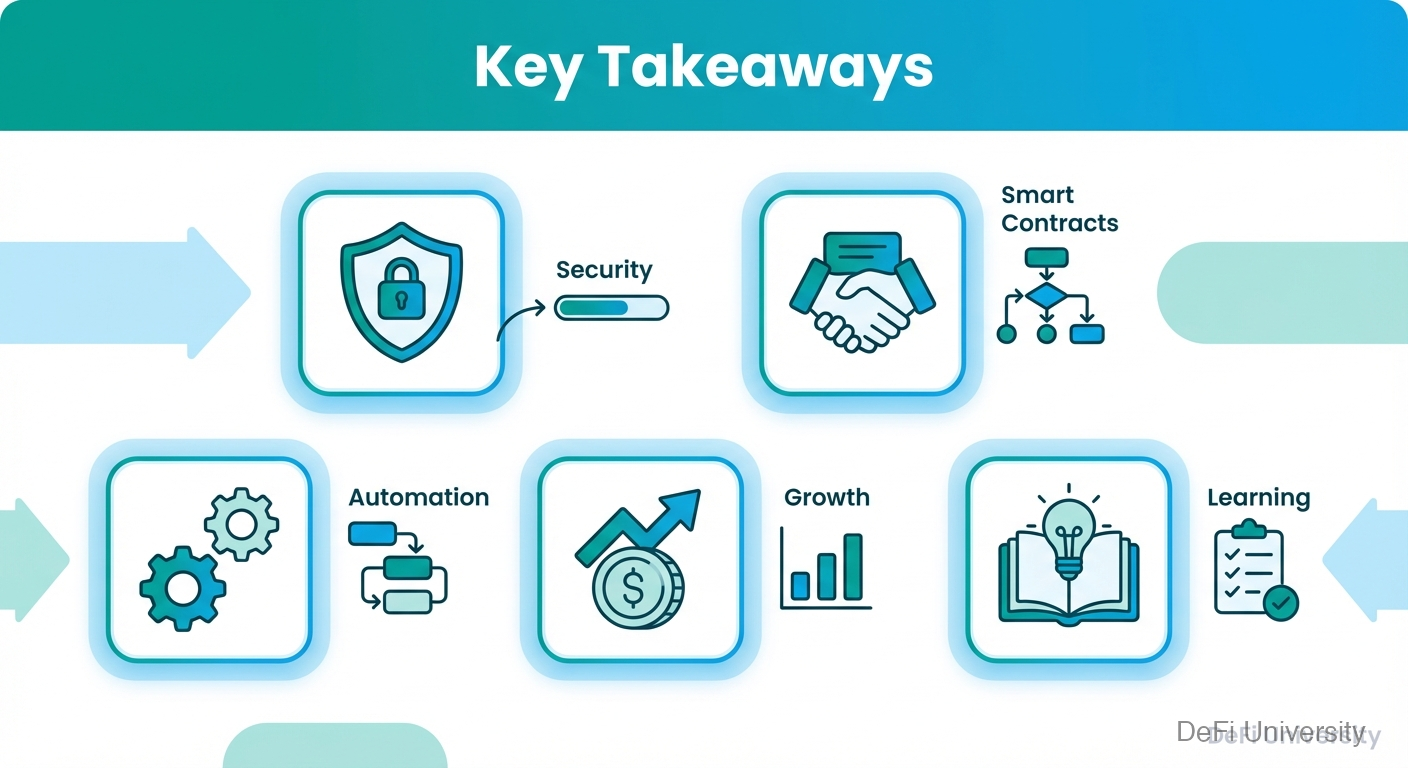
Gas fees pay for transaction processing—like postage for sending mail
Fees prevent spam and compensate network operators
Prices vary by network and congestion—Ethereum expensive, L2s and Solana cheap
Transaction complexity affects cost—simple transfers cheaper than smart contracts
Keep native tokens for fees—you need ETH to pay Ethereum fees, SOL for Solana, etc.
Time transactions for lower fees when possible
Last updated