Lesson 4: Exchange Wallets vs Your Own

🎧 Lesson Podcast

🎬 Video Overview

Lesson 4: Exchange Wallets vs Your Own
Header

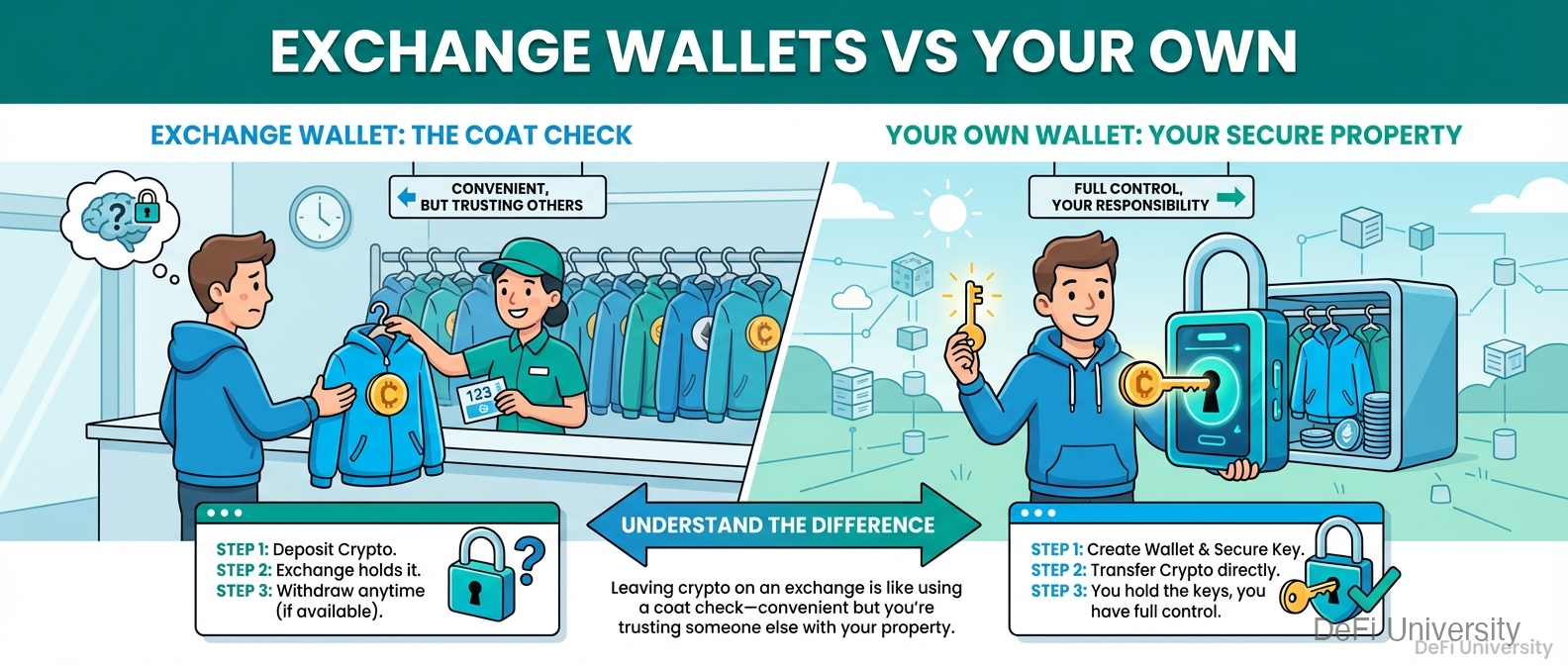
Core concept: Leaving crypto on an exchange is like using a coat check—convenient but you're trusting someone else with your property.


Coat Check vs. Your Own Closet

Inline Analogy

At a fancy restaurant:

Coat check: You hand over your coat. They give you a ticket. It's convenient—you don't carry it around. But your coat is in their possession. You trust they won't lose it, damage it, or give it to someone else.

Your own closet: Your coat stays with you. More effort to manage, but it's fully under your control. No one can lose it except you.

Exchange wallets are like coat check—convenient but custodial. Your own wallet is like your closet—more responsibility but more control.


What "Your Crypto on an Exchange" Really Means
Infographic

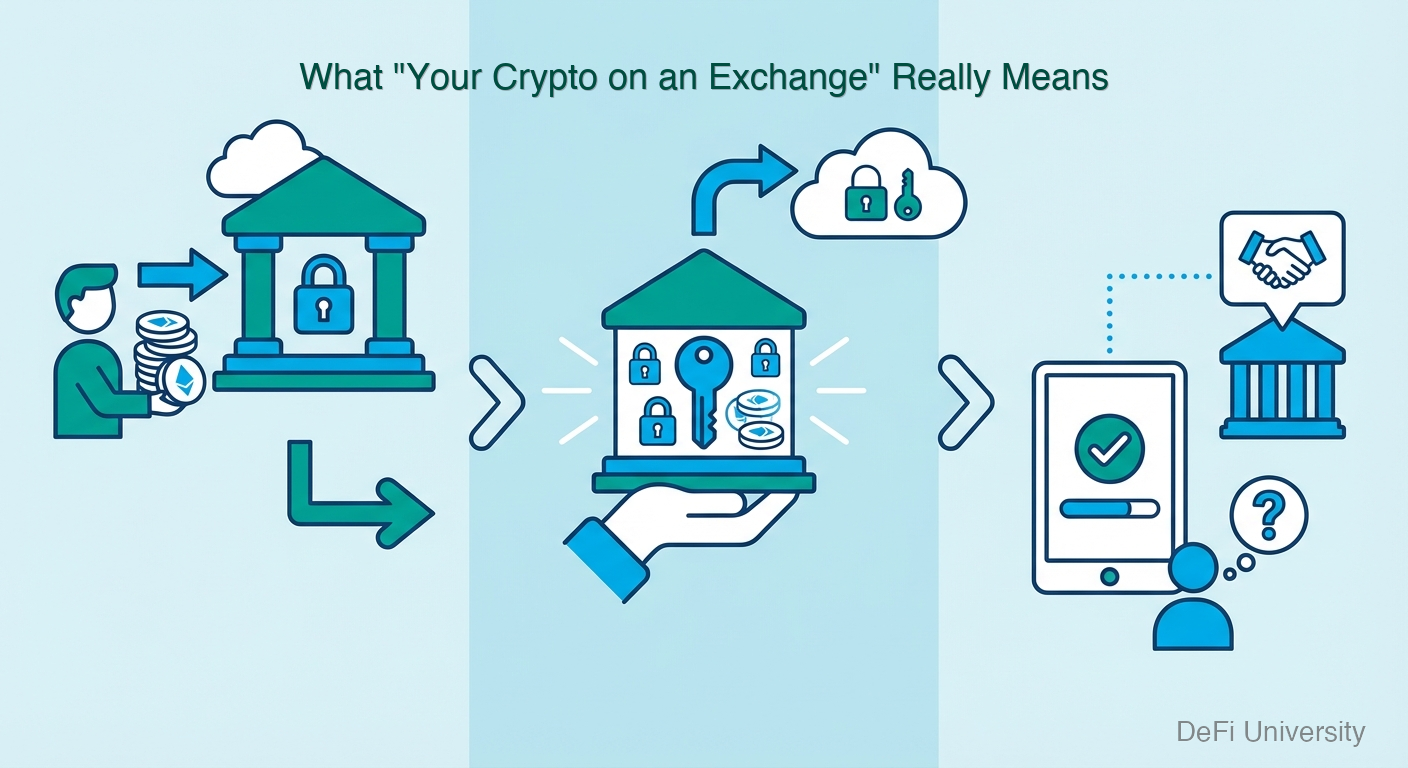
When you buy crypto on an exchange and leave it there:

  • The exchange holds the private keys

  • Your "balance" is their promise to give you that crypto when asked

  • They're essentially an IOU

  • If the exchange is hacked, goes bankrupt, or freezes your account, you might not get it back

When you move crypto to your own wallet:

  • You hold the private keys

  • The crypto is actually under your control

  • No company can freeze or lose it (but you can)

  • You're fully responsible for security


Historical Reasons This Matters

Exchange failures have happened repeatedly:

Mt. Gox (2014): Once handling 70% of Bitcoin transactions. Hacked. 850,000 BTC lost. Customers waited a decade for partial recovery.

FTX (2022): One of the largest exchanges. Collapsed due to fraud. Billions in customer funds locked or lost.

QuadrigaCX (2019): CEO died (or claimed to), taking wallet access with him. $190 million inaccessible.

Countless smaller examples: Hacks, exit scams, regulatory shutdowns.

"Not your keys, not your coins" became a community mantra because of these disasters.


When Exchange Custody Makes Sense

Despite risks, exchange custody isn't always wrong:

Good for:

  • Small amounts while learning

  • Active trading (need quick access)

  • Very beginners who might make self-custody mistakes

  • As a fiat on/off ramp

Key questions:

  • Is the amount small enough that you could lose it without major hardship?

  • Do you need frequent trading access?

  • Is the exchange reputable with good security practices?

If you answered yes to these, exchange custody might be reasonable—as long as you understand the risks.


When Self-Custody Makes Sense

Move to your own wallet when:

Larger amounts: Any amount that would hurt to lose deserves better security.

Long-term holding: If you're not trading, why leave it with an exchange?

Security concerns: Worried about exchange hacks or failures.

Privacy preferences: Exchanges know your identity and transactions.

Principle: You believe in the "be your own bank" ethos.

A common approach: keep small "active" amounts on exchanges for convenience, move the majority to self-custody for safety.


The Middle Ground: Withdrawal to Your Own Wallet

You don't have to choose one or the other permanently:

  1. Buy on exchange (use their fiat on-ramp)

  2. Withdraw to your wallet (move significant amounts periodically)

  3. Keep small amount on exchange (for quick trades or sells)

This gives you: easy buying + secure storage + trading flexibility.


Making the Decision

Self-custody if:

  • Amount is significant to you

  • You're holding long-term

  • You're willing to learn proper security

  • You want full control

Exchange custody if:

  • Small learning amounts

  • Active trading

  • Still building confidence with crypto

  • Using reputable, well-regulated exchange

There's no universal right answer. Understanding the trade-offs lets you make the choice that fits your situation.


Summary

Key Takeaways

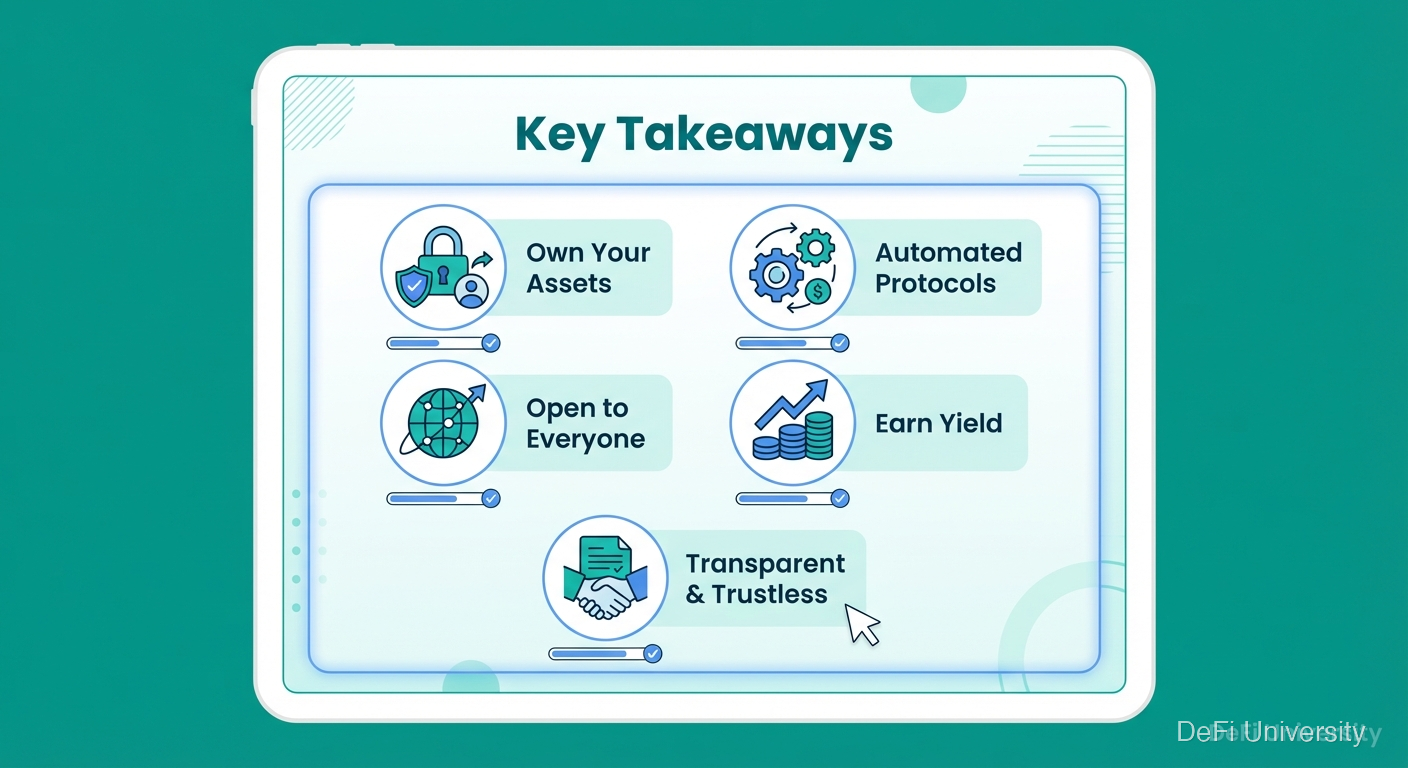
  • Exchange wallets are custodial—the exchange holds keys, you hold an IOU

  • Your own wallet is self-custodial—you hold keys, you have full control

  • Exchange failures have happened—billions lost when companies fail

  • "Not your keys, not your coins" reflects real historical lessons

  • Both approaches have their place—consider amount, timeframe, and risk tolerance

  • Common strategy: buy on exchange, withdraw significant amounts to own wallet

Last updated