Lesson 12: Moving Crypto Off an Exchange
🎧 Lesson Podcast
🎬 Video Overview
Lesson 12: Moving Crypto Off an Exchange
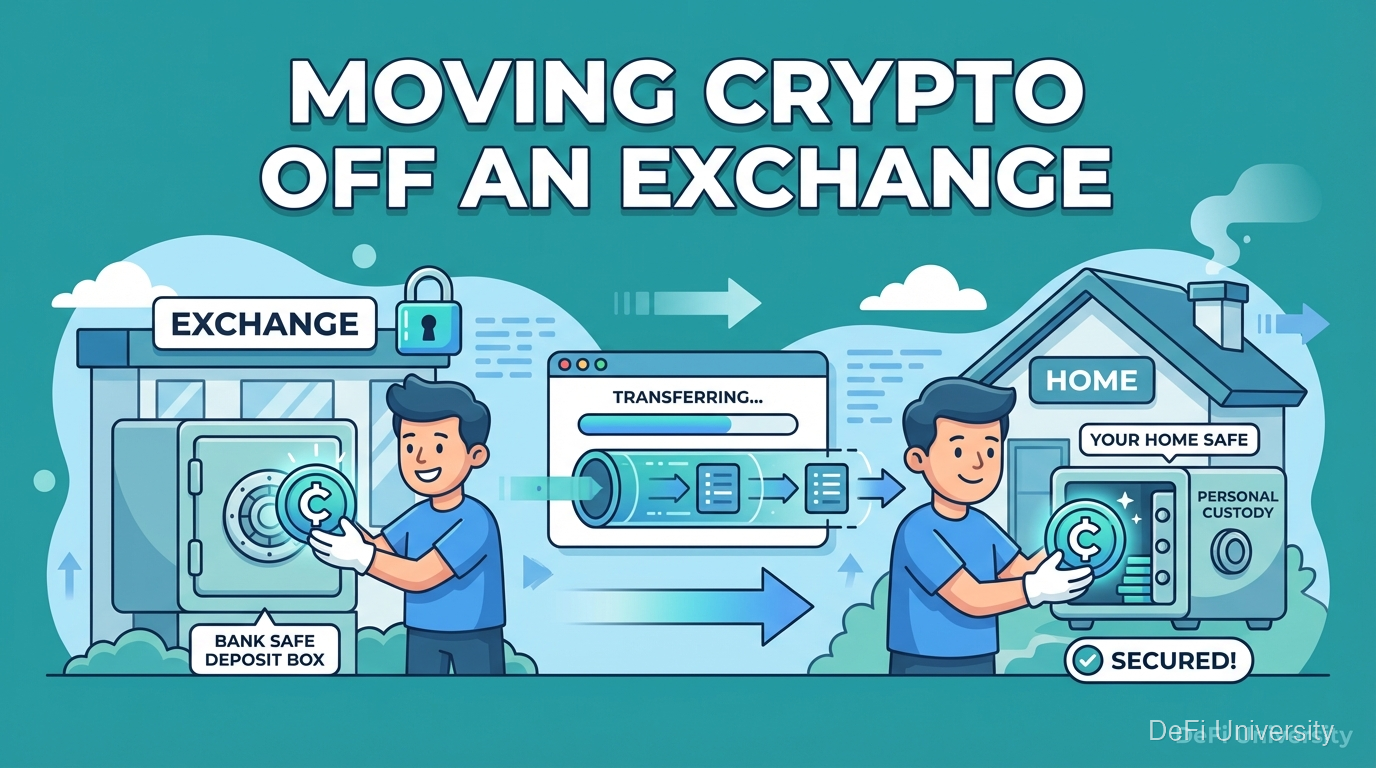
Core concept: Moving crypto off an exchange is like moving valuables from a bank safe deposit box to your home safe—you're taking personal custody.
Bank to Home Safe
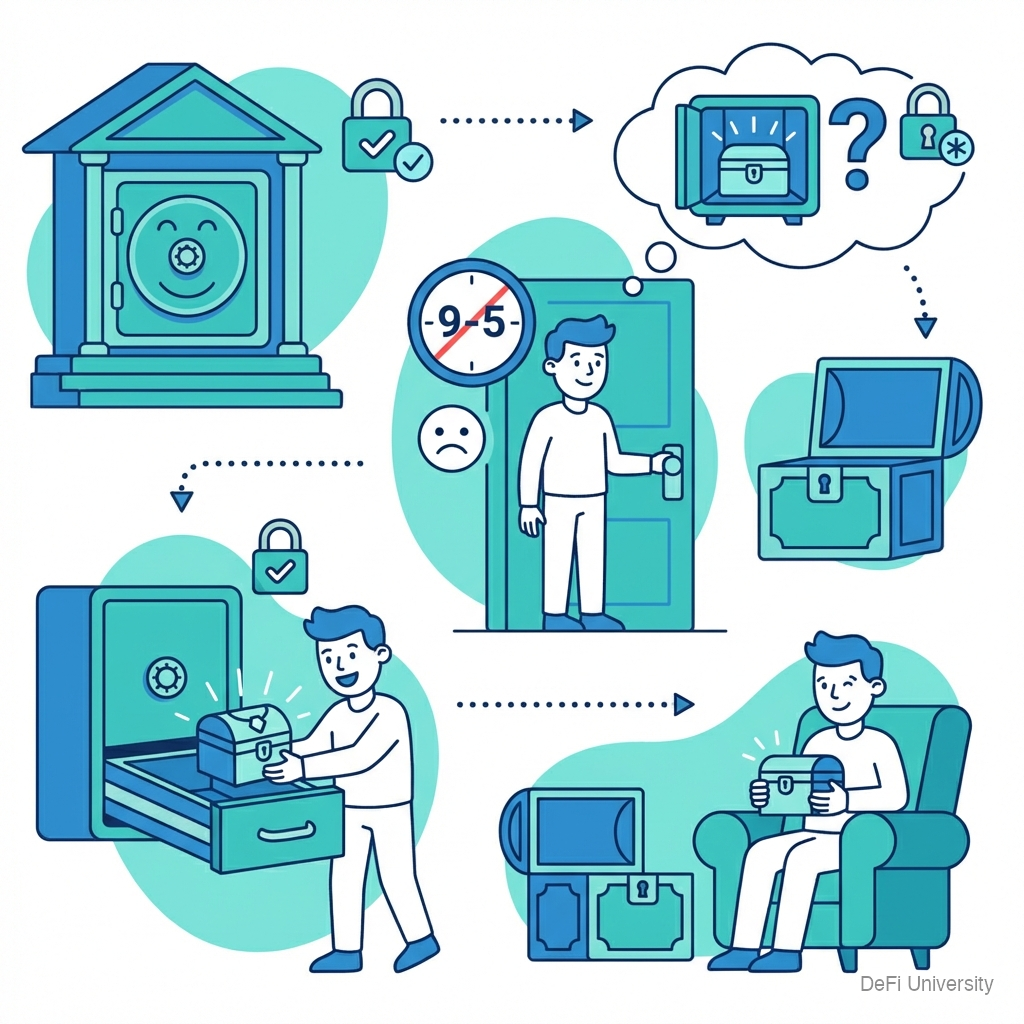
Imagine you've stored jewelry at the bank's safe deposit box:
Convenient—they handle security
But you need to go to the bank during hours
You trust they won't lose it or freeze access
Eventually, you might want it in your own home safe:
You control access 24/7
No one can freeze it
You're responsible for your own security
Moving crypto off exchange follows similar logic: you're taking control but also taking responsibility.
Why Move to Your Own Wallet
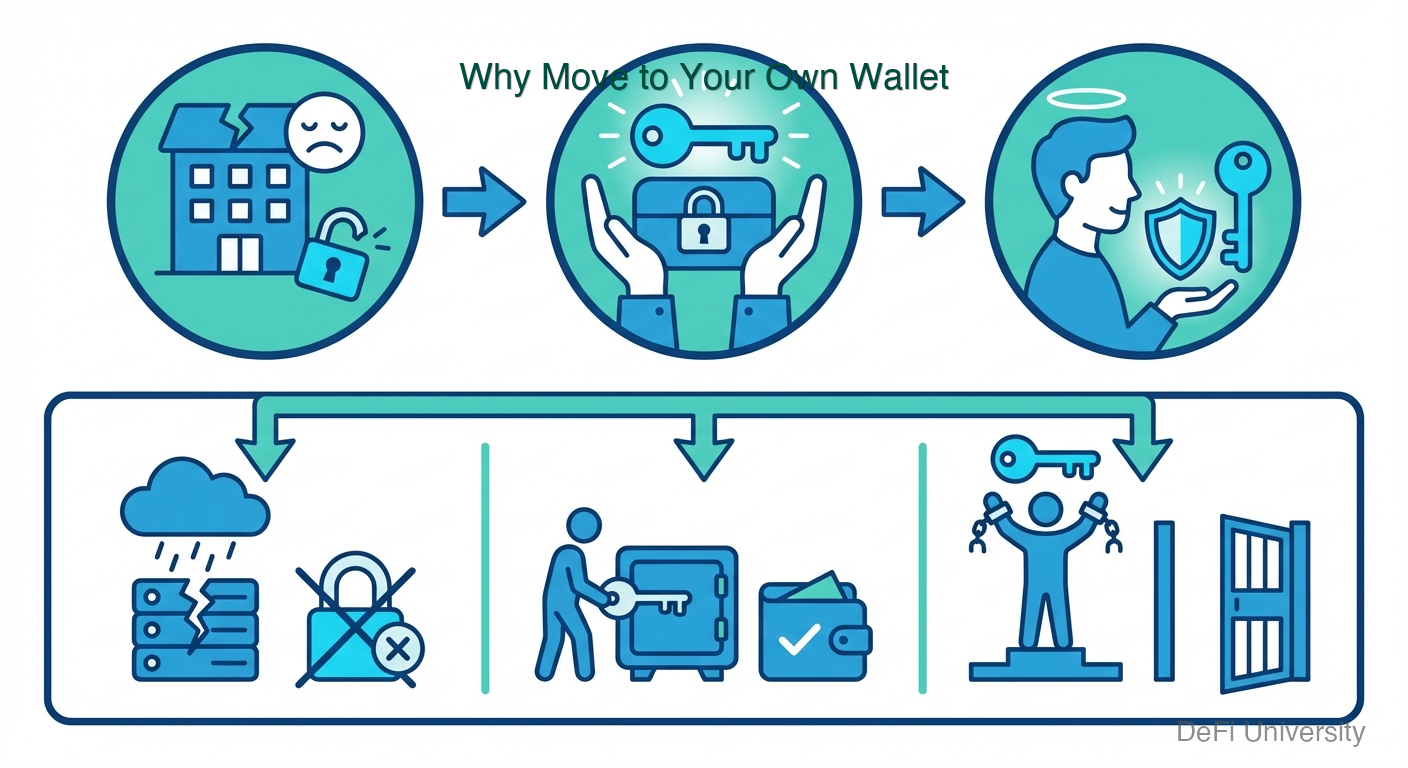
Reasons to withdraw:
True ownership: You control the keys, you own the crypto
Exchange risk: Exchanges can fail (FTX, Mt. Gox)
No account freezes: No company can lock you out
Privacy: Exchanges know your transactions; your wallet doesn't report to anyone
Long-term holding: If you're not trading, why leave it with them?
Reasons you might wait:
Learning and not confident in self-custody yet
Active trading (need quick access)
Very small amounts (withdrawal fees might not be worth it)
Before You Withdraw: Checklist
☐ Wallet is set up You have a functioning wallet with backed-up seed phrase.
☐ You've verified the wallet works Maybe received a small test amount already.
☐ You understand the network Know which network (Ethereum, Polygon, etc.) you're using.
☐ You know withdrawal fees Exchanges charge for withdrawals—know the cost.
☐ You won't need these funds urgently Once off exchange, selling requires sending back—time and fees.
Step-by-Step: Withdrawing from an Exchange
Step 1: Get your wallet address Open your wallet. Find "Receive" for the specific crypto. Copy the address.
Step 2: Navigate to exchange withdrawal In exchange app/website: find your wallet/assets, select the crypto, click "Withdraw."
Step 3: Select network Choose the network that matches your wallet. If your wallet is set to Ethereum mainnet, select Ethereum (ERC20).
Step 4: Paste your wallet address Paste the address from Step 1. Verify first and last characters match.
Step 5: Enter amount Enter how much to withdraw. Note the fee.
Step 6: Complete security verification Exchange likely requires: email code, SMS code, authenticator code.
Step 7: Wait for processing Some exchanges process instantly. Others have withdrawal delays (security hold, manual review).
Step 8: Verify receipt Check your wallet. Check blockchain explorer with transaction ID.
Test Transaction First
For significant amounts:
Withdraw a small amount first ($5-20 worth)
Verify it arrives in your wallet
Once confirmed, withdraw the rest
This costs extra in fees but ensures:
Address is correct
Network is correct
Wallet is receiving properly
Peace of mind is worth a few extra dollars.
After Withdrawal: What Changes
On exchange:
You could sell instantly
Support could help with issues
2FA and password protected
In your wallet:
You sell by first sending back to exchange (or using DEX)
No support if you make mistakes
Only your seed phrase protects funds
The responsibility shift is significant. Make sure you're comfortable with it.
Common Withdrawal Mistakes
Wrong address: Double-check before confirming.
Wrong network: Verify network matches wallet setup.
Forgetting fees exist: Exchange fee + network fee = total cost.
Not having backup: Before large withdrawal, verify seed phrase backup.
Withdrawing everything at once: Better to test first with small amount.
Panic at delays: Some exchanges hold withdrawals. This is often normal.
Key Takeaways
Moving off exchange = taking true custody—you control keys, you have responsibility
Verify wallet setup before withdrawing—have address ready, backup confirmed
Match network exactly—sending on wrong network can mean loss
Test with small amount first—verify everything works before large withdrawals
Understand the trade-off: convenience and support (exchange) vs. control and security (self-custody)
Congratulations—completing this step means you're holding your own crypto
Last updated