Lesson 5: Seed Phrase Security

🎧 Lesson Podcast

🎬 Video Overview

Lesson 5: Seed Phrase Security
Header

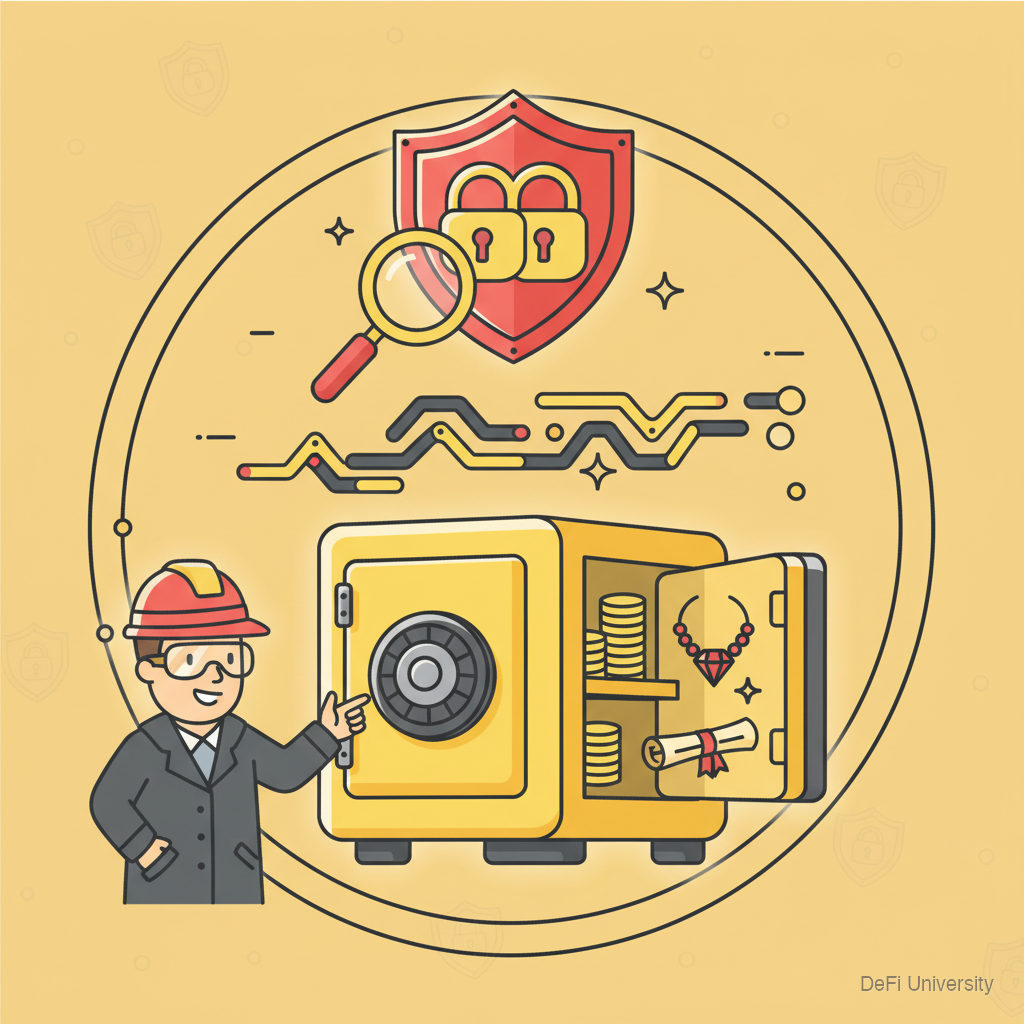
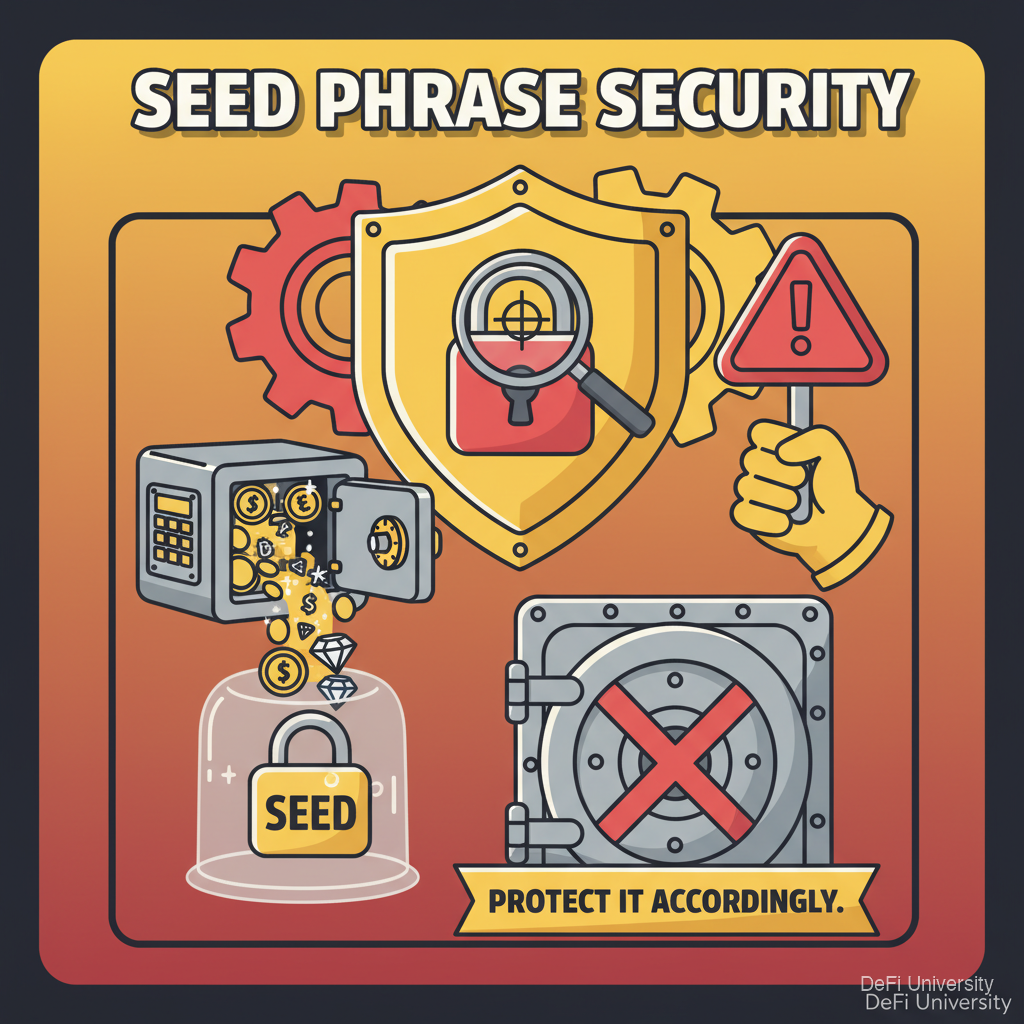
Core concept: Your seed phrase is like the combination to a safety deposit box containing everything you own—protect it accordingly.


The Safety Deposit Box Combination

Inline Analogy

Imagine a safety deposit box that holds:

  • All your money

  • All your valuables

  • Everything you own of value

The combination to open it? A sequence of 12-24 words.

Anyone who knows those words can open the box from anywhere in the world. You can't change the combination. You can't call the bank if someone learns it.

That's your crypto seed phrase. Treat it accordingly.


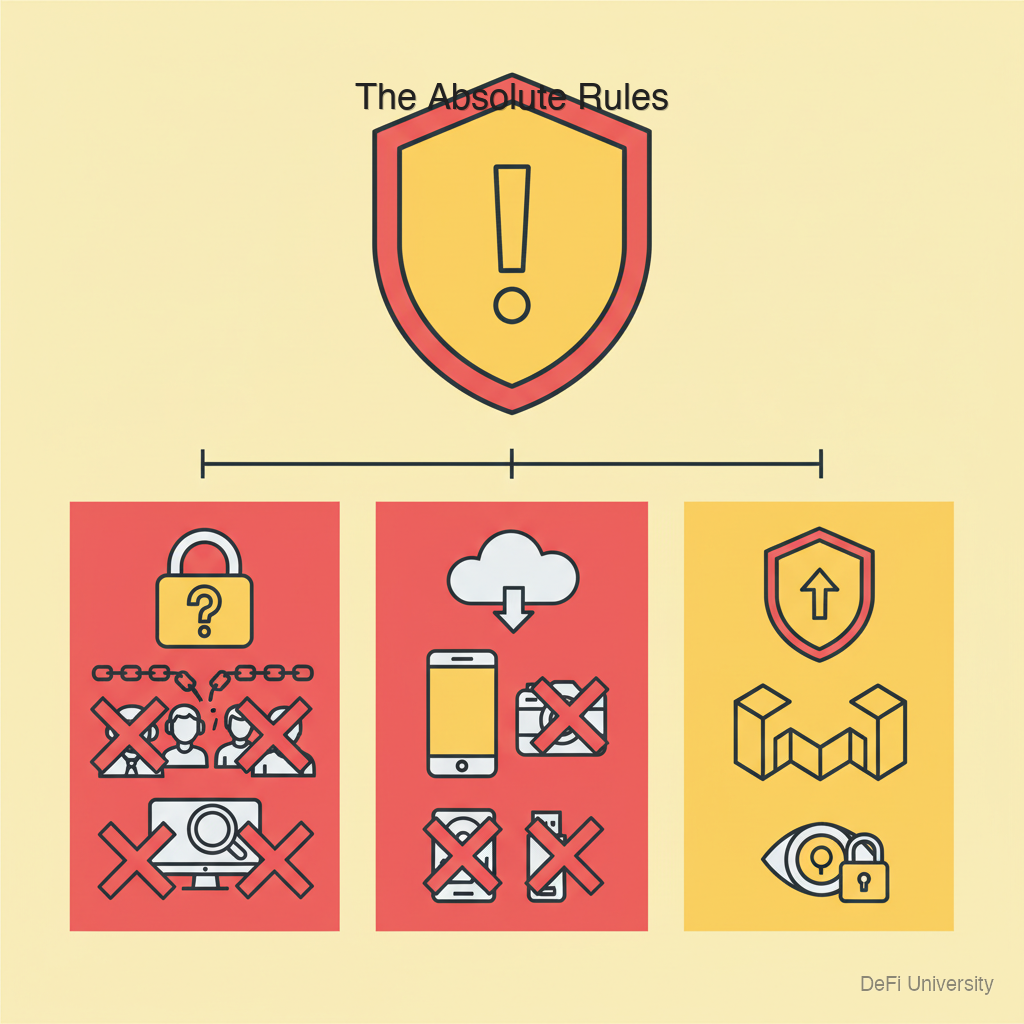
The Absolute Rules

Infographic

NEVER share your seed phrase

  • Not with customer support

  • Not with friends helping you

  • Not with "verification" websites

  • Not with anyone, ever

NEVER store it digitally

  • No photos

  • No screenshots

  • No notes apps

  • No cloud storage

  • No email drafts

  • No password managers (for the seed itself)

NEVER enter it online

  • No websites asking to "verify" your wallet

  • No forms asking you to "recover" access

  • No "support" requests

The ONLY time you enter your seed phrase:

  • When setting up a new wallet device/app

  • When restoring a wallet you control

  • On the wallet application itself, offline ideally


How to Store Your Seed Phrase

Best practices:

Physical writing: Write it on paper or, better, stamp it on metal. Paper can burn, flood, fade. Metal survives disasters.

Multiple copies: Store copies in different physical locations. One location being destroyed shouldn't mean total loss.

Secure locations: Home safe, bank safe deposit box, trusted family member's safe. Somewhere a thief wouldn't easily find or access.

No digital traces: Don't type it into any device. Don't photograph it. Assume all digital storage is compromised eventually.


Common Seed Phrase Mistakes

"Quick photo for now": That photo syncs to cloud. Gets backed up. Becomes findable.

Storing in notes app: Notes sync. Notes are searchable. Notes get compromised.

Emailing to myself: Email is not secure. Email gets hacked. Email companies can access.

Telling someone for safekeeping: They might not protect it properly. They might be compromised.

Single copy: Fire, flood, theft, or losing the paper = everything gone.

Clever hiding (too clever): If you die, can anyone find it? If you forget where, can you find it?


Verifying Your Backup

Before significant funds:

  1. Create wallet, write seed phrase

  2. Make backup copies

  3. Small deposit to wallet

  4. Delete wallet from device

  5. Restore using backup

  6. Verify you see the same balance

If restore works, your backup is good. If not, fix it before adding more funds.


Planning for the Worst

Consider these scenarios:

If I die: How does my family access my crypto? Do they know where to find the seed phrase and how to use it?

If I forget: Is the backup somewhere I'll find it? Is it clearly labeled (but not to a thief)?

If my house burns: Is there a backup elsewhere?

If I'm incapacitated: Can someone I trust access it?

Having answers to these questions is part of responsible self-custody.


Summary

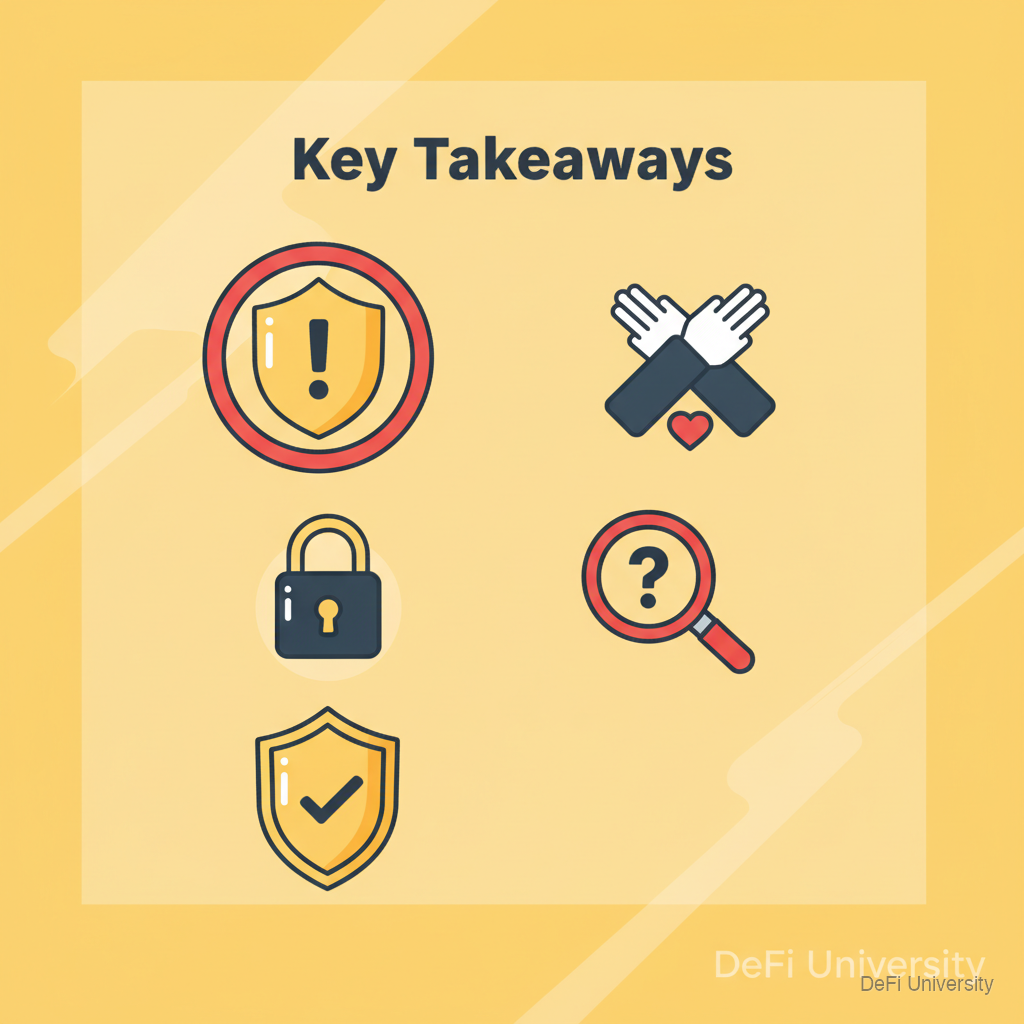
Key Takeaways

  • Seed phrase = master key to everything—protect it like your most valuable secret

  • Never share, never store digitally, never enter online—absolute rules with no exceptions

  • Physical storage only—paper or metal, in secure locations

  • Multiple backups in different locations—one disaster shouldn't mean total loss

  • Test your backup—verify restore works before significant funds

  • Plan for worst case—consider death, incapacitation, disasters

Last updated