Lesson 7: Social Media Red Flags

🎧 Lesson Podcast

🎬 Video Overview

Lesson 7: Social Media Red Flags
Header

Core concept: Social media is where most crypto scams begin—learning to recognize warning signs can save you from expensive mistakes.


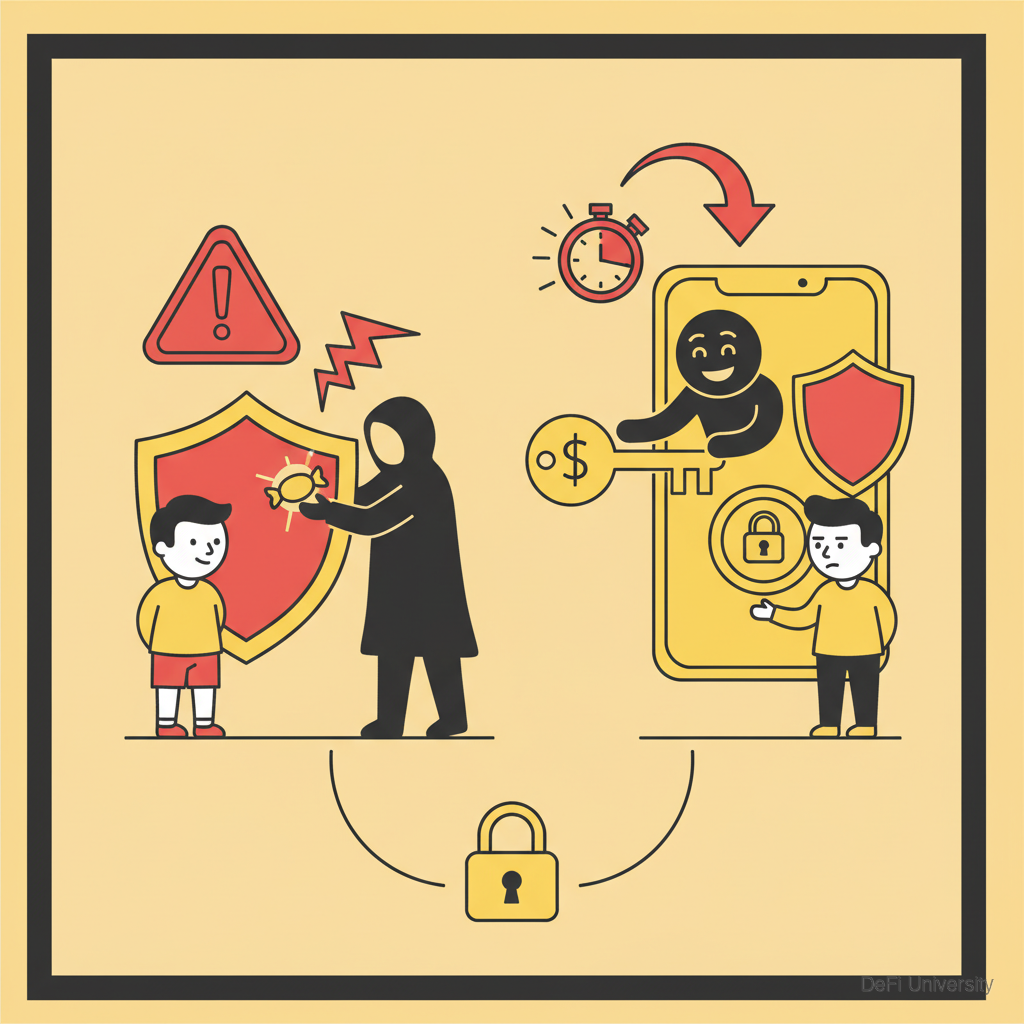
Stranger Danger, Online Edition

Inline Analogy

As a kid, you learned "stranger danger"—be careful with people you don't know offering things.

Social media crypto scams follow the same pattern:

  • Strangers offering help you didn't ask for

  • Too-good-to-be-true opportunities

  • Pressure to act quickly

  • Requests for private information

The context is different, but the principles are identical.


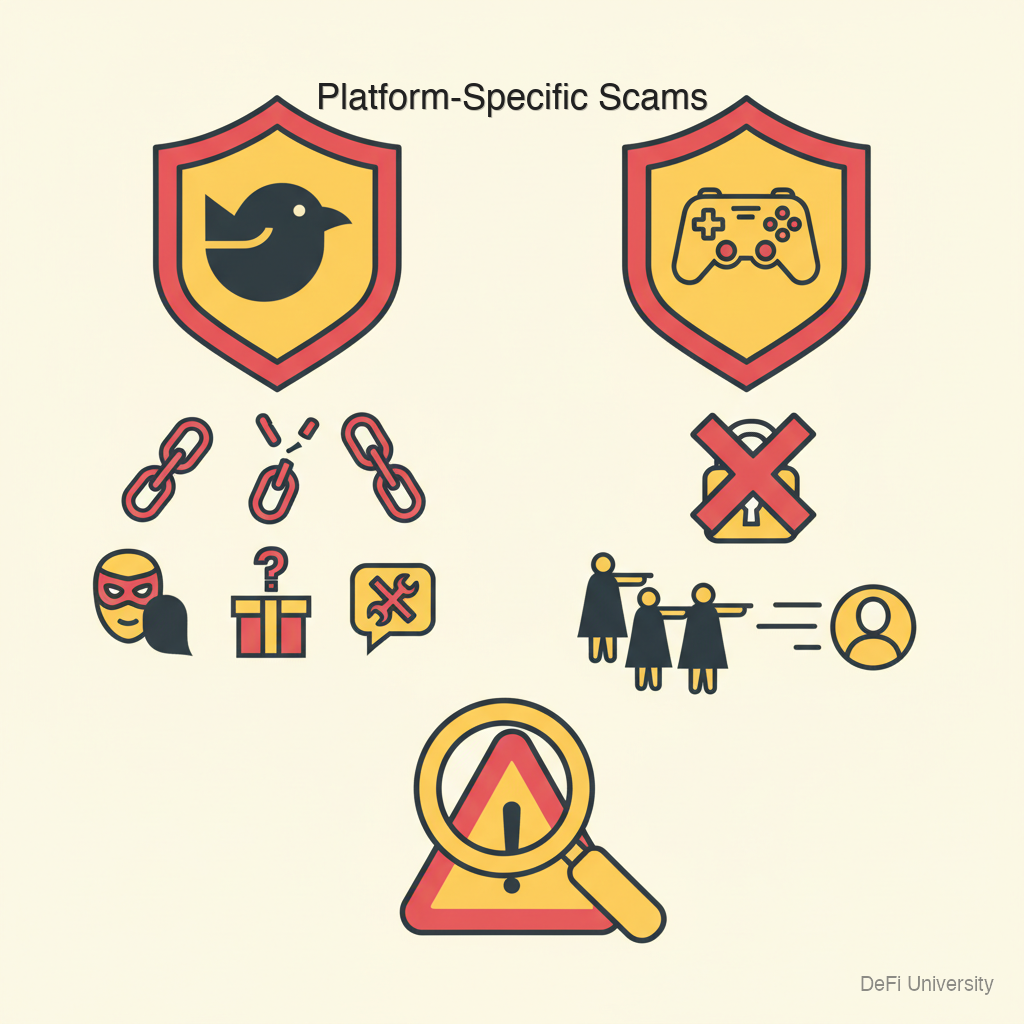
Platform-Specific Scams

Infographic

Twitter/X

  • Fake accounts impersonating celebrities or projects

  • Scam replies under legitimate crypto tweets

  • Fake "support" accounts responding to complaints

  • Giveaway scams in tweet threads

Discord

  • DMs from "admins" (real admins rarely DM first)

  • Fake announcement channels with phishing links

  • Friend requests from bot accounts

  • Compromised servers posting scam links

Telegram

  • Fake groups impersonating real projects

  • Unsolicited DMs about "investment opportunities"

  • Pump-and-dump coordination groups

  • Impersonator accounts of project leaders

YouTube

  • Fake livestreams with celebrity deepfakes

  • Comments linking to scam sites

  • "Leaked" crypto strategies videos

  • Paid promotions for scam projects


Universal Red Flags

Unsolicited contact: You didn't ask for help, but someone's offering. Why? What do they gain?

Urgency: "Act NOW! Only 10 spots left!" Legitimate opportunities don't require split-second decisions.

Guaranteed returns: "100% safe, guaranteed 10x." Nothing in crypto is guaranteed.

Asking for money first: "Send ETH to receive tokens." Legitimate airdrops don't require payment.

DMs about finance: Legitimate projects don't recruit investors via random DMs.

Too good to be true: If your gut says "this seems too good," trust your gut.


Verification Strategies

Check account age and history:

  • Brand new account? Red flag.

  • Bought followers? (High follower count, low engagement)

  • Sudden pivot to crypto? Possibly compromised account.

Verify through official channels:

  • Is this really the official account?

  • Check the project's official website for social links.

  • Look for verification badges (though these can be faked too).

Cross-reference information:

  • Can you verify this news/opportunity elsewhere?

  • Are other reputable sources talking about it?

Ask in public:

  • Before engaging with a DM, ask in the public channel: "Is this person legitimate?"

  • Real community members will often confirm or deny.


Safe Social Media Practices

Turn off DMs from strangers: If possible, disable DMs from people you don't follow or aren't in servers with.

Never click links in DMs: Navigate to sites directly through bookmarks or careful typing.

Verify before engaging: Before clicking any link, verify the source through other channels.

Don't share holdings: Broadcasting how much crypto you own makes you a target.

Report scams: Report scam accounts to help protect others.

Be skeptical by default: Approach crypto social media with healthy skepticism.


Summary

Key Takeaways

  • Social media is primary attack surface—most scams begin there

  • Stranger danger applies—unsolicited offers from unknowns are suspect

  • Each platform has specific scam types—learn patterns for platforms you use

  • Universal red flags: urgency, guaranteed returns, requests for money, unsolicited DMs

  • Verify through official channels—don't trust DMs or replies without verification

  • Disable DMs and stay skeptical—default to caution

Last updated