Lesson 2: The Doubling Scam
🎧 Lesson Podcast
🎬 Video Overview
Lesson 2: The Doubling Scam
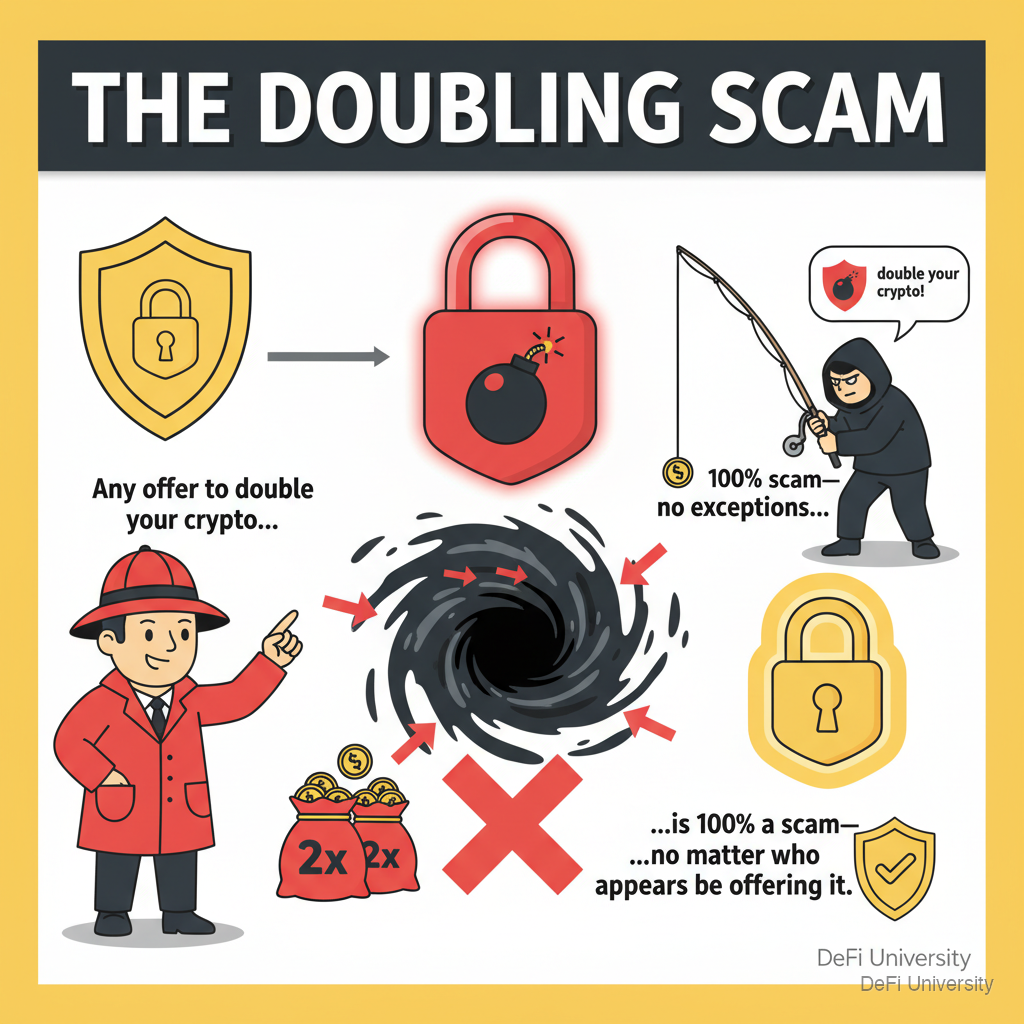
Core concept: Any offer to double your crypto if you send it somewhere is 100% a scam—no exceptions, no matter who appears to be offering it.
Too-Good-to-Be-True Mail Offers
Remember those mail offers? "Send us $10 and we'll send you $100!" Obviously a scam—why would anyone do that?
Yet people fall for the exact same pitch with crypto:
"Elon Musk is giving away Bitcoin! Send 0.1 BTC to this address, receive 0.2 BTC back!"
It's the same scam, just dressed in crypto clothing. Nobody gives away free money. Nobody doubles your crypto out of generosity.
How Doubling Scams Work
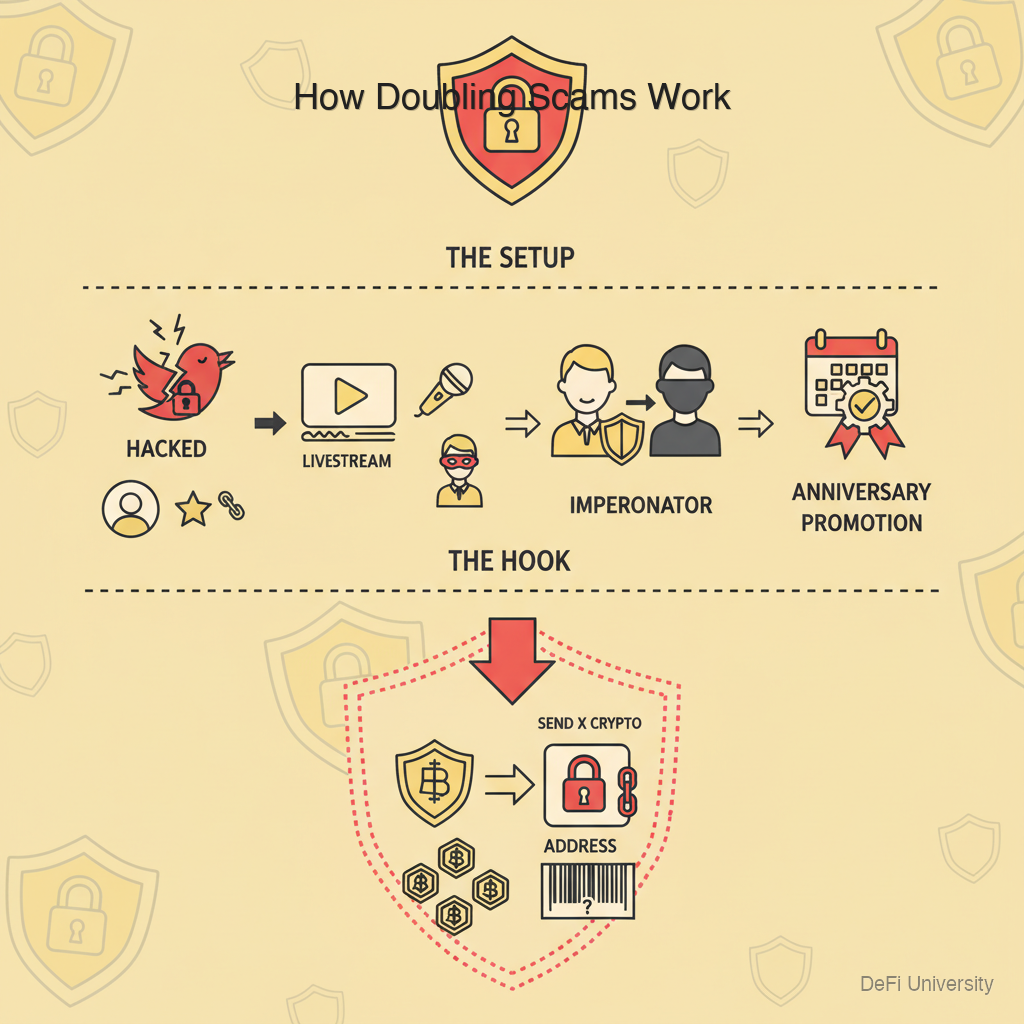
The Setup: Scammers create legitimate-looking giveaway promotions:
Hacked celebrity Twitter accounts
Fake YouTube livestreams
Impersonator accounts on social media
Fake company "anniversary" promotions
The Hook: "To participate, send X crypto to this address. We'll send back 2X!"
Sometimes there's a timer: "Only 30 minutes left!" to create urgency.
The Result: You send crypto. They keep it. Nothing comes back. Ever.
The Scale: These scams collect millions. One hacked Twitter event involving fake Elon Musk, Bill Gates, and Apple accounts collected over $100,000 in hours.
Why People Fall for It
Despite being obvious in hindsight:
Celebrity association: "Elon Musk wouldn't scam people!" But it's not Elon—it's someone using his name/image.
Professional presentation: High-quality fake websites, livestreams, graphics make it feel official.
Social proof: "1,000 people have already received their crypto!" (fabricated claims)
Urgency: "Only 10 minutes left!" prevents careful thinking.
Wishful thinking: People want to believe free money exists.
"Just a small test": "I'll only send a little to test it..." but even small amounts fund scammers and encourage more scams.
Red Flags of Doubling Scams
"Send to receive": Any "giveaway" requiring you to send first is a scam.
Celebrity endorsement: Real celebrities don't do crypto giveaways via random addresses.
Too good to be true: Doubling money isn't a real financial operation.
Urgency timers: Legitimate opportunities don't require split-second decisions.
Unfamiliar addresses: Why would you send money to a random blockchain address?
No verification: Real giveaways verify identity, don't just accept anonymous transfers.
Real Giveaways vs. Scams
How real promotions work:
Application/registration process
Identity verification
Winners selected, then receive funds
You NEVER send money first
How scams work:
Send money to participate
No verification
Anonymous addresses
Never receive anything
The rule is simple: legitimate giveaways don't require you to send crypto first.
Variations to Watch For
"Verification" scam: "Send 0.01 ETH to verify your wallet address." No service needs this.
"Gas fee" scam: "Send us ETH to cover gas fees for your prize." Legitimate winners don't pay to receive.
"Whitelist" scam: "Send crypto to confirm your spot." Real whitelists don't work this way.
Investment doubling: "Our trading bot doubles investments!" Same scam, different packaging.
All variations: you send, they keep, you lose.
Key Takeaways
Doubling scams are 100% scams—no legitimate person or company doubles crypto sent to them
Celebrities don't run crypto giveaways via random addresses—hacked accounts and impersonators do
Never send to receive—real giveaways don't require payment first
Urgency is manufactured—designed to prevent you from thinking carefully
No amount is "safe to test"—small amounts fund scammers and you'll never get it back
If it sounds too good to be true, it is—this cliché exists because it's reliable
Last updated