Lesson 3: Rug Pulls and Exit Scams
🎧 Lesson Podcast
🎬 Video Overview
Lesson 3: Rug Pulls and Exit Scams
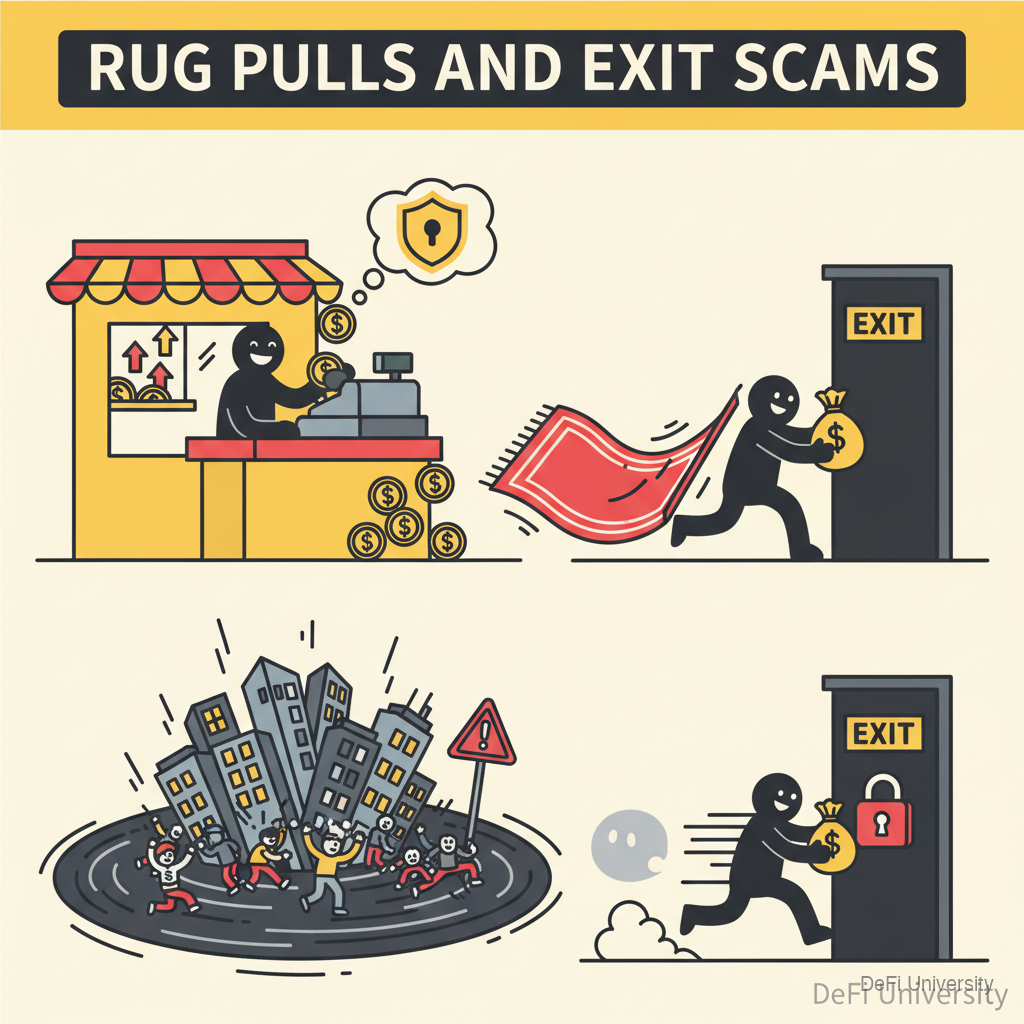
Core concept: A rug pull happens when project creators build hype, collect investments, then vanish with the money—like a store that takes orders, collects payments, and closes overnight.
The Store That Closes Overnight
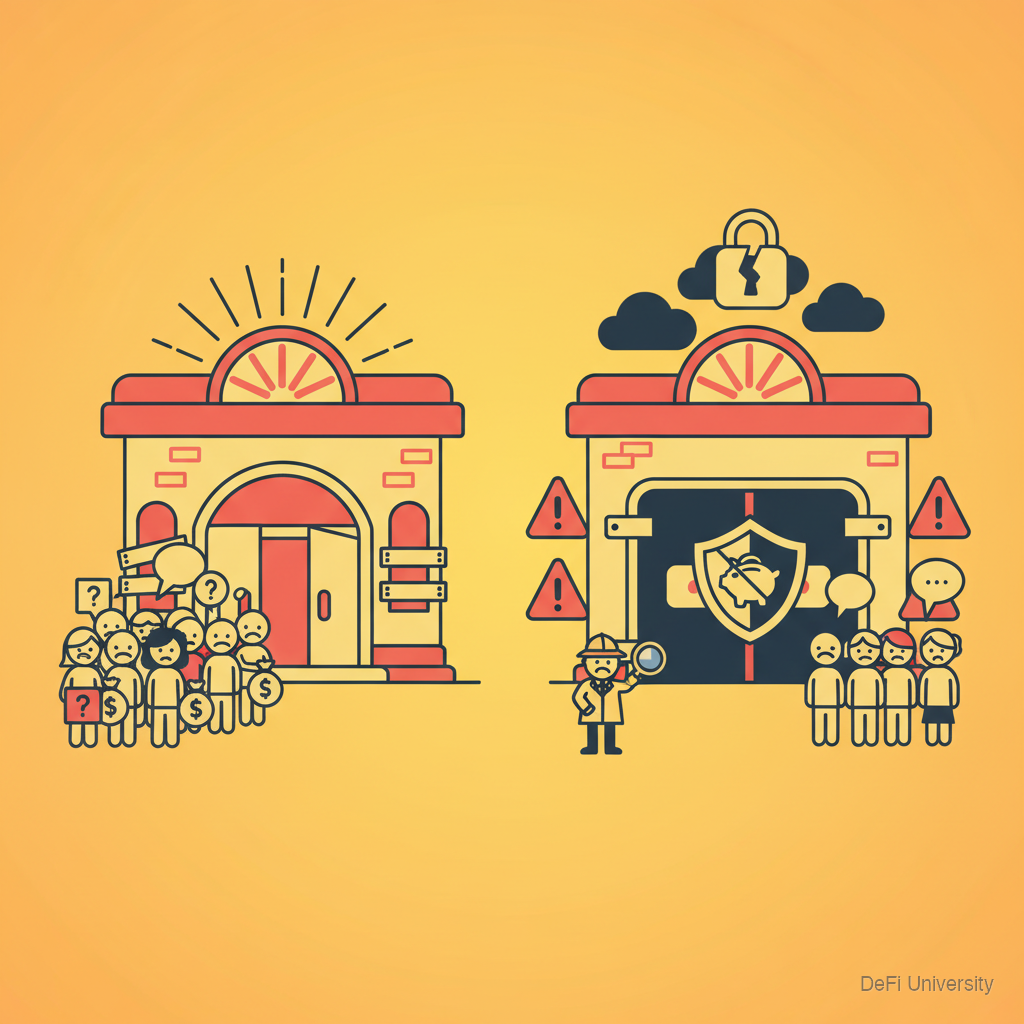
Imagine a new store opens in your town:
Grand opening with big promises
Great prices on pre-orders
"Limited time! Reserve yours now!"
People line up to pay
Then one morning: doors locked, owners gone, all the money taken. The "store" was never real—just a setup to collect money and disappear.
This is exactly what rug pulls are in crypto. Projects launch with exciting promises, collect money, then vanish.
How Rug Pulls Work
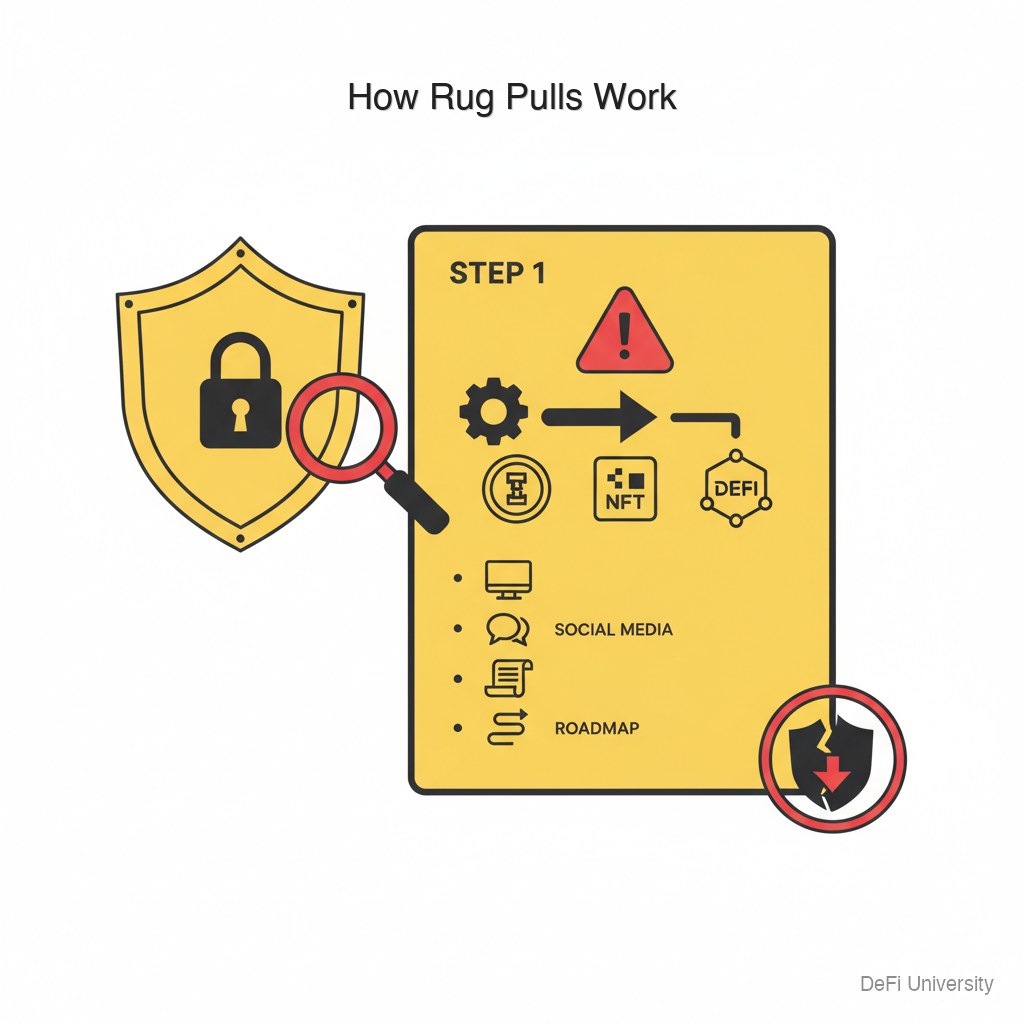
Step 1: Create the Project Scammers create a token, NFT collection, or DeFi protocol. It might have:
Professional-looking website
Active social media
Whitepaper with technical jargon
Roadmap with ambitious promises
Step 2: Build Hype Marketing creates excitement:
Paid influencer promotions
Fake community activity
Fabricated team credentials
"Early investor" success stories
Step 3: Collect Money People buy in:
Token presales
NFT mints
Liquidity pool deposits
Staking/yield farming deposits
Step 4: Pull the Rug Creators withdraw everything:
Drain liquidity pools
Sell all tokens crashing the price
Delete social media
Disappear
Investors are left holding worthless tokens or nothing at all.
Types of Rug Pulls
Hard Rug Pull
Immediate exit. Liquidity removed, everyone locked out, creators vanish.
Soft Rug Pull
Gradual exit. Team slowly sells tokens, reduces development, stops communicating, abandons project over time.
Honeypot
You can buy but not sell. Smart contract coded so only creators can sell.
Pump and Dump
Team buys early, hypes project, sells when price peaks from new buyers, price crashes.
Red Flags to Watch For
Anonymous team: Real projects have verifiable team members. "Anonymous" team = can disappear easily.
No audit: Unaudited smart contracts might have backdoors or bugs.
Locked liquidity: Is liquidity actually locked, or can creators withdraw anytime?
Concentrated ownership: If creators hold most tokens, they can crash price by selling.
Unrealistic promises: "1000x guaranteed!" "10% daily returns!" are scam signals.
Rushed timeline: "Buy now or miss out!" pressures decisions without research.
Copy-paste project: Minimal original development, just a clone of another project.
No real utility: What does this token actually do? "Number go up" isn't utility.
How to Protect Yourself
Research the team:
Are team members real people with verifiable history?
LinkedIn, Twitter, past projects?
Doxxed (publicly identified) teams have reputational risk if they rug
Check the contract:
Is it audited by reputable firms?
Can you read basic contract functions?
Community tools can check for common rug pull patterns
Verify liquidity:
Is liquidity locked? For how long?
What percentage of supply do creators hold?
Start small:
Don't put significant money in unproven projects
Be skeptical of new launches
Listen to your gut:
If something feels off, it probably is
Hype isn't a substitute for fundamentals
Key Takeaways
Rug pulls are planned exit scams—creators build hype, collect money, disappear
Anonymous teams are higher risk—they can vanish without consequences
Verify liquidity locks and audits—these provide some protection (but aren't guarantees)
Unrealistic promises are red flags—"guaranteed returns" don't exist
New projects are inherently risky—assume you might lose everything
FOMO causes losses—rushing into new projects without research is dangerous
Last updated