Lesson 11: Emotional Decision Traps
🎧 Lesson Podcast
🎬 Video Overview
Lesson 11: Emotional Decision Traps
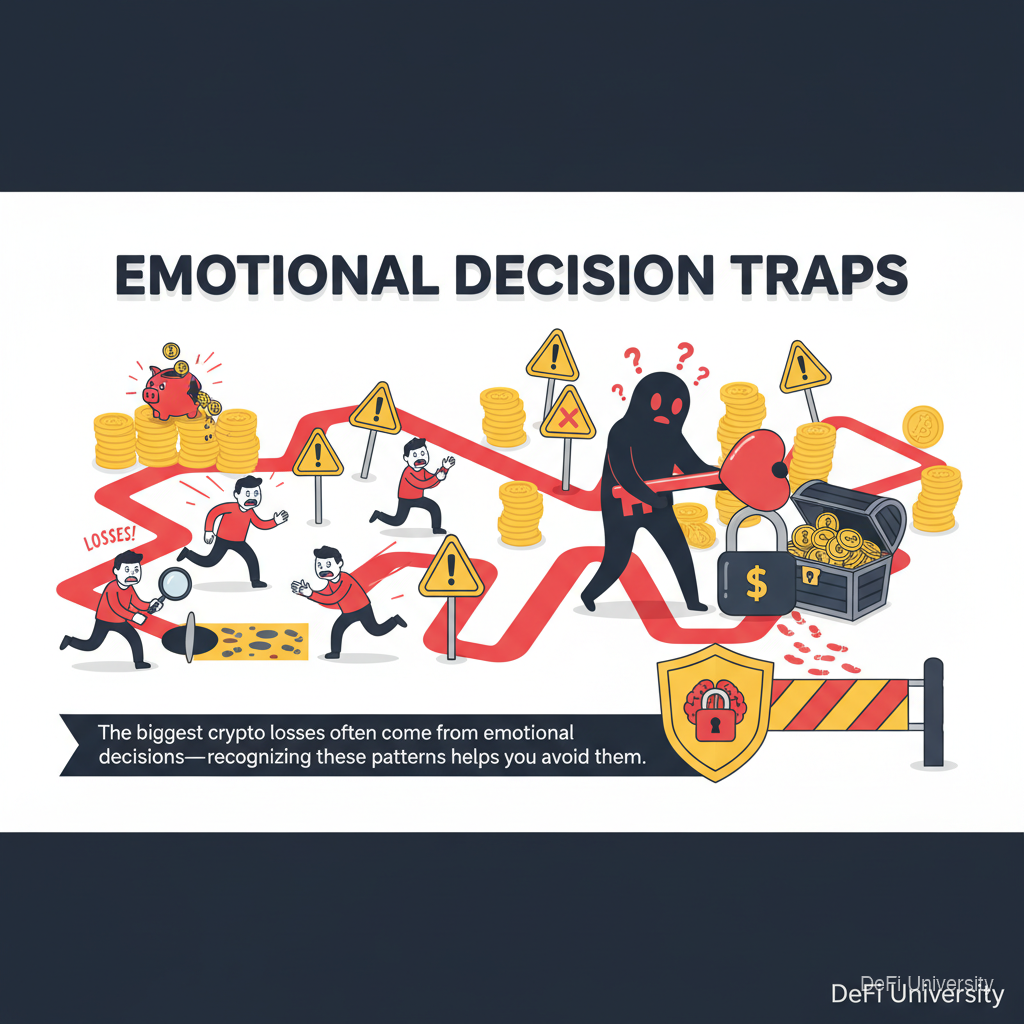
Core concept: The biggest crypto losses often come from emotional decisions—recognizing these patterns helps you avoid them.
Shopping When Hungry
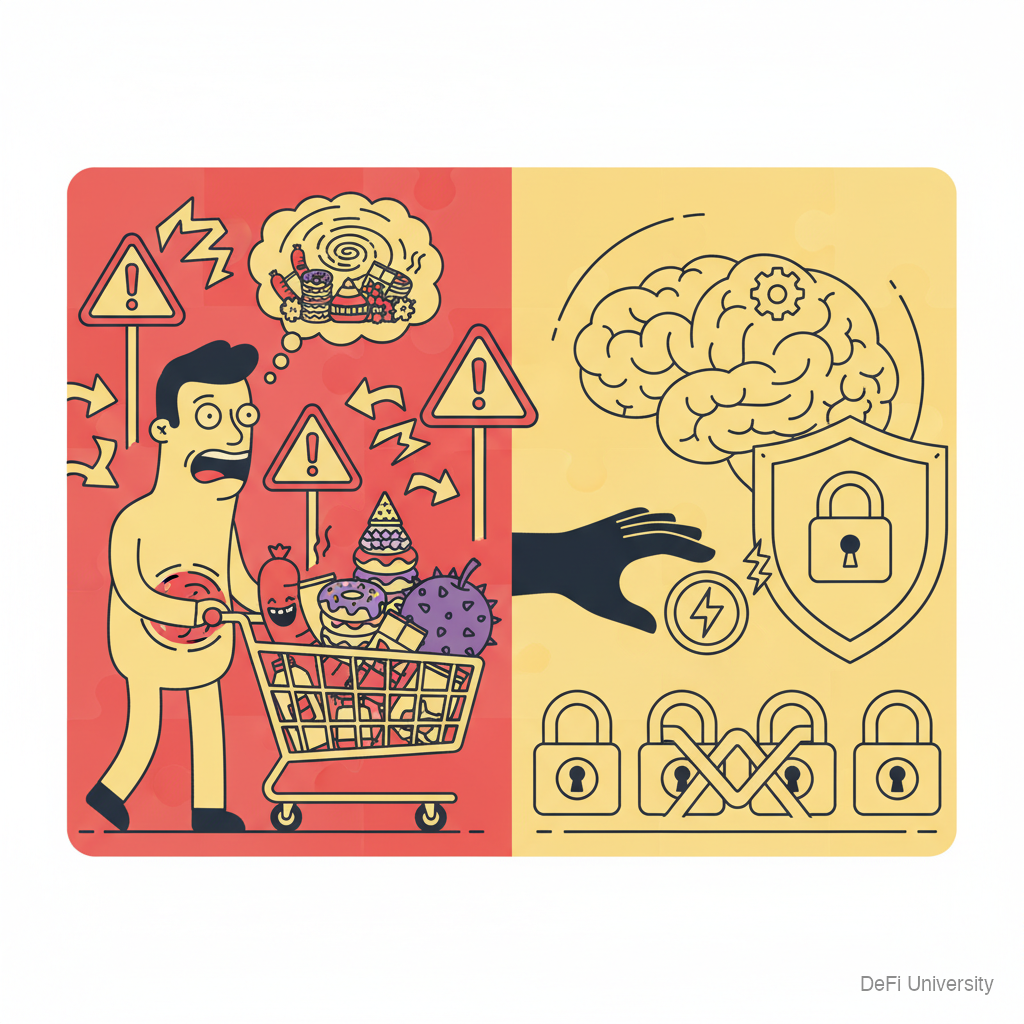
Ever gone grocery shopping hungry? You buy things you don't need, more than you planned, and stuff that looked good in the moment but you regret later.
Crypto decisions work similarly. When you're emotional—excited, fearful, greedy, desperate—you make choices you'll regret.
Hungry shopping = emotional trading
The solution isn't willpower in the moment. It's recognizing emotional states and having rules that protect you from yourself.
FOMO (Fear of Missing Out)
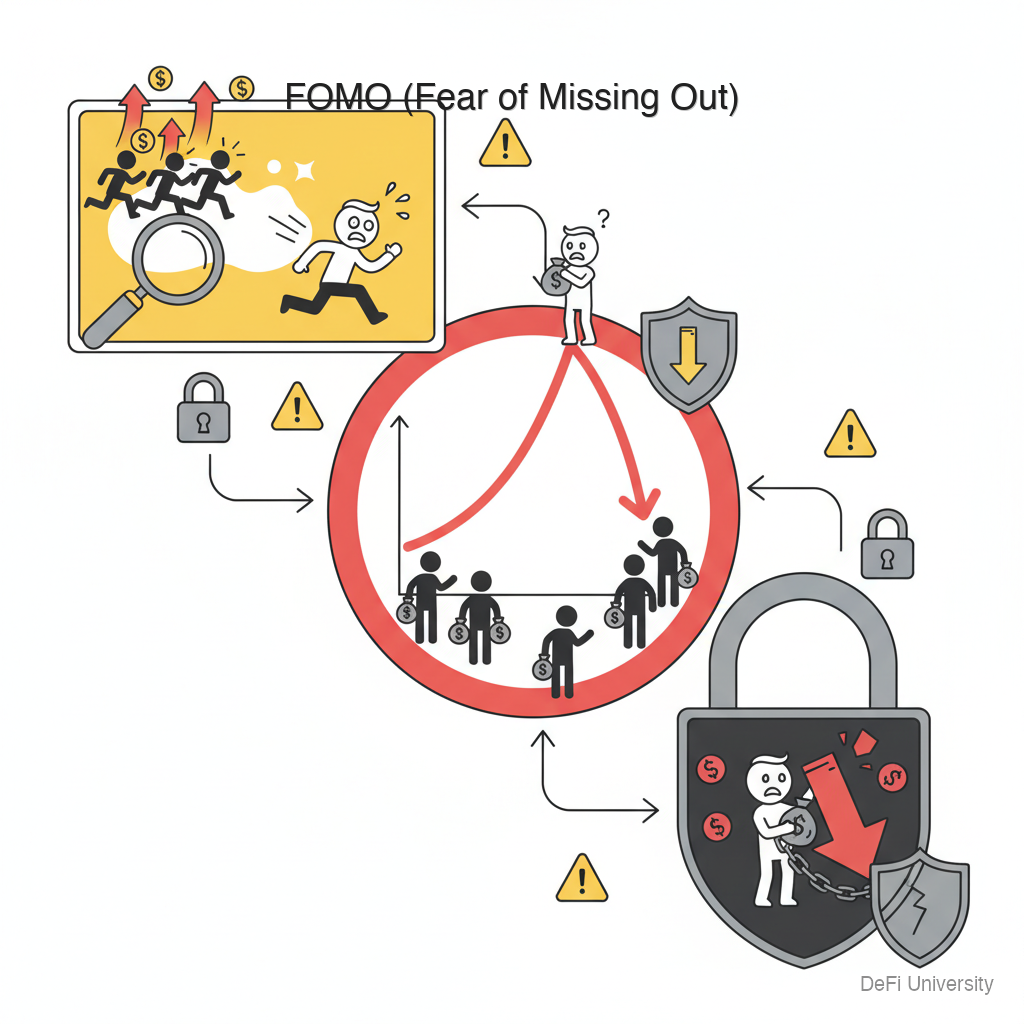
What it feels like: "Everyone's making money! I need to get in NOW or I'll miss it!"
What happens: You buy at the peak, after others have already profited. Price drops. You're left holding the bag.
Why it's a trap: By the time something is "hot," the easy gains are often gone. You're buying what early investors are selling.
Protection:
Have a buying plan before emotions hit
"If I didn't want it yesterday, why do I want it today?"
Wait 24 hours before any impulse purchase
Panic Selling
What it feels like: "It's crashing! I need to sell before I lose everything!"
What happens: You sell at the bottom, locking in losses. Price recovers. You watch it go back up without you.
Why it's a trap: Volatility is normal. What feels like a crash is often a temporary dip. Selling in panic crystallizes paper losses into real losses.
Protection:
Only invest what you can afford to lose
Have a plan for downturns before they happen
Ask: "Has anything fundamental changed, or just the price?"
Revenge Trading
What it feels like: "I lost money. I need to make it back right now."
What happens: You make increasingly risky bets trying to recover. Losses compound. Desperation leads to worse decisions.
Why it's a trap: You're trading emotionally, not rationally. The market doesn't owe you your money back. Trying to force recovery usually makes things worse.
Protection:
Accept losses as part of the process
Take a break after significant losses
Never try to "make back" losses in one trade
Confirmation Bias
What it feels like: "This coin is amazing! All the analysis I see confirms it!"
What happens: You only read positive analysis. You dismiss or ignore warnings. You're building a one-sided picture that doesn't reflect reality.
Why it's a trap: You're not researching—you're seeking validation. You miss real risks because you don't want to see them.
Protection:
Actively seek bearish analysis on anything you're bullish on
Ask: "What would make me wrong?"
Value people who disagree with you
Sunk Cost Fallacy
What it feels like: "I've already lost so much, I can't sell now."
What happens: You hold a losing position indefinitely because selling feels like "admitting defeat." The position continues declining.
Why it's a trap: Past losses don't determine future returns. A bad investment doesn't become good because you've lost money on it.
Protection:
Evaluate positions as if buying today: "Would I buy this at this price now?"
Past investment is irrelevant to future decisions
It's okay to cut losses and move on
Building Emotional Discipline
Have a plan: Decide rules before emotions hit. "I'll buy X amount of Y regardless of short-term price." "I won't sell in the first 24 hours of a crash."
Use automation: Automated investments (dollar-cost averaging) remove emotional timing.
Take breaks: Step away from charts and news. Checking prices constantly feeds emotional decision-making.
Journal decisions: Write down why you're buying or selling. Review later to learn from emotional patterns.
Accept imperfection: You'll make emotional mistakes. The goal is reducing them, not eliminating them entirely.
Key Takeaways
Emotional decisions cause major losses—FOMO, panic, revenge trading
FOMO leads to buying peaks—by the time it's "hot," it's often too late
Panic selling locks in losses—temporary dips become permanent losses
Confirmation bias blinds you—actively seek opposing viewpoints
Sunk cost fallacy keeps you stuck—past losses don't justify holding
Build systems and rules—protect yourself from your future emotional self
Last updated