Lesson 12: Creating Your Security Routine
🎧 Lesson Podcast
🎬 Video Overview
Lesson 12: Creating Your Security Routine
Core concept: Security isn't a one-time setup—it's ongoing habits that become second nature, like locking your doors before bed.
Locking Doors Before Bed
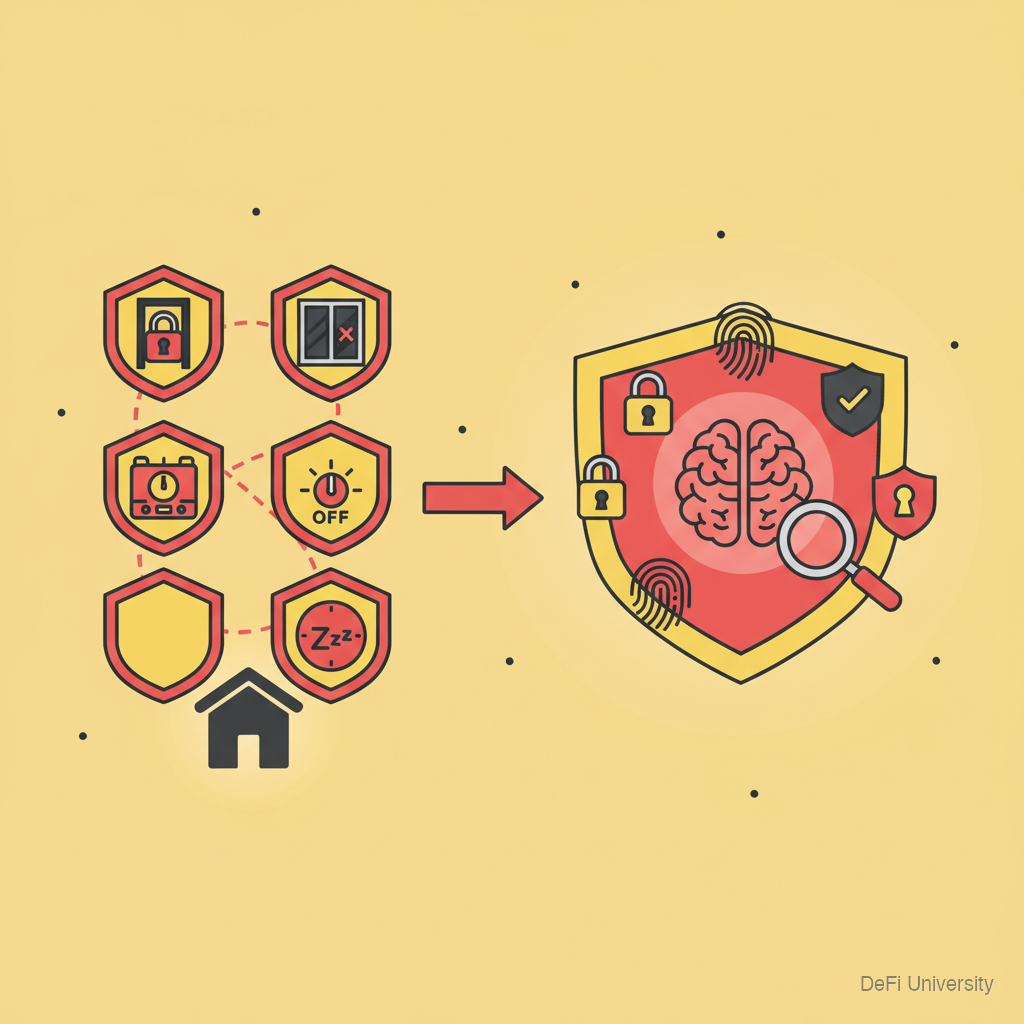
Every night, you probably:
Lock the front door
Close windows
Maybe check the stove
Set the alarm (if you have one)
You don't think about it much—it's routine. You'd feel uncomfortable NOT doing it.
Crypto security should become the same: automatic habits that protect you without requiring conscious effort every time.
Daily Habits
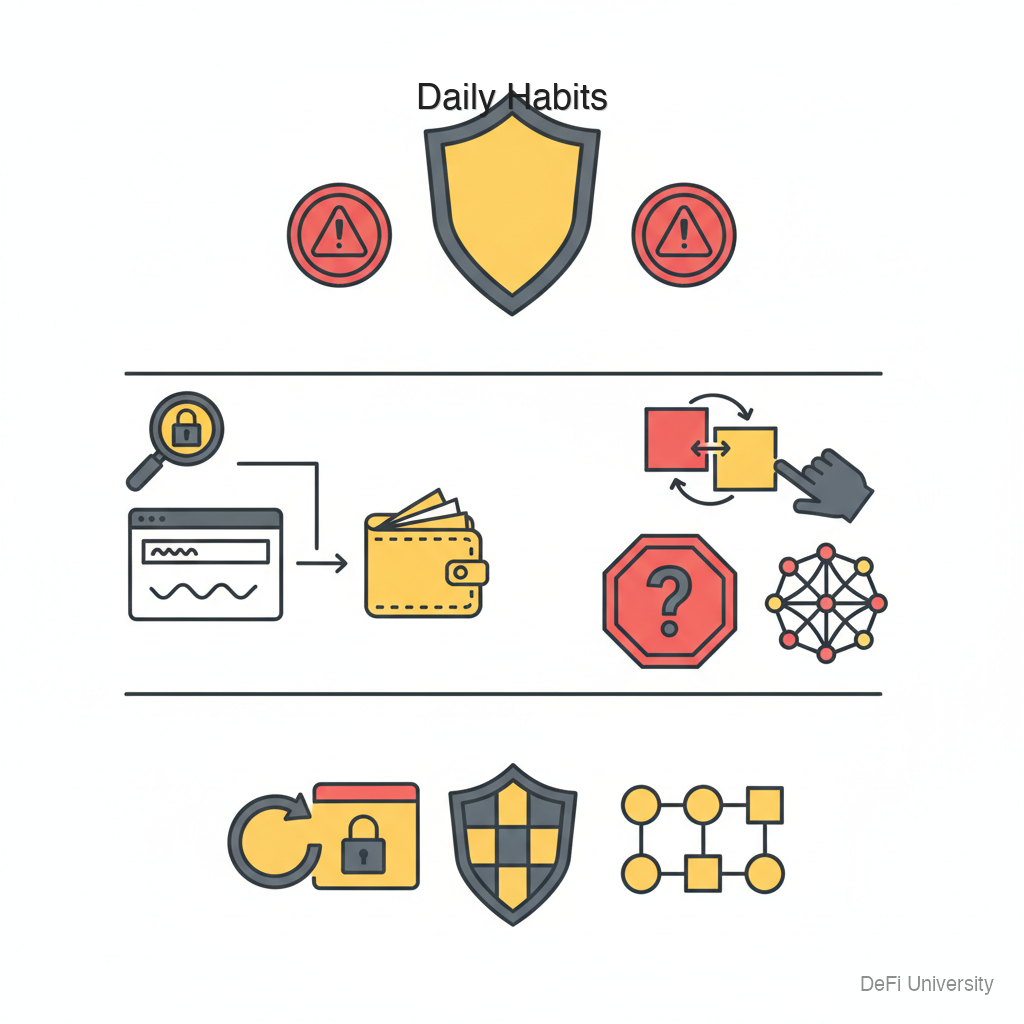
Before any transaction:
Verify you're on the correct site (check URL)
Read what you're approving in your wallet
Double-check addresses and amounts
If unsure, stop and verify
When checking crypto accounts:
Access through bookmarks, not search
Verify site before entering credentials
Be suspicious of unexpected prompts
On social media:
Ignore unsolicited DMs about crypto
Don't click links in messages
Verify giveaway claims through official channels (hint: they're scams)
Weekly Habits
Review active wallet connections: Many wallets let you see what sites are connected. Disconnect anything you're no longer actively using.
Check for unusual activity: Glance at recent transactions. Anything you don't recognize?
Stay informed: Brief check of security news. Any new scams to be aware of?
Monthly Habits
Review token approvals: Use tools like revoke.cash to see what contracts can access your tokens. Revoke approvals you no longer need.
Verify backup integrity: Are your seed phrase backups still where they should be? Still readable?
Update software: Wallet apps, browser extensions, devices. Updates often include security patches.
Review exchange security: 2FA still enabled? Recovery options still accurate? No unauthorized devices?
Periodic Security Audit
Every few months, do a deeper review:
Wallet hygiene:
Still using strong, unique passwords?
2FA enabled everywhere possible?
Email security solid?
Backup verification:
Test that backup can actually restore (with small amounts or separate test wallet)
Backups in multiple locations?
Holdings review:
Is distribution across wallets appropriate?
Should more be in cold storage?
Knowledge update:
Any new security best practices?
New scam types to be aware of?
Building the Habit
Start small: Don't try to implement everything at once. Pick 2-3 habits, make them automatic, then add more.
Use checklists: Until habits are automatic, use written checklists. Check off items every time.
Create triggers: Attach security checks to existing routines. "Before sending any transaction, I always verify the URL."
Forgive mistakes: You'll slip up. Learn and adjust, don't quit.
Celebrate success: Months of good security hygiene means avoided disasters. That's worth acknowledging.
The Goal: Unconscious Competence
Skill development follows stages:
Unconscious incompetence: You don't know what you don't know
Conscious incompetence: You know you need to learn
Conscious competence: You can do it, but it requires attention
Unconscious competence: It's automatic
This course took you from stage 1 to stage 3. Practice turns stage 3 into stage 4—where security is just how you operate, not something you think about.
Key Takeaways
Security is ongoing habits, not one-time setup
Daily habits: verify sites, read wallet prompts, ignore scam DMs
Weekly habits: check connections, review activity
Monthly habits: revoke old approvals, verify backups, update software
Build gradually: start with a few habits, make them automatic, add more
Goal is unconscious competence: security becomes how you operate
Last updated