Lesson 8: DeFi Lending and Borrowing

Lesson 8: DeFi Lending and Borrowing

๐ŸŽฏ Core Concept: Over-Collateralized Lending
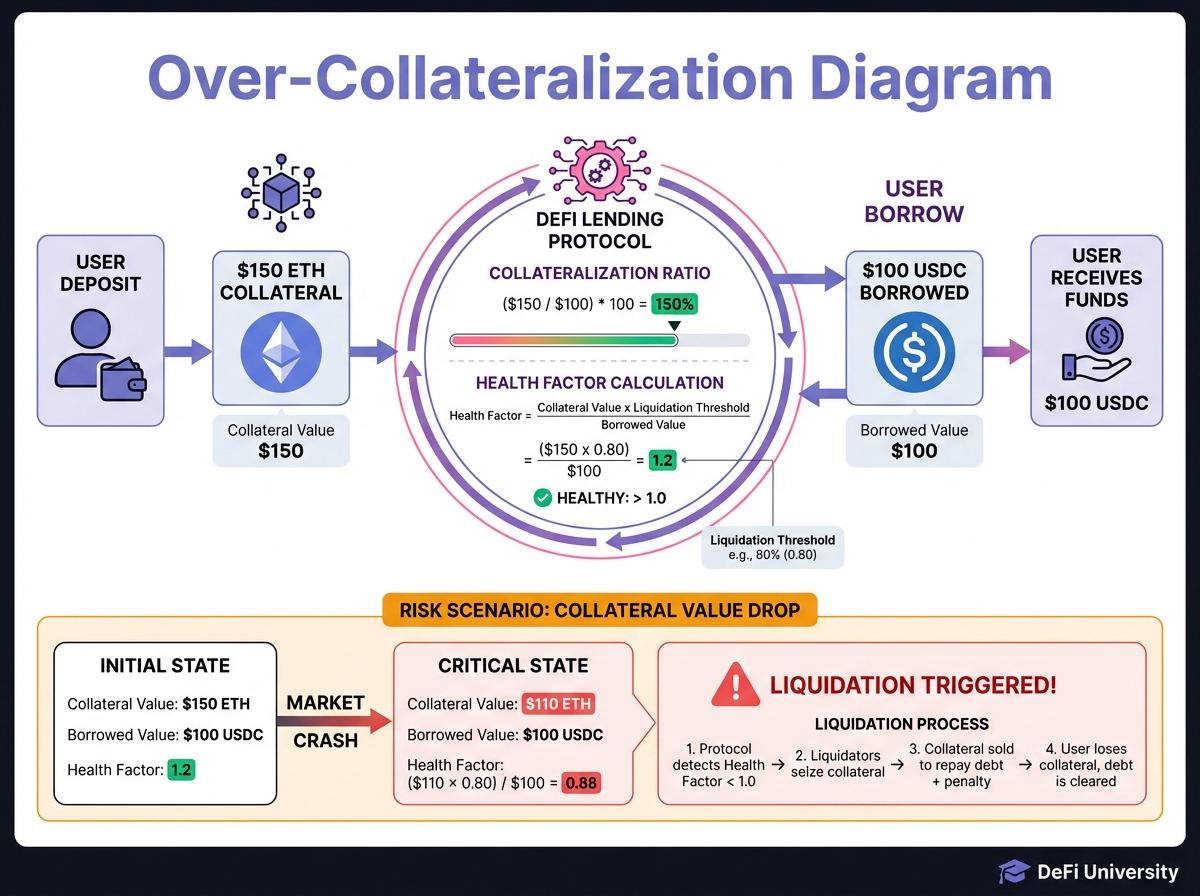
DeFi protocols like Aave and Compound allow for permissionless lending and borrowing. Unlike TradFi, which relies on credit scores, DeFi relies on Over-Collateralization. To borrow $100 worth of USDC, you might need to deposit $150 worth of ETH as collateral.

Over-Collateralization Diagram

๐Ÿ“š How It Works

The Mechanics:

  1. Deposit collateral (e.g., $150 ETH)

  2. Borrow against it (e.g., $100 USDC)

  3. If collateral value drops near debt value โ†’ automatic liquidation

Use Cases for Borrowing:

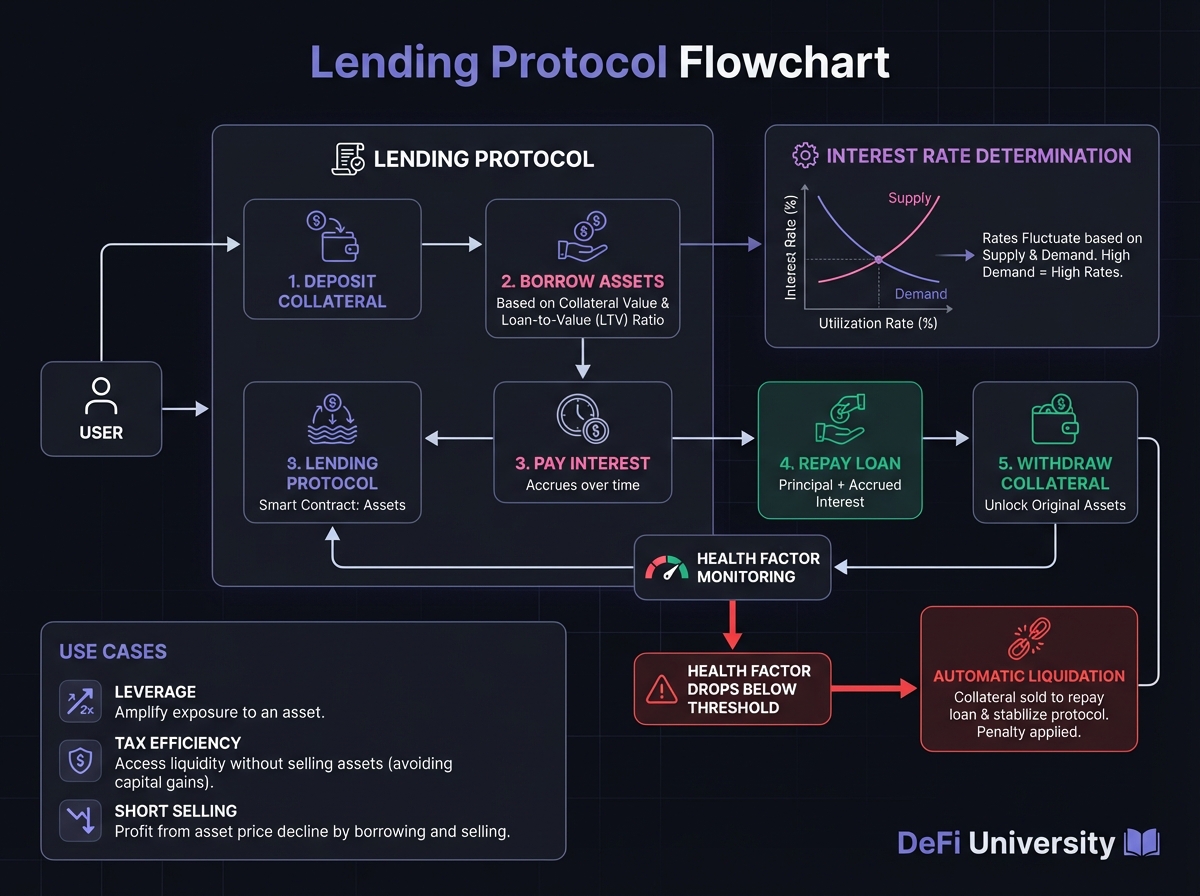
  • Leverage: Borrow against an asset to buy more of that asset

  • Tax Efficiency: Access liquidity without selling (avoiding capital gains)

  • Short Selling: Borrow an asset to sell it, hoping to buy back cheaper

Lending Protocol Flowchart

๐Ÿ“š Health Factors

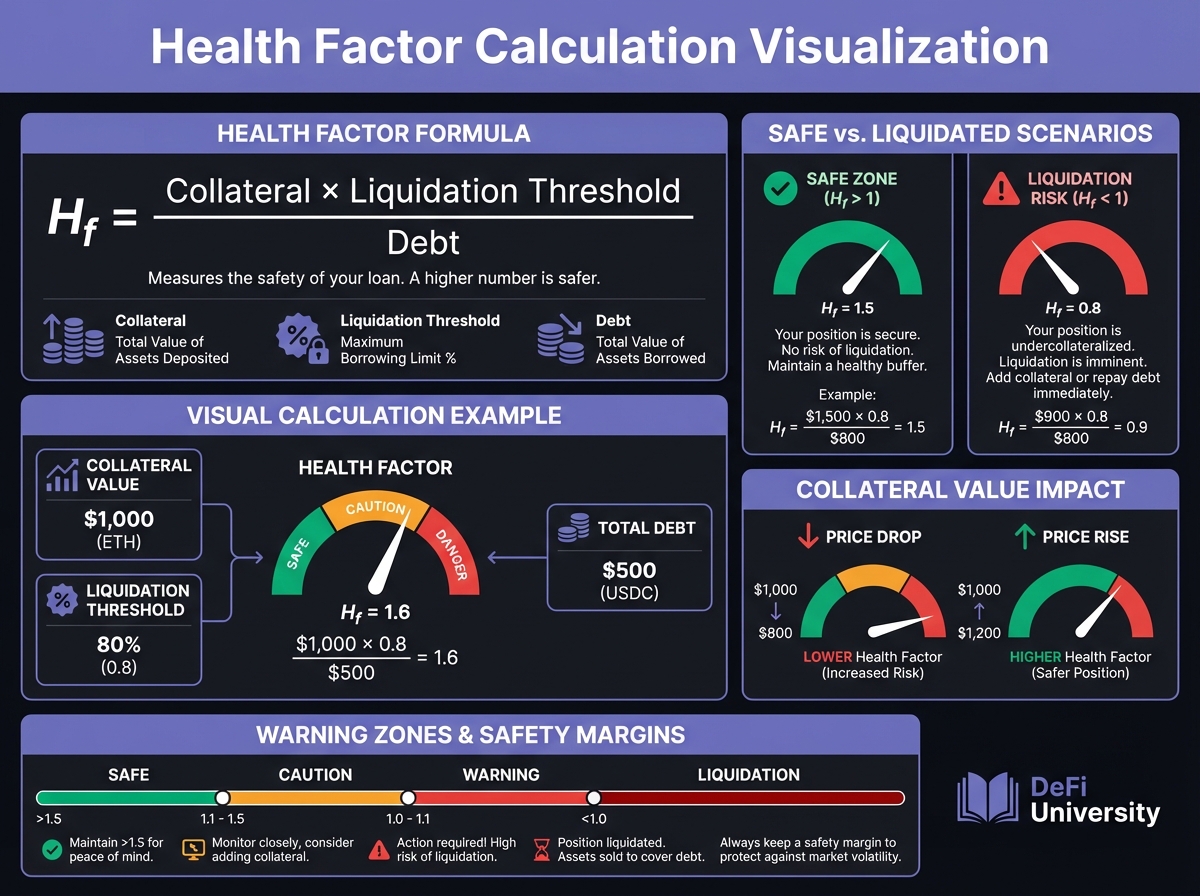
The Health Factor determines loan safety:

Hf=Collateralร—Liquidationย ThresholdDebtH_f = \frac{Collateral \times Liquidation\ Threshold}{Debt}

  • H_f > 1: Position is safe

  • H_f < 1: Position is liquidated

Health Factor Calculation Visualization

๐ŸŽฎ Interactive: Lending Calculator

Calculate your loan health factor and liquidation price with this interactive tool:

Interactive DeFi Protocol Explorer

Use this interactive tool to explore and compare different lending protocols:

๐Ÿ”‘ Key Takeaways

  1. Over-Collateralization: You must deposit more than you borrow

  2. No Credit Checks: Access is permissionless, based on collateral only

  3. Automatic Liquidations: If collateral drops, position is liquidated

  4. Health Factor: Monitor this metric to avoid liquidation

  5. Interest Rates: Determined algorithmically by supply and demand


Next Lesson: In Lesson 9, we'll explore stablecoins and stability mechanisms.

Last updated