Lesson 3: Why We Trust Money
🎧 Lesson Podcast
🎬 Video Overview
Why We Trust Money
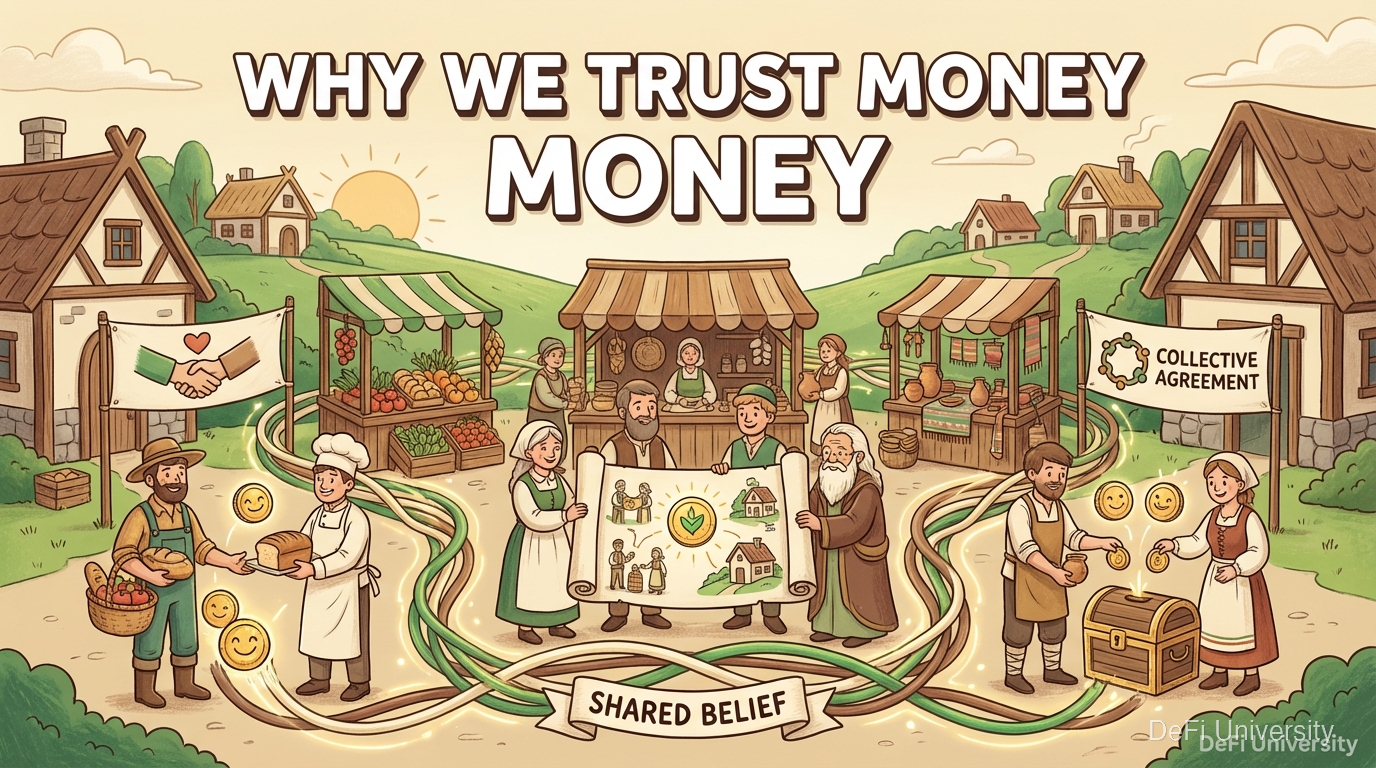
Core concept: Money only works because everyone agrees it works—it's a shared story we all believe in.
The Birthday Party Game
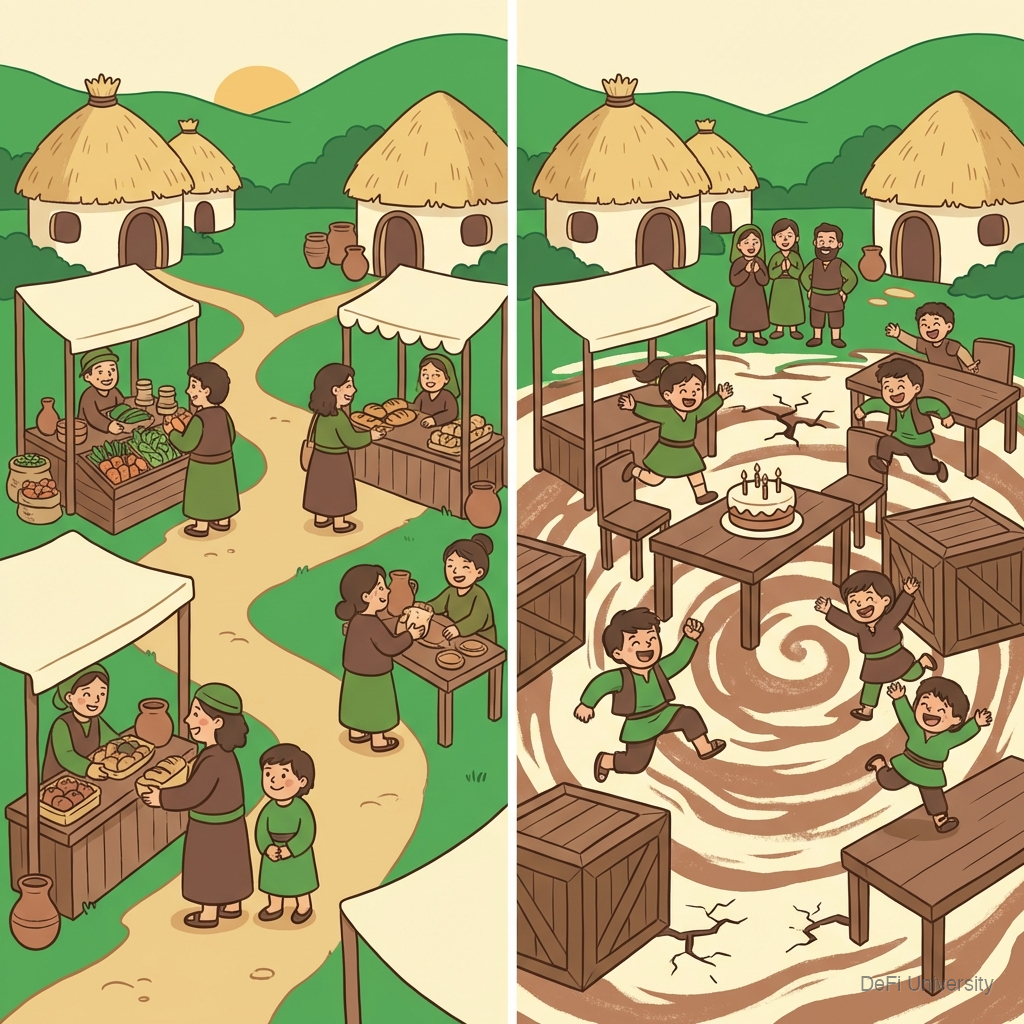
Remember being a kid at a birthday party where someone invented a game on the spot? "The floor is lava! If you touch it, you're out!"
Suddenly, everyone's jumping on furniture, screaming with excitement. Why? There's no actual lava. The floor is perfectly safe. But the game works because everyone agrees to play by the same rules.
Money works exactly the same way.
A $100 bill is just paper with ink. It's not intrinsically useful—you can't eat it, wear it, or build shelter with it. But because everyone agrees to accept it as payment, it becomes incredibly valuable.
The moment everyone stops agreeing? The paper becomes worthless. This has happened throughout history when currencies collapsed—people literally wallpapered their homes with worthless bills.
The Three Pillars of Trust
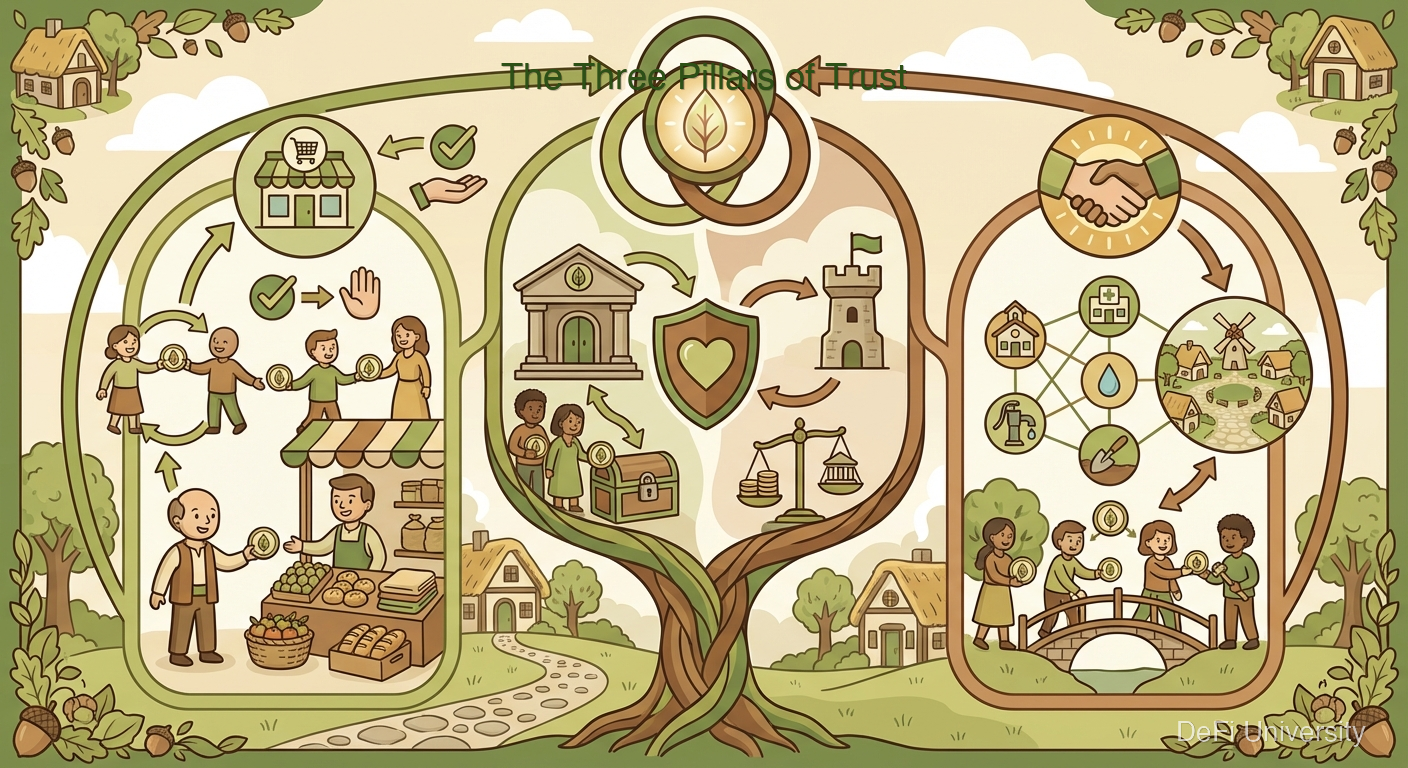
For money to work, three types of trust need to exist:
1. Trust in Acceptance
You believe other people will accept the money too. You take dollars because you trust the grocery store will take them, your landlord will take them, and the gas station will take them.
This creates a powerful network effect: the more people accept it, the more valuable it becomes, which makes even more people accept it.
2. Trust in Stability
You believe the money won't suddenly become worthless tomorrow. If you thought prices would double next week, you'd spend everything immediately. If you thought prices would crash, you'd hoard everything.
Stable expectations about value are crucial for money to function.
3. Trust in the Issuer
Most modern money is backed by governments. You trust that:
The government won't print unlimited money (causing inflation)
The legal system will enforce contracts using that money
Banks operating under government rules will be reliable
This is why government currencies are called "fiat" money—from the Latin word meaning "let it be done." The government declares it money by fiat, and everyone goes along with it.
When Trust Breaks Down
History is full of examples where monetary trust collapsed:
Germany, 1923: After World War I, Germany printed money to pay debts. Prices doubled every few days. Workers got paid twice daily and ran to stores immediately because prices rose by the hour. Children played with stacks of worthless bills like building blocks.
Zimbabwe, 2008: Inflation hit 89.7 sextillion percent (that's 89,700,000,000,000,000,000,000%). The government printed 100 trillion dollar bills that couldn't buy a loaf of bread.
Venezuela, 2010s-present: Severe inflation made the currency nearly worthless. People weighed money instead of counting it. Many turned to dollars or cryptocurrency as alternatives.
In each case, people lost trust in the money's stability. Once trust breaks, recovery is extremely difficult.
Trust is Invisible Until It's Gone
Here's the tricky thing about trust: you never think about it until it fails.
When you hand someone a $20 bill, you don't consciously think "I trust this will be accepted." It's automatic, like trusting a chair will hold you when you sit down.
But ask someone in Venezuela how they feel about their currency, and trust becomes very visible—because they don't have it anymore.
Understanding this invisible trust is crucial for understanding cryptocurrency. Bitcoin's innovation wasn't digital money (we already had that). It was creating a system where trust could be placed in math and code instead of governments and banks.
Whether that's better or worse depends on your circumstances—but it's definitely different.
The Agreement Continues
Every time you accept money as payment, you're voting with your actions that you trust the system. Every time you spend it, you're demonstrating that trust to someone else.
Money is a never-ending game that keeps running because enough people keep playing. It's one of humanity's most successful collaborative fictions—a shared story that enables civilization-scale cooperation between strangers who will never meet.
Pretty impressive for some paper and digital entries.
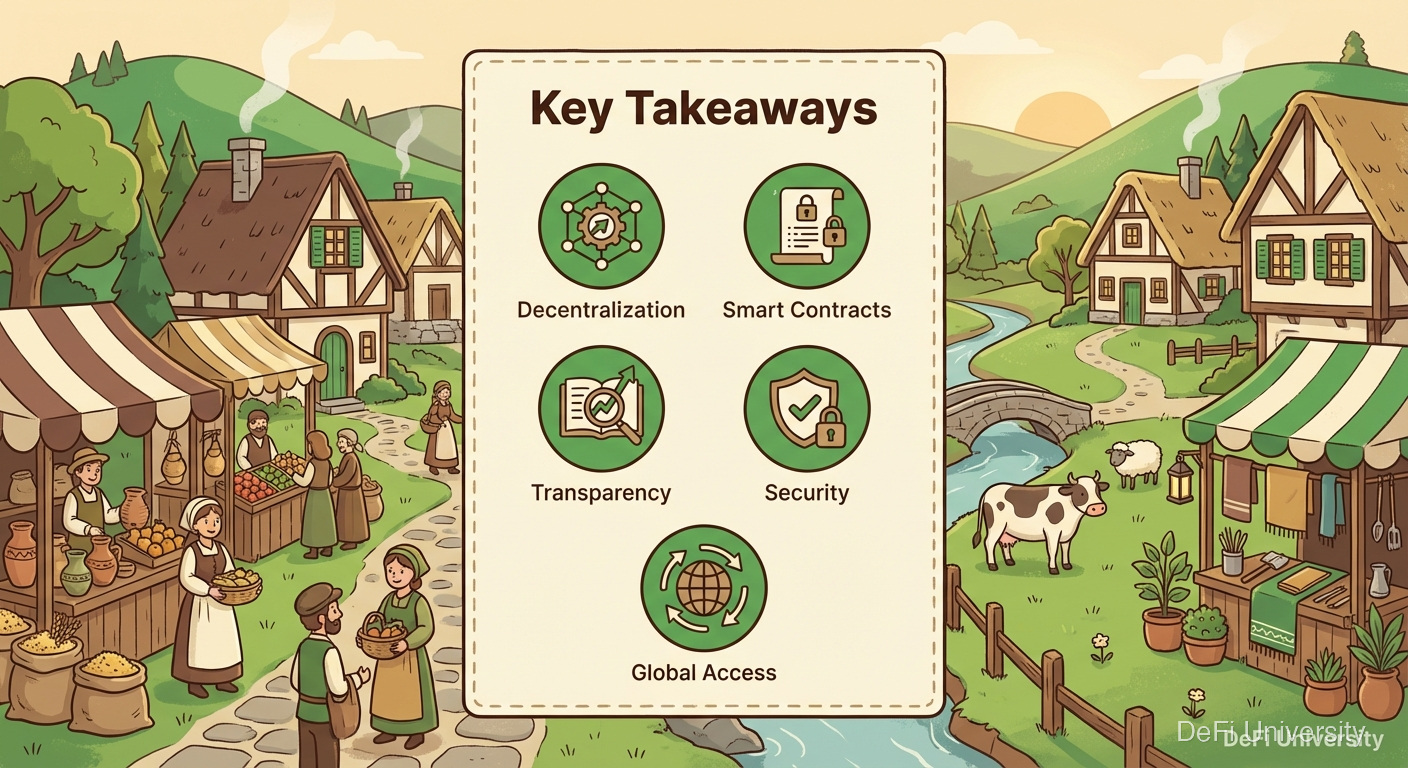
Key Takeaways
Money is a social agreement—it only works because everyone agrees it works
Trust has three components: acceptance by others, stability over time, and backing by issuers
When trust fails, money fails—hyperinflation destroys currencies when people lose faith
Trust is invisible until broken—we don't notice it working until it stops
Different systems create different trust models—governments, banks, and crypto each require trusting different things
Last updated