Lesson 7: Bank Fees Explained
🎧 Lesson Podcast
🎬 Video Overview
Bank Fees Explained
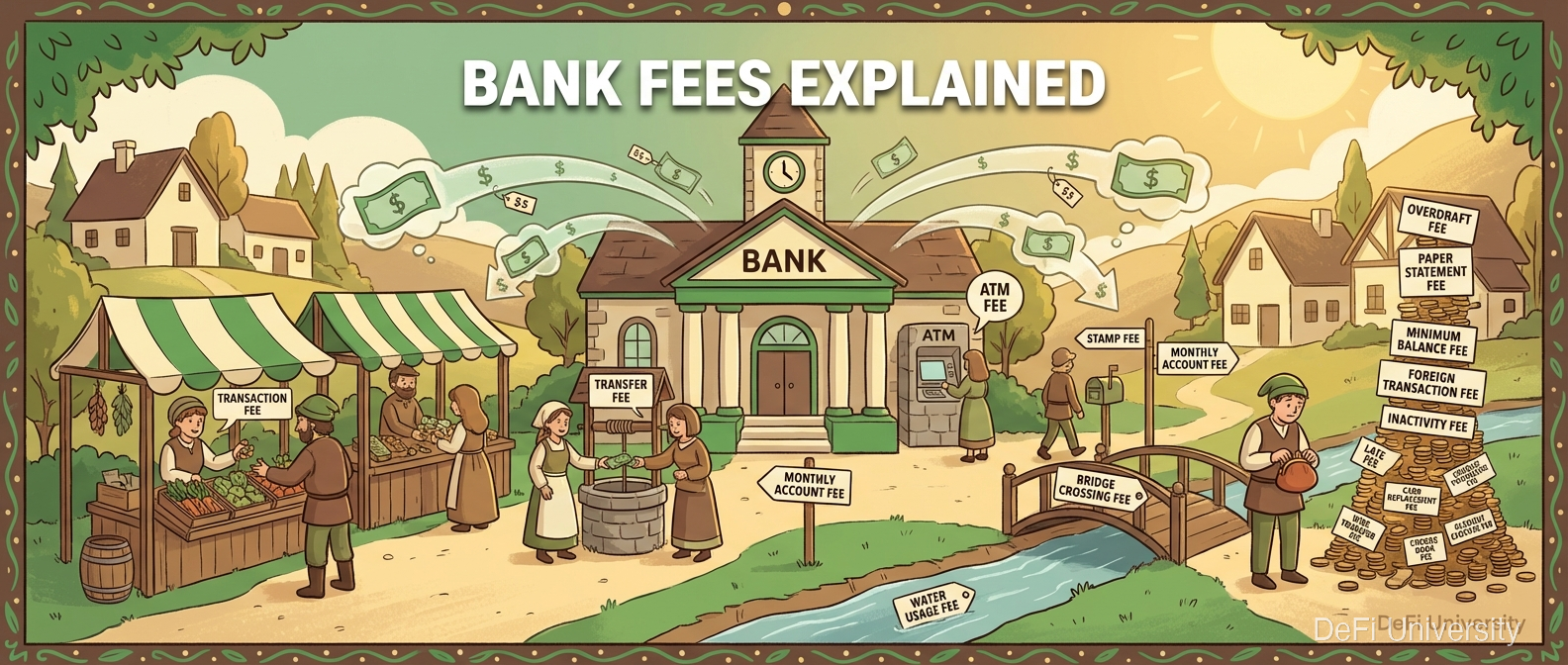
Core concept: Banks charge fees for almost everything—and these costs add up more than most people realize.
The Hotel Minibar Effect
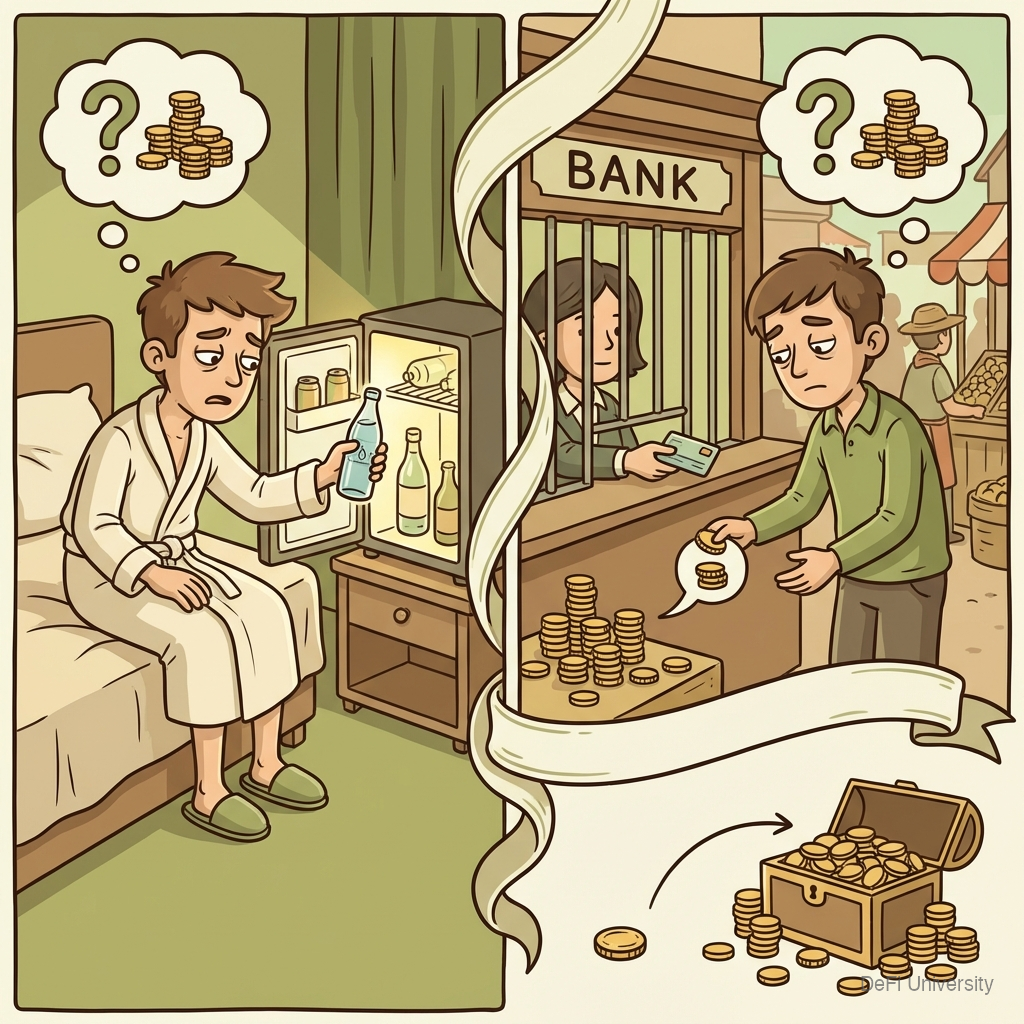
Ever open the minibar in a hotel room, see a $8 bottle of water, and think "who pays these prices?" Then later, tired and thirsty, you grab that water anyway?
Bank fees work the same way. Each individual fee seems small or ignorable, but they're strategically designed for moments when you have no better option or when you're not paying attention.
And unlike the hotel minibar, bank fees happen automatically. You don't consciously decide to pay—the money just disappears from your account.
The Fee Menu
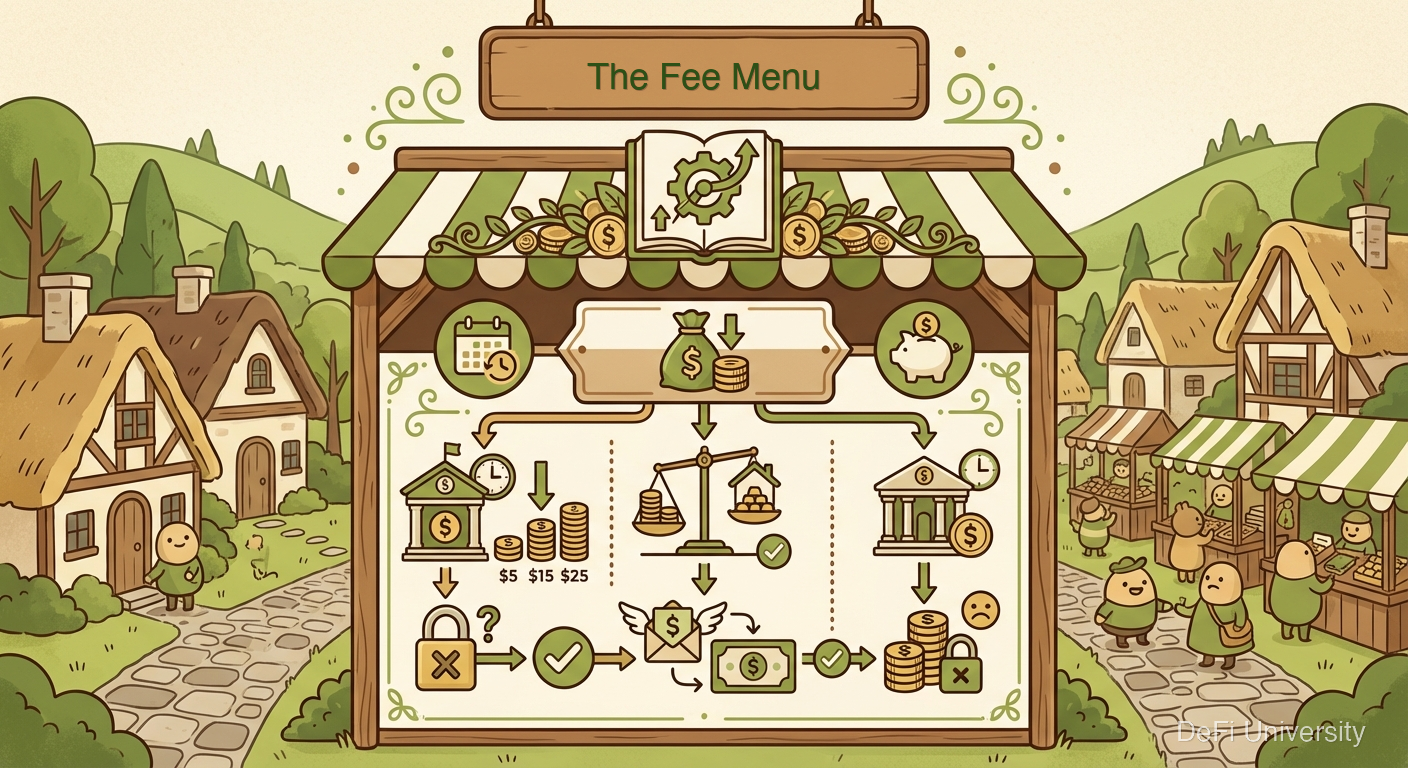
Here's what banks commonly charge:
Monthly Maintenance Fees ($5-25/month)
The fee for having an account. Some banks waive this if you maintain a minimum balance (usually $500-5,000) or have direct deposit. Others charge no matter what.
The math: $12/month = $144/year. Over 40 years of adulthood, that's $5,760—not including inflation.
Overdraft Fees ($25-35 per incident)
You buy a $4 coffee but only have $3 in your account. The bank covers the $4 (how generous!) and charges you $35 for the privilege. Your coffee just cost $39.
The reality: People who overdraft are typically those who can least afford extra fees. Studies show banks earn more from overdraft fees from low-balance customers than from all services combined.
ATM Fees ($2-5 per withdrawal)
Use an ATM outside your bank's network and you might pay twice: once to the ATM operator and once to your own bank. A $40 withdrawal can cost $6 in fees—that's 15% just for accessing your own money.
Wire Transfer Fees ($15-50)
Need to send money quickly or internationally? Wire transfers cost $25-50 for domestic and can exceed $50 for international. The money moves in hours but costs a full hour's wages for many workers.
Account Closure Fees ($10-25)
Some banks charge you to leave. Breaking up isn't free.
Minimum Balance Fees ($10-15/month)
Fall below a certain balance? Fee. This creates a penalty for being poor—those with less money are charged more to keep what little they have.
Paper Statement Fees ($2-5/month)
Want a physical copy of your transactions? That'll cost extra. Some banks only waive this if you agree to paperless (and then email you advertisements).
Dormant Account Fees ($5-25/month)
Don't use your account for a while? Fee. Activity keeps them in business, so they penalize inactivity.
The Math of Being Poor
Economists have a saying: it's expensive to be poor. Banking perfectly illustrates this.
If you have money: Minimum balances are easy, overdrafts don't happen, you can wait for free ATMs, and banks compete for your business with rewards and perks.
If you don't: Every week is a minefield of potential fees. One unexpected expense can cascade into multiple overdrafts. Minimum balances are impossible to maintain.
The Federal Reserve estimated that Americans paid $15.47 billion in overdraft and non-sufficient funds fees in 2019. That money came disproportionately from people who could least afford it.
Hidden Fees and Fine Print
Beyond explicit fees, there are stealth costs:
Foreign transaction fees: Use your card abroad and pay 1-3% extra on every purchase.
Currency conversion markups: Banks set their own exchange rates—usually 2-4% worse than the real rate. You're paying, just indirectly.
Inactivity fees on savings: Some accounts penalize you for not depositing regularly.
Early closure fees: Close an account within 90-180 days of opening? Fee.
These aren't advertised in big letters. They're buried in the terms and conditions that nobody reads.
What You Can Do
Shop around: Online banks typically have fewer fees than traditional banks. Some have none.
Set up alerts: Get notifications before you overdraft.
Use your bank's ATM network: Or get a bank that reimburses ATM fees.
Keep a buffer: If possible, maintain a cushion above minimum balance requirements.
Negotiate: Banks sometimes waive fees if you ask, especially for long-time customers.
Consider alternatives: Credit unions often have lower fees. New fintech apps may have different (sometimes better, sometimes worse) fee structures.
Understanding fees is the first step to minimizing them. Later in this curriculum, we'll explore how cryptocurrency and DeFi offer different cost structures—not necessarily better or worse, but different trade-offs worth understanding.
Key Takeaways
Banks charge fees for nearly everything—maintenance, overdrafts, ATMs, transfers, statements, and more
Fees disproportionately affect low-balance customers—the less money you have, the more you pay proportionally
Overdraft fees are the most punitive—a $4 purchase can cost $39
Hidden fees hide in fine print—foreign transactions, currency conversion, early closure
Alternatives exist—online banks, credit unions, and newer fintech options often have lower fees
Last updated