Lesson 9: From Cash to Cards
🎧 Lesson Podcast
🎬 Video Overview
From Cash to Cards
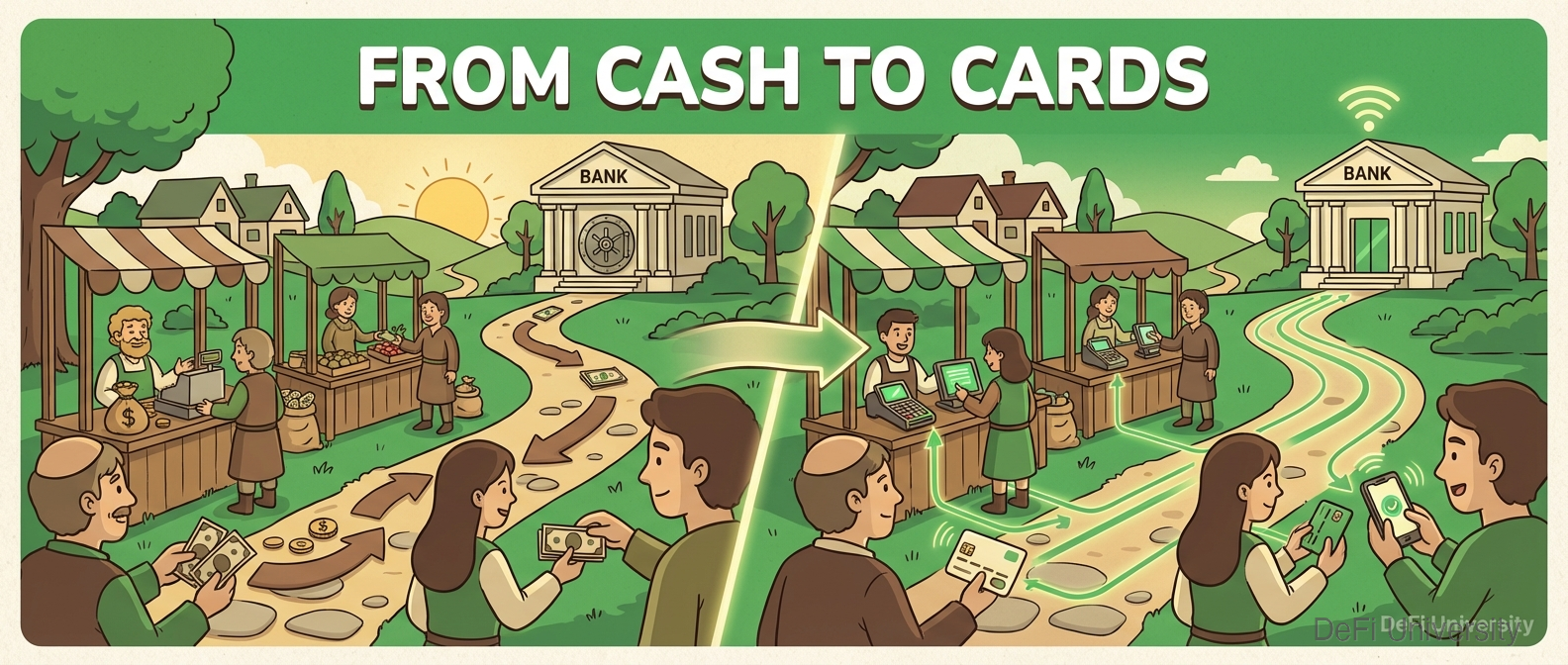
Core concept: The shift from cash to cards changed how money moves—but the underlying system stayed mostly the same.
Notes Passing in Class vs. Group Chat
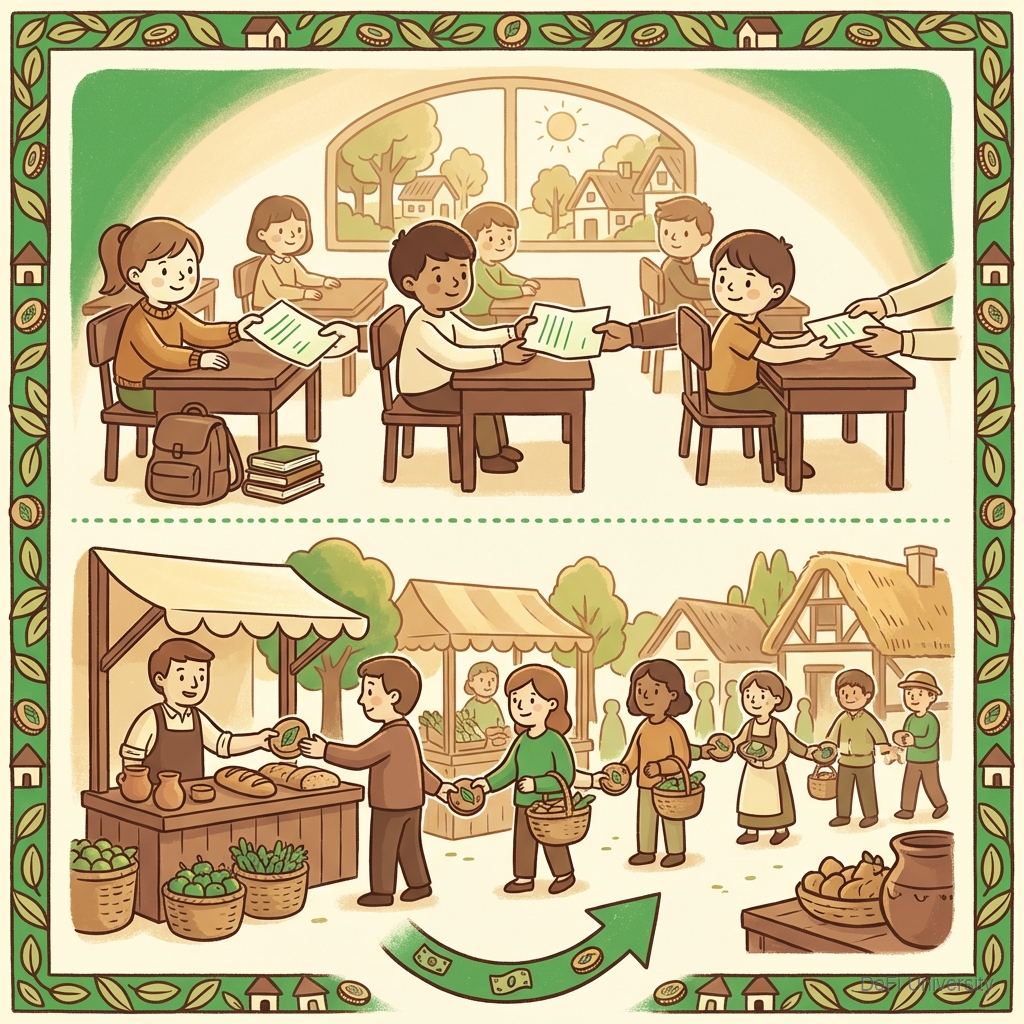
Remember passing notes in class? You'd write something, fold it up, and physically hand it to the next person to pass down the row. It was tangible, immediate, and everyone in the chain touched the paper.
Cash works the same way. You hand someone physical money. They now have it. You don't. Simple, immediate, final.
Now think about group chats. You type a message, hit send, and it appears on everyone's screen. You never physically handed anything to anyone—information just updated everywhere.
Cards work like group chats. When you pay with a card, no physical money moves. Information updates in multiple databases. Your balance goes down, the store's balance goes up, and several companies take notes about what happened.
Both methods get messages from A to B, but the mechanics are completely different.
What Happens When You Swipe
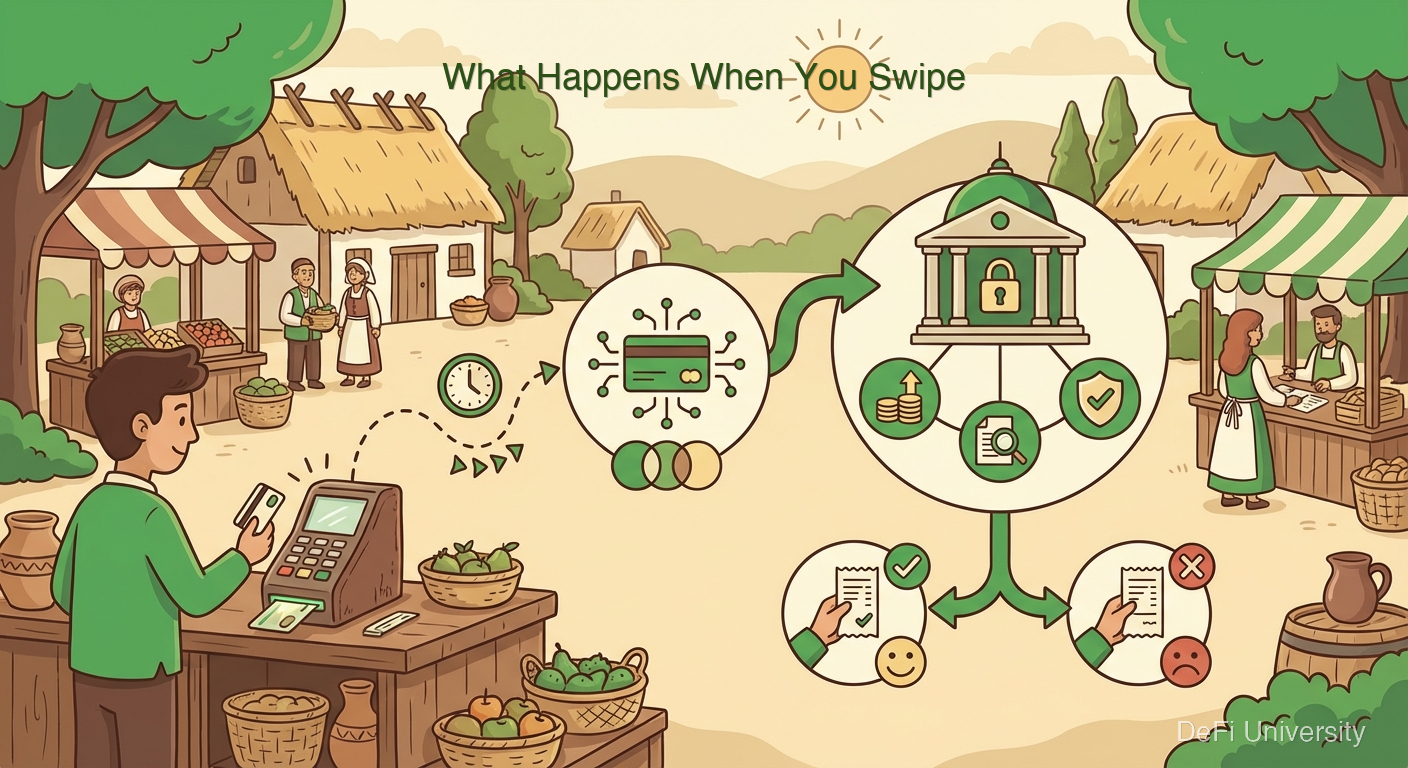
Here's what actually occurs during a card transaction:
1. Authorization (2-3 seconds) Your card details hit the payment terminal, which sends a request through the card network (Visa, Mastercard) to your bank. Your bank checks: Does this person have the funds? Is this card reported stolen? Are there any fraud flags?
If everything looks good, your bank says "approved" and puts a hold on the funds.
2. Clearing (later that day) The merchant's system sends the final transaction details to the card network. The network sorts all the day's transactions and figures out who owes what to whom.
3. Settlement (1-3 days) Actual money moves between banks. Your bank sends funds to the merchant's bank (minus fees). The merchant finally has the money.
That 3-second swipe initiated a multi-day process involving 4-5 different companies. You never see this complexity—and that's intentional.
The Parties Involved
A simple card purchase involves:
You (cardholder)
Your bank (issuing bank)
The store (merchant)
The store's bank (acquiring bank)
The card network (Visa, Mastercard, etc.)
The payment processor (often behind the scenes)
Each party takes a cut. On a $100 purchase:
Card network: ~$0.13
Issuing bank: ~$1.75
Acquiring bank/processor: ~$0.20
That's about 2-3% of every transaction. The merchant pays this (which is partly why small businesses sometimes prefer cash or have card minimums).
Credit vs. Debit: Same Swipe, Different Money
They look identical to use, but they're fundamentally different:
Debit Card: Money comes directly from your bank account. You're spending money you have. If someone steals your card, they're taking your actual money (though banks typically help recover it).
Credit Card: You're borrowing money from the card company. You'll pay them back later (ideally before interest kicks in). If someone steals your card, they're stealing from the bank—you have better protection.
Credit cards also typically offer rewards (points, cashback) because they charge merchants more and pass some back to you as an incentive to use the card.
What Cash Still Does Better
Despite convenience, cash has advantages:
Privacy: Cash transactions are anonymous. No one tracks your purchases or sells data about them.
Universal acceptance: Cash doesn't require terminals, internet connections, or bank accounts.
No fees: Neither party pays transaction fees on cash.
Immediate settlement: No waiting days for "settlement." The transaction is complete the moment cash changes hands.
Works without power: Hurricanes, blackouts, and server outages don't stop cash.
This is why many people still prefer cash, especially for small purchases, privacy-sensitive transactions, or when dealing with people who don't have card infrastructure.
The Cashless Trend
Many societies are moving toward cashless:
Sweden: Cash is used in less than 10% of transactions
China: Mobile payments dominate through WeChat Pay and Alipay
India: The government actively pushes digital payments
Benefits include reduced cash handling costs, better transaction records, and less physical robbery.
Concerns include financial exclusion (what about people without bank accounts?), privacy loss (all transactions become trackable), and system fragility (what happens when the network goes down?).
The Foundation for What's Next
Understanding cards helps you understand cryptocurrency payments:
Cards: Multiple intermediaries, 2-3% fees, 1-3 day settlement
Crypto: No intermediaries, variable fees, minutes-to-hours settlement
Neither is universally "better"—but they make different trade-offs. Cards offer consumer protection and familiarity. Crypto offers speed and no intermediaries.
Knowing what's happening behind that card swipe helps you evaluate alternatives intelligently.
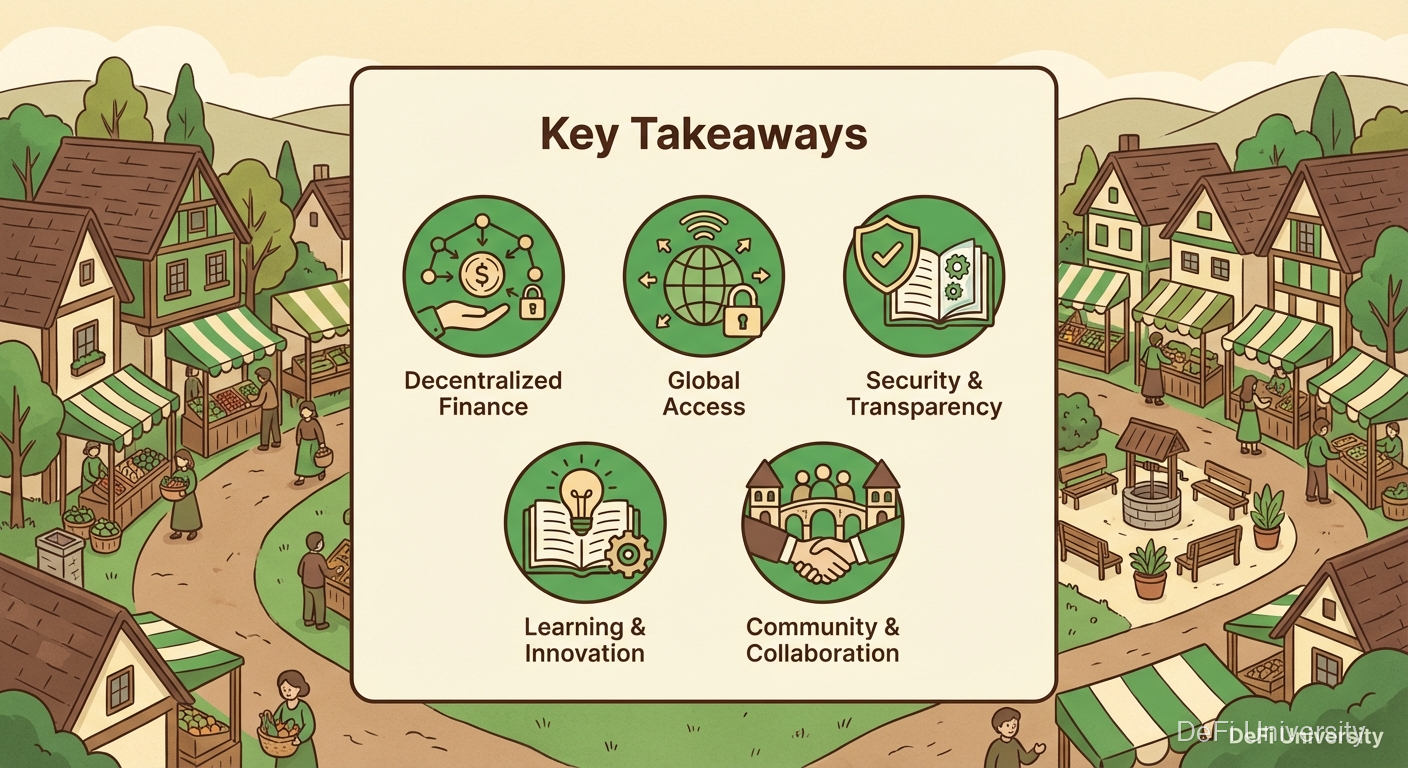
Key Takeaways
Card payments are information updates, not physical transfers—databases change, not locations of paper
A simple swipe involves 4-5 companies and a multi-day process you never see
Merchants pay 2-3% on every card transaction, which affects pricing
Credit cards are loans; debit cards spend your money directly
Cash still offers privacy, universal acceptance, and instant settlement
The world is going cashless, with both benefits and concerns
Last updated