Lesson 9: Only Invest What You Can Lose
🎧 Lesson Podcast
🎬 Video Overview
Lesson 9: Only Invest What You Can Lose
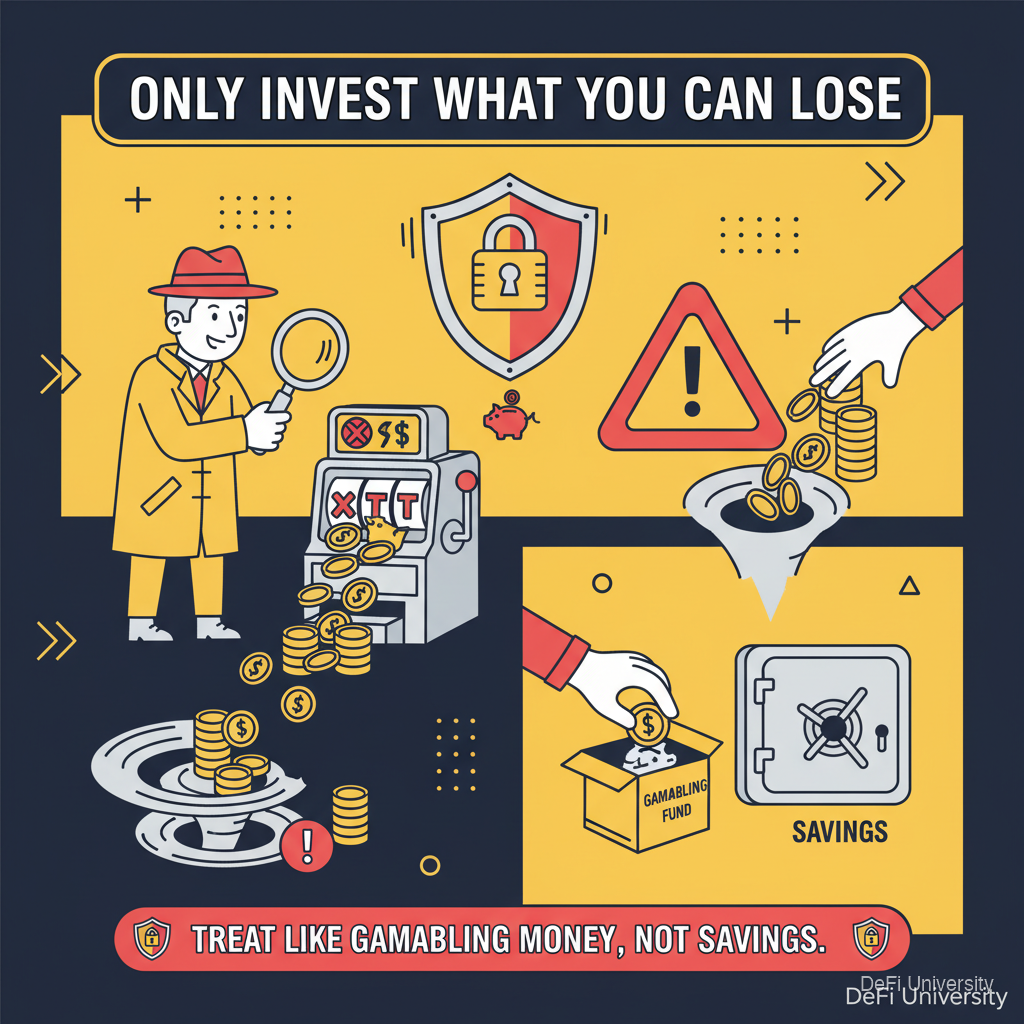
Core concept: Only put money into crypto that you could lose entirely without affecting your life—treat it like gambling money, not savings.
Emergency Fund First
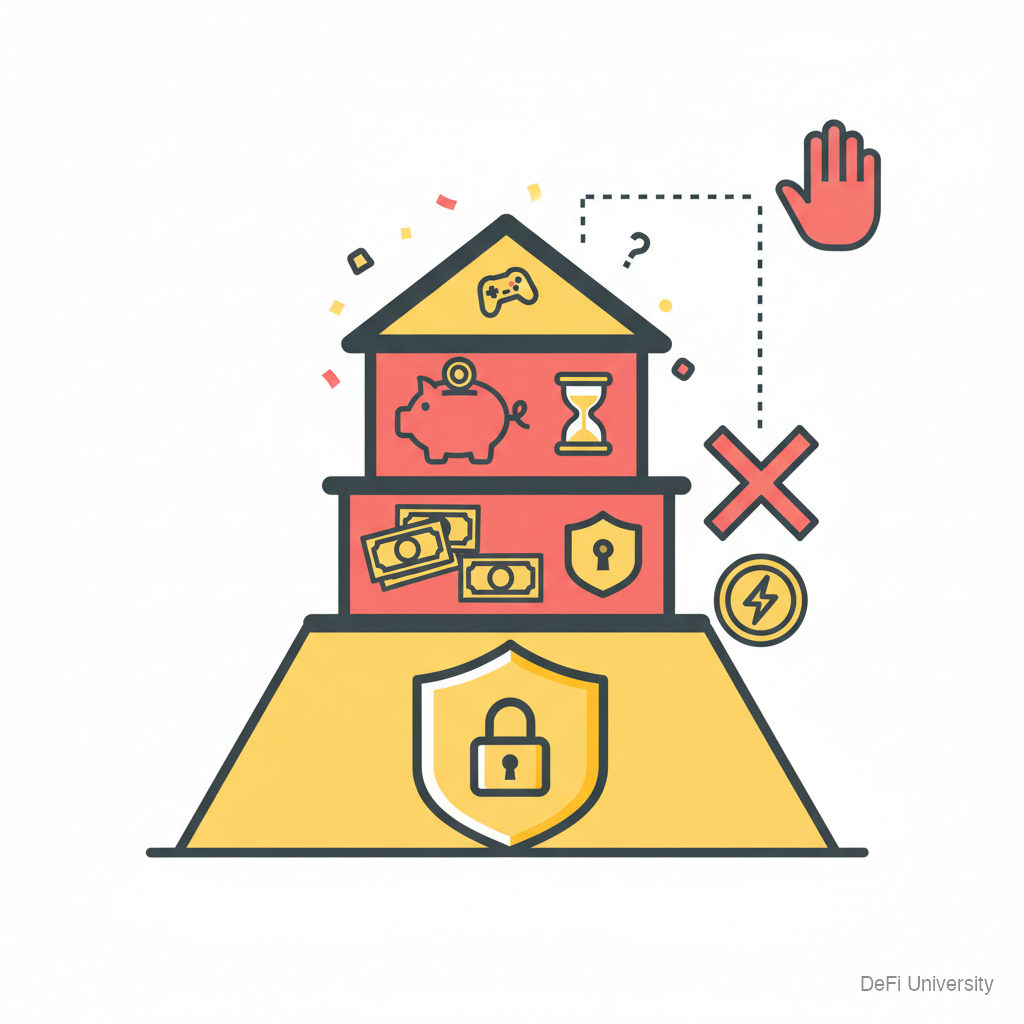
Imagine your financial priorities as building a house:
Foundation: Emergency fund (3-6 months expenses) First floor: Essential bills covered Second floor: Retirement savings Attic: Speculation/fun money
You don't furnish the attic before building the foundation.
Cryptocurrency belongs in the "attic"—optional money that wouldn't devastate you to lose. It shouldn't be your emergency fund, rent money, or retirement plan.
Why This Matters for Crypto
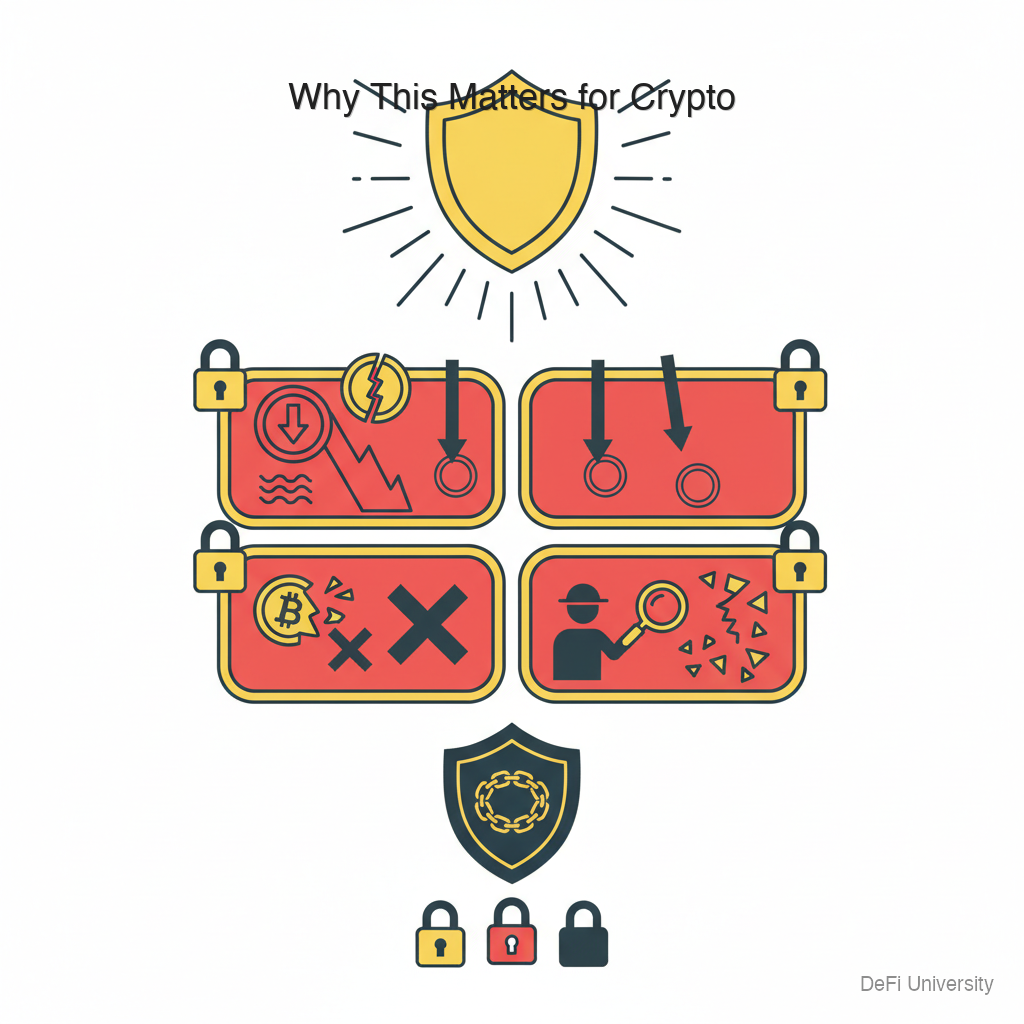
Cryptocurrency is volatile:
50%+ drops happen regularly
90%+ drops have happened to major assets
Individual projects go to zero entirely
Hacks, scams, and mistakes cause permanent losses
This isn't fear-mongering—it's history. Bitcoin has dropped 80%+ multiple times. Smaller tokens have gone to zero.
If you invested money you need, a crash forces terrible decisions:
Sell at the bottom because you need the money
Can't pay bills because holdings dropped
Stress damages health and relationships
If you invested money you don't need:
Wait out drops calmly
Make rational decisions
Sleep at night regardless of prices
How to Determine Your Amount
Step 1: Establish financial basics Before any crypto investment:
Emergency fund fully funded?
Bills paid automatically?
Retirement contributions on track?
No high-interest debt?
Step 2: Identify truly disposable income What's left after all responsibilities are covered? What could you literally lose tomorrow and be okay?
Step 3: Be honest with yourself Don't count money you're "pretty sure" you won't need. Count money you definitely don't need.
Step 4: Start smaller than you think Most people overestimate their risk tolerance until they experience a real drop.
The Mental Exercise
Try this thought experiment:
"If I wake up tomorrow and my crypto is worth zero, what happens?"
If your answer involves:
"I can't pay rent"
"I'll need to borrow money"
"My retirement is ruined"
"I can't afford my kid's school"
You've invested too much. Scale back until the answer is:
"That would suck, but I'd be okay"
"It's money I was willing to lose"
"My financial life continues unchanged"
Why People Over-Invest
FOMO: "I'll miss the gains!" You'll also miss the losses if you're not overexposed.
Overconfidence: "I know it'll go up." No one knows. Not even experts.
Success stories: "That guy made millions!" Survivor bias—you don't hear from the losses.
Addiction-like patterns: Crypto's volatility can be exciting. That excitement can lead to poor decisions.
Social pressure: "Everyone's doing it!" Everyone's also losing money sometimes.
Scaling With Experience
As you learn:
Beginner: Very small amounts while learning (even $10-50).
Learning: Modest amounts you're comfortable losing.
Experienced: Larger allocation possible, but still within "disposable" category.
Never: Emergency fund, rent money, retirement savings, debt repayment money.
Experience reduces some risks (fewer mistakes, better judgment) but doesn't eliminate market risk or scam risk.
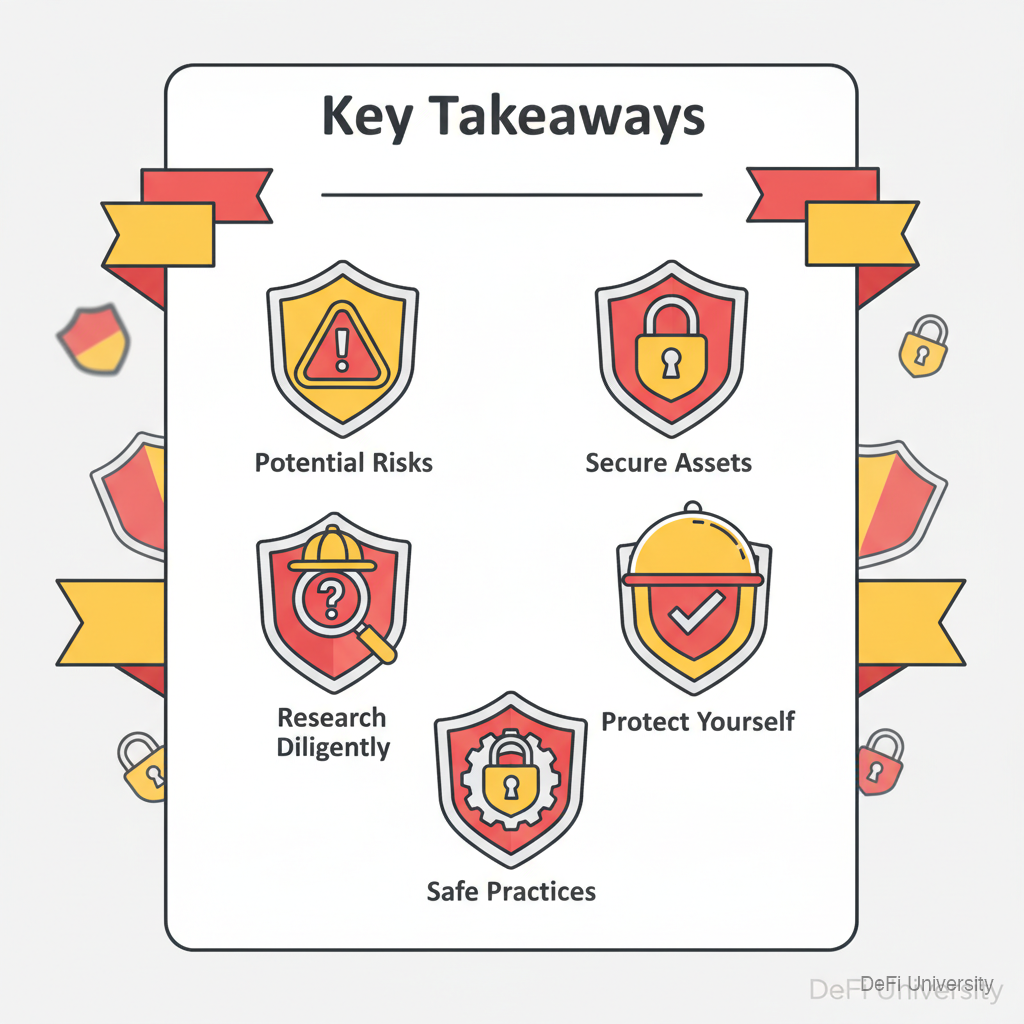
Key Takeaways
Financial foundation first—emergency fund, bills, retirement before any crypto
Crypto is volatile—50%+ drops are normal, 90%+ has happened
Only use truly disposable money—money you could lose without lifestyle impact
Mental test: "What if it goes to zero tomorrow?" Answer should be "I'm okay"
Start smaller than you think—overconfidence leads to overexposure
Experience helps but doesn't eliminate risk—market and scam risks always exist
Last updated