Lesson 5: What Banks Actually Do
🎧 Lesson Podcast
🎬 Video Overview
What Banks Actually Do
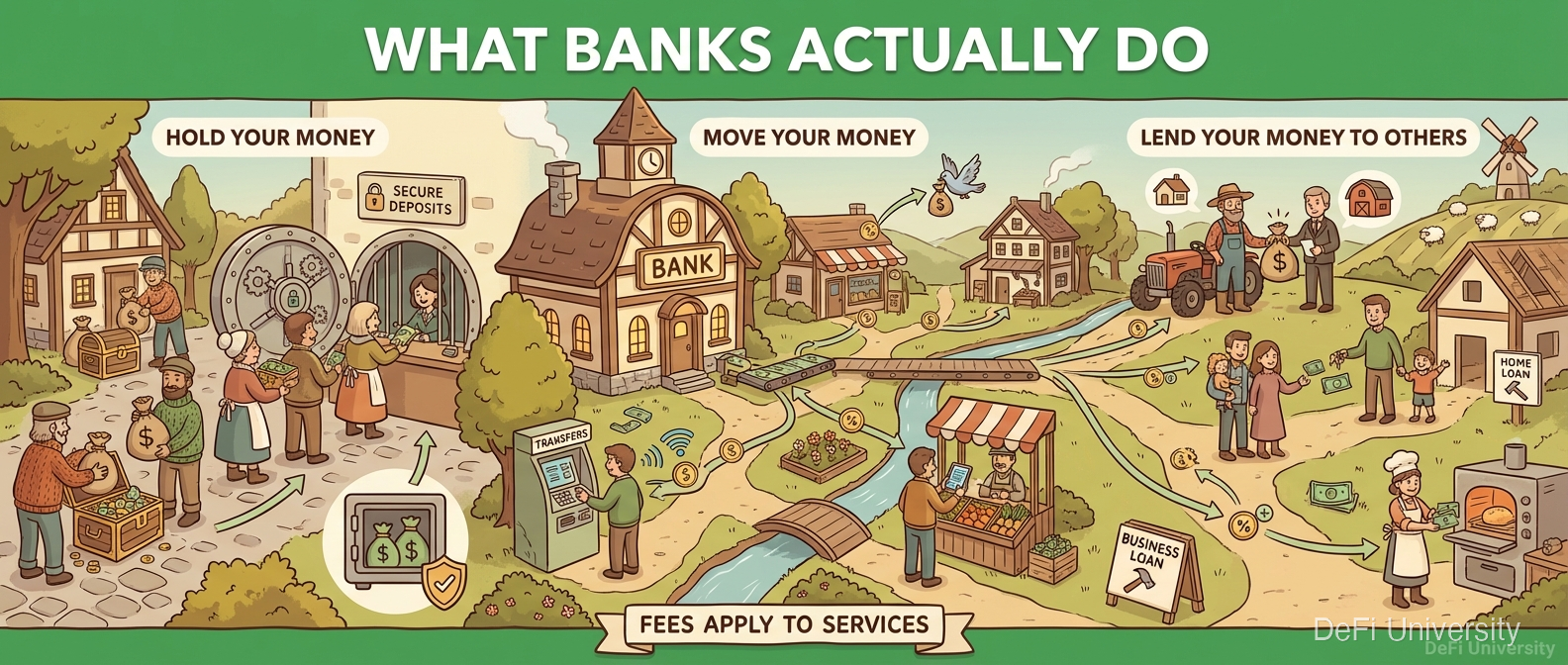
Core concept: Banks are middlemen that hold your money, move your money, and lend your money to others—all while charging fees for the service.
The Middleman at the Swap Meet
Imagine a giant swap meet where thousands of people want to trade with each other. Instead of everyone finding their own trading partners, a guy named Bob sets up a booth in the middle.
"Give me your stuff," Bob says. "I'll keep it safe. When you want to trade with someone, just tell me, and I'll handle the exchange. Oh, and if you don't need your stuff right now, I'll rent it out to people who do and share some of the profit with you."
That's essentially what a bank does. Bob is your bank.
The system has advantages: you don't have to carry your valuables around, you don't have to find trading partners, and you can earn a little extra from stuff you're not using. The disadvantage: Bob takes a cut of everything, and you're trusting Bob with your stuff.
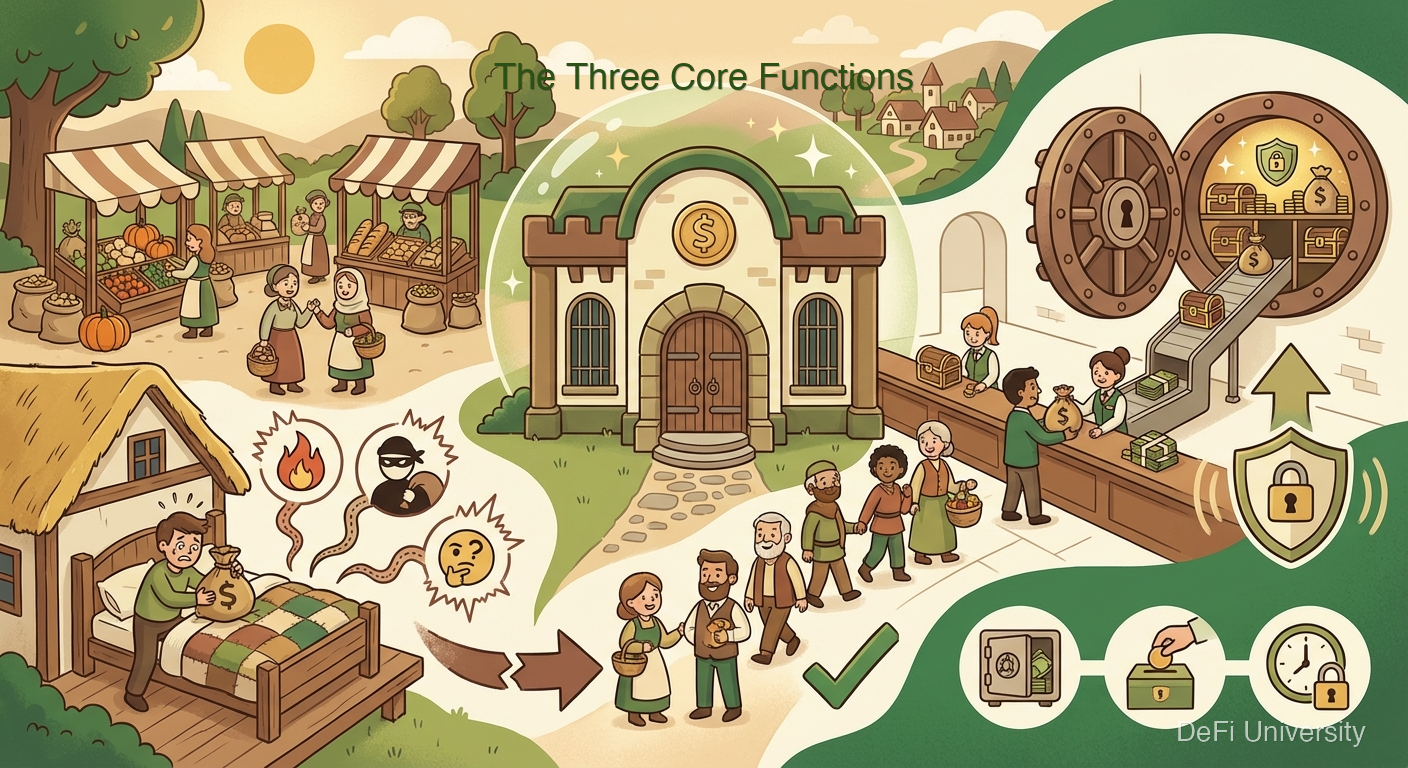
The Three Core Functions

Banks serve three main purposes:
1. Safekeeping (Deposits)
Banks hold your money so you don't have to. Instead of keeping cash under your mattress (risky—fire, theft, forgetfulness), you keep it in a bank account (less risky—insured, trackable, accessible).
When you "deposit" money, you're actually lending it to the bank. They promise to give it back when you ask, but in the meantime, they use it for other things.
2. Payments (Transfers)
Banks move money between accounts. When your employer pays you, when you pay rent, when you buy something online—banks are coordinating these transfers behind the scenes.
Before digital banking, this meant physically moving checks and records between bank branches. Now it's mostly database updates, but the process is still surprisingly slow (more on that in later lessons).
3. Lending (Credit)
Banks take the money deposited by many people and lend it to others who need money now—for houses, cars, businesses, emergencies. The bank charges borrowers interest and pays depositors a smaller interest rate. The difference is profit.
This is how banks make most of their money: they pay you 0.5% interest on your savings while charging someone else 7% for a car loan. That spread is their business model.
The Magic Trick: Fractional Reserve
Here's something that surprises most people: banks don't keep all your money sitting in a vault.
If you deposit $1,000, the bank keeps maybe $100 on hand and lends out $900 to someone else. This is called "fractional reserve banking"—they only keep a fraction of deposits as reserves.
This works because most people don't withdraw all their money at once. As long as withdrawals and deposits roughly balance out, the bank can keep operating.
But if everyone suddenly wants their money back at the same time (called a "bank run"), the bank doesn't have it. This is why bank failures happen and why governments created deposit insurance—to prevent panic withdrawals.
What You Get (and What You Pay)
Banks provide genuine value:
Security: Your money is safer than cash at home
Convenience: Easy payments, ATMs, online access
Credit access: Ability to borrow when needed
Insurance: Government protection (up to limits) if the bank fails
But you pay for these services:
Low interest on deposits: Your savings earn far less than inflation
Fees: Monthly maintenance, overdraft, ATM, wire transfer fees
Your time: Applying for accounts, waiting for approvals, following their rules
Your data: Banks know everything about your financial life
The question isn't whether banks provide value—they do. The question is whether the trade-offs are worth it for your situation, and whether better alternatives exist.
The Gatekeeper Role
Banks also serve as gatekeepers to the financial system. To open an account, you typically need:
Government ID
Social Security number or equivalent
Physical address
Clean enough financial history
This keeps out some bad actors but also excludes people who lack documentation—immigrants, homeless individuals, people in developing countries without robust ID systems.
Globally, about 1.4 billion adults lack access to basic banking. They're "unbanked"—stuck using cash, check-cashing services, or informal arrangements. Understanding this helps explain why alternatives to traditional banking matter.
Key Takeaways
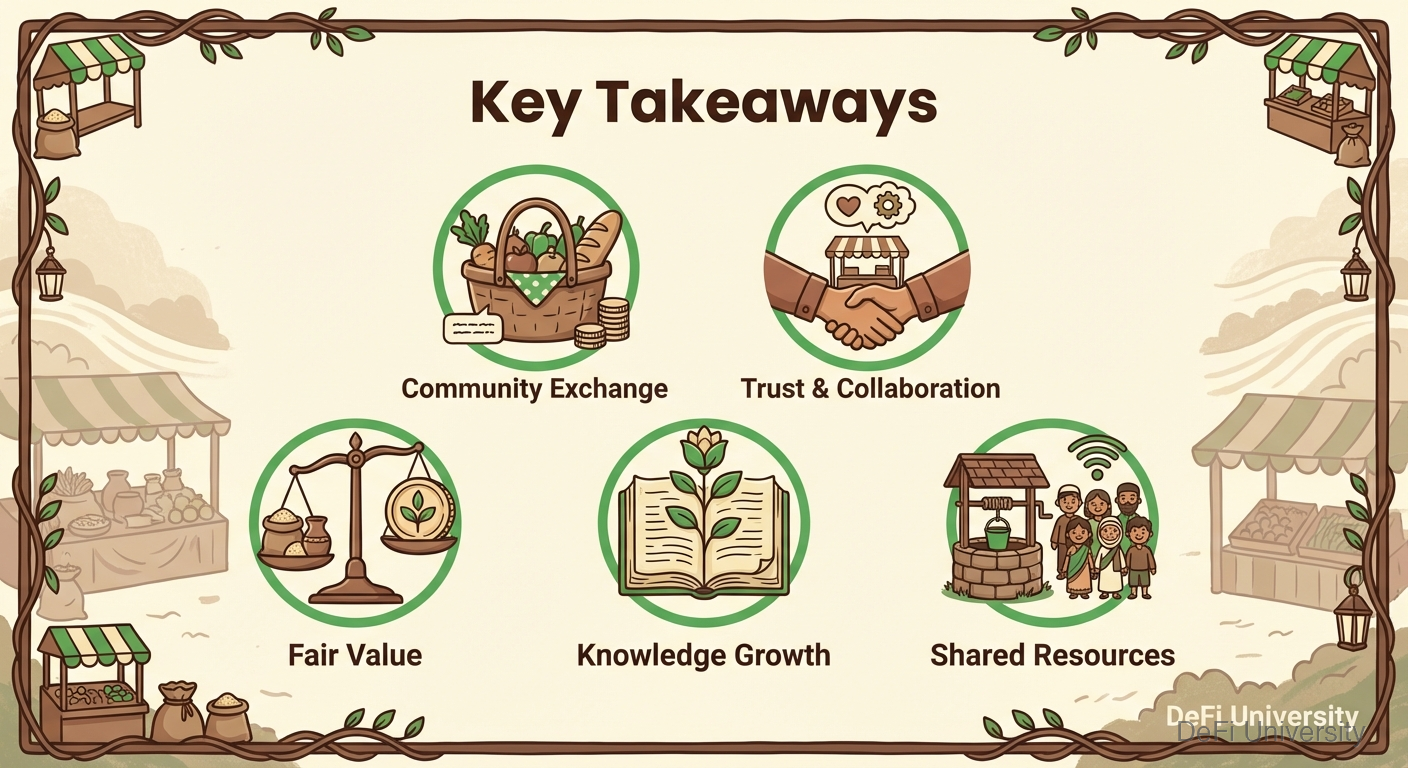
Banks are middlemen that safeguard money, facilitate payments, and make loans
Your deposit is a loan to the bank—they use it to lend to others
Fractional reserve means banks don't keep all deposits on hand
Banks profit from the spread between what they pay depositors and charge borrowers
Banks are gatekeepers—you need their approval to access the financial system
Billions of people are unbanked because they can't meet bank requirements
Last updated