Lesson 12: Building Your Professional Trading System
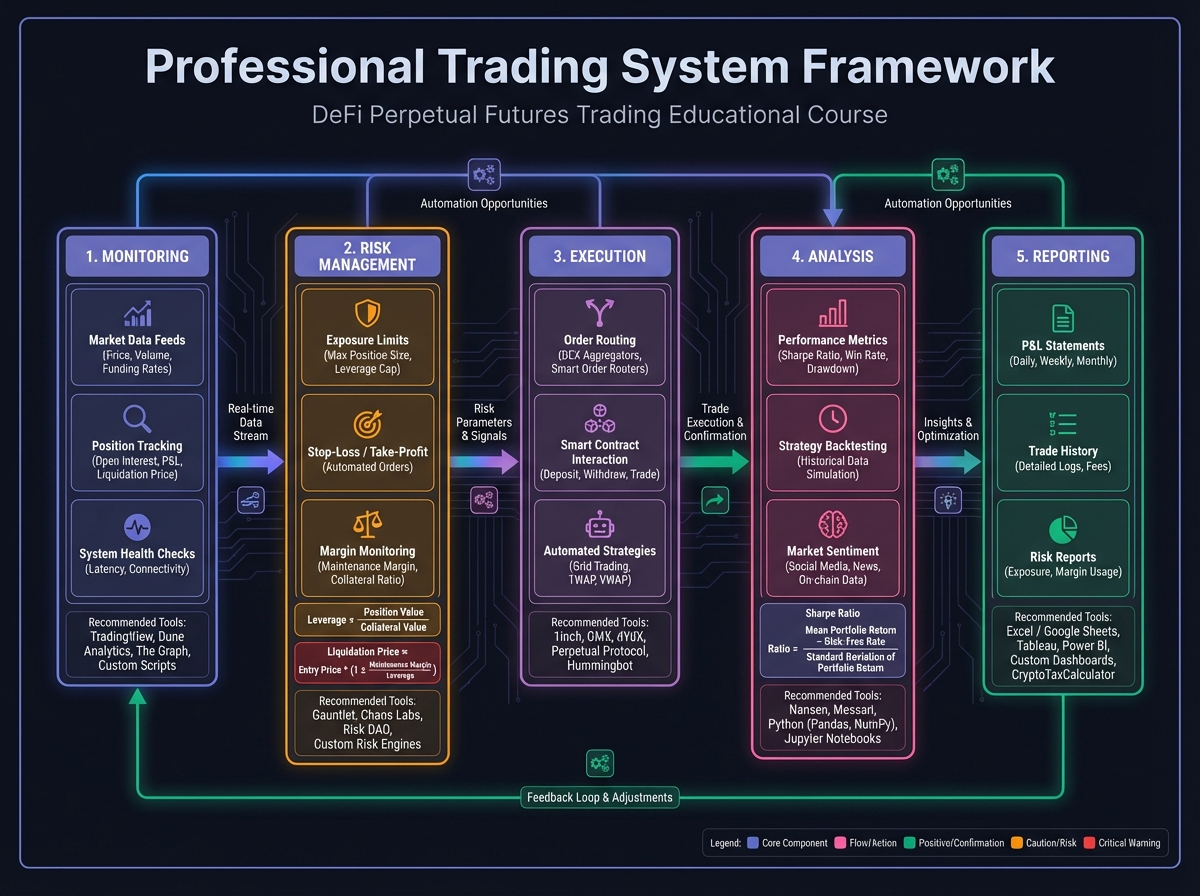
Professional Trading System Framework

🎯 Core Concept: Systems Over Trades

Professional traders don't rely on luck or intuition—they build systematic frameworks that guide every decision. This final lesson synthesizes everything you've learned into a comprehensive trading system that you can implement, monitor, and continuously improve.

Why Systems Matter

The Statistics:

  • 70-90% of retail traders lose money

  • Professional traders use systematic approaches

  • Consistency beats occasional wins

Your System Should Include:

  • Due diligence framework

  • Protocol selection criteria

  • Risk management rules

  • Position sizing formulas

  • Monitoring procedures

  • Performance tracking

  • Continuous improvement process

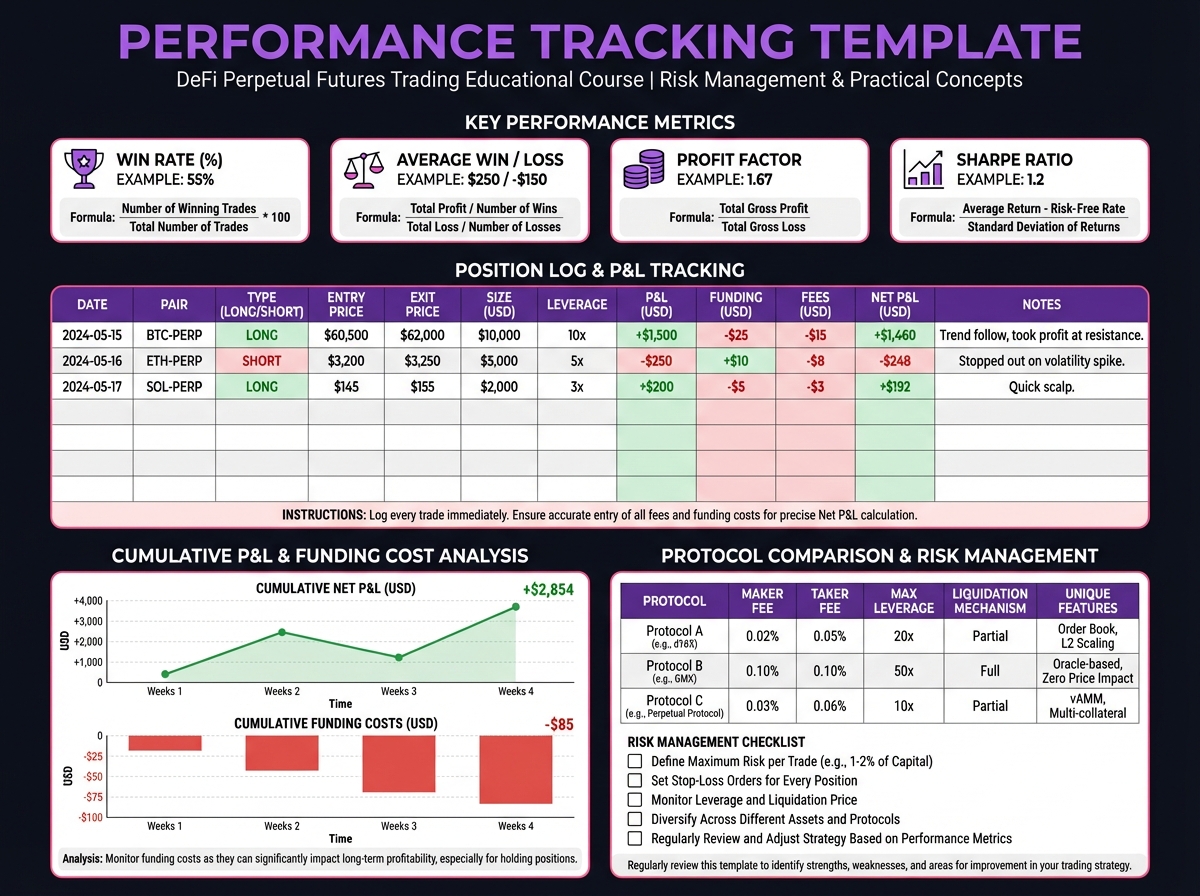
Performance Tracking Template
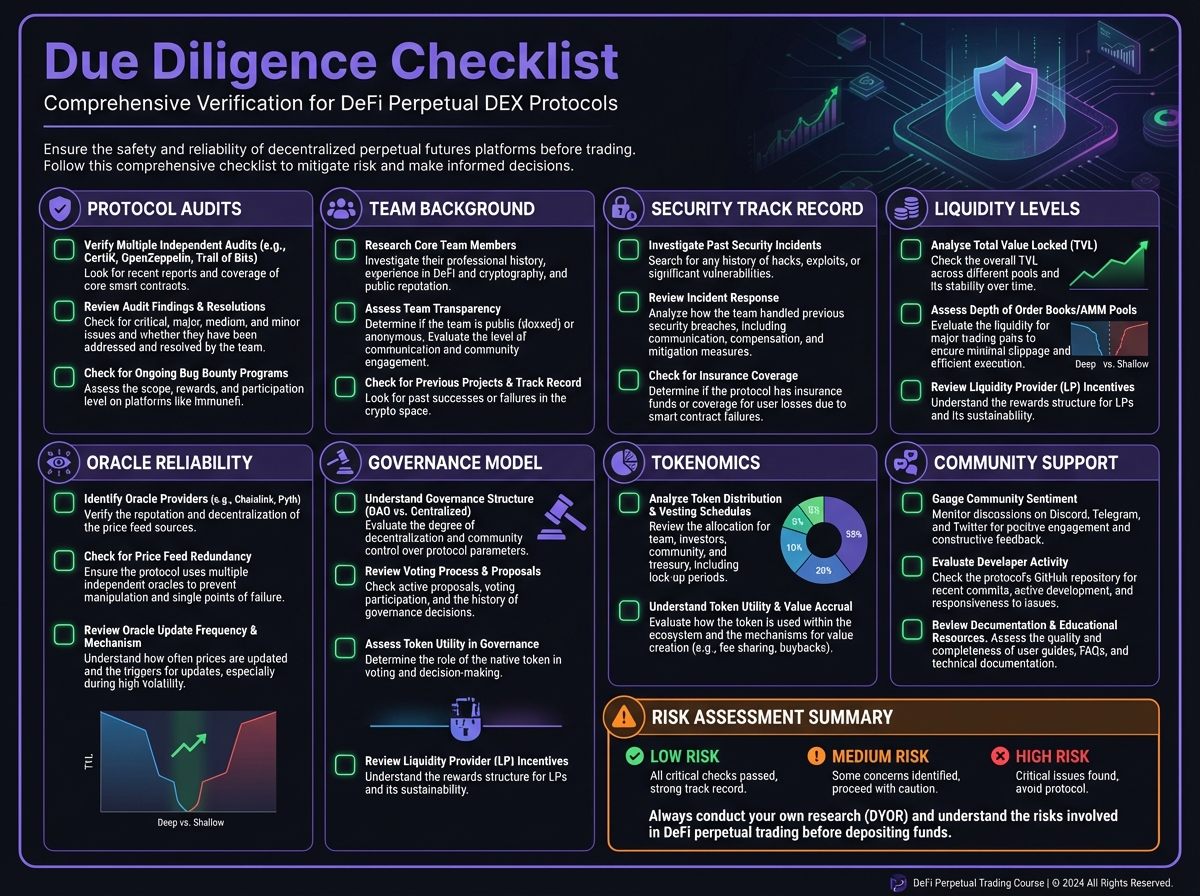
Due Diligence Checklist

📋 Due Diligence Framework

Protocol Evaluation Checklist

Before Using Any Protocol:

Security:

Economics:

Technical:

Red Flags:

  • ❌ Single audit from unknown firm

  • ❌ "Audit in progress" (should be done)

  • ❌ No insurance fund

  • ❌ TVL < $1M (too risky)

  • ❌ Emissions > Revenue (unsustainable)

Due Diligence Scorecard

Create Your Own:

Category
Weight
Score (1-10)
Weighted Score

Security

40%

___

___

Economics

30%

___

___

Technical

20%

___

___

Community

10%

___

___

Total

100%

___/10

Minimum Score: 7/10 to use protocol

🎯 Protocol Selection Framework

Decision Matrix

Your Criteria (rank by importance):

  1. Execution Quality: CEX-like / Good / Acceptable

  2. Liquidity Depth: Deep / Moderate / Thin

  3. Fee Structure: Low / Moderate / High

  4. Features: Advanced / Standard / Basic

  5. Chain Preference: Your preferred chain

  6. Risk Profile: Low / Moderate / High

Protocol Scoring:

Protocol
Execution
Liquidity
Fees
Features
Chain
Risk
Total

Hyperliquid

___/10

___/10

___/10

___/10

___/10

___/10

___/60

GMX V2

___/10

___/10

___/10

___/10

___/10

___/10

___/60

Drift

___/10

___/10

___/10

___/10

___/10

___/10

___/60

EdgeX

___/10

___/10

___/10

___/10

___/10

___/10

___/60

Top Choice: _______ Backup Choice: _______

Multi-Protocol Strategy

Why Diversify:

  • Different protocols excel at different things

  • Reduces single-protocol risk

  • Access to best features

  • Optimize execution

Allocation Framework:

  • Primary Protocol: 60-70% (best overall fit)

  • Secondary Protocol: 20-30% (specific use cases)

  • Tertiary Protocol: 10% (experimental/niche)

Example:

  • Hyperliquid: 60% (primary, best liquidity)

  • GMX V2: 30% (large orders, zero slippage)

  • EdgeX: 10% (mobile trading)

💰 Risk Management Framework

Position Sizing Rules

Capital Allocation:

  • Total Trading Capital: $_______

  • Risk Per Trade: _______% (1-5% recommended)

  • Maximum Concurrent Positions: _______

  • Maximum Portfolio Risk: _______% (<10%)

Position Size Formula:

Position Size = (Capital × Risk Per Trade) ÷ (Entry - Stop Loss)

Example:

  • Capital: $10,000

  • Risk: 2% = $200

  • Entry: $2,500

  • Stop: $2,400

  • Position: $200 ÷ ($2,500 - $2,400) = $2,000

  • Margin: $2,000 ÷ 5x = $400

Leverage Guidelines

By Experience Level:

  • Beginner: 2x-3x maximum

  • Intermediate: 3x-5x maximum

  • Advanced: 5x-10x maximum

  • Professional: 10x-20x (with strict risk management)

By Asset:

  • Blue-chip (BTC, ETH): Up to 10x

  • Mid-cap: Up to 5x

  • Volatile/New: Up to 3x

  • Meme coins: Avoid or 2x maximum

Stop Loss Rules

Mandatory Rules:

Stop Loss Placement:

  • Long: Below support level

  • Short: Above resistance level

  • Buffer: 20-30% from liquidation price

📊 Portfolio Construction

Diversification Strategy

Across Assets:

  • BTC: _______%

  • ETH: _______%

  • Altcoins: _______%

  • Stablecoins: _______%

Across Protocols:

  • Protocol 1: _______%

  • Protocol 2: _______%

  • Protocol 3: _______%

Across Strategies:

  • Directional trading: _______%

  • Arbitrage: _______%

  • LP provision: _______%

Correlation Management

Avoid Over-Concentration:

  • Don't trade only ETH-beta assets

  • Diversify across uncorrelated assets

  • Monitor portfolio correlation

Hedging Strategies:

  • Long BTC, Short ETH (if correlated)

  • Use cross-margin for hedging

  • Monitor correlation changes

📈 Monitoring and Analytics

Key Metrics to Track

Position Metrics:

  • Unrealized P&L

  • Margin ratio

  • Distance to liquidation

  • Funding costs

  • Time in position

Portfolio Metrics:

  • Total portfolio value

  • Portfolio health factor

  • Total risk exposure

  • Win rate

  • Average win/loss ratio

Protocol Metrics:

  • Funding rates across protocols

  • Liquidity depth

  • Open Interest trends

  • Fee costs

Monitoring Schedule

Active Trading:

  • Check positions: Every few minutes

  • Review portfolio: Hourly

  • Full analysis: Daily

Swing Trading:

  • Check positions: Daily

  • Review portfolio: Weekly

  • Full analysis: Monthly

Never: Set and forget—always monitor.

Alert System

Set Alerts For:

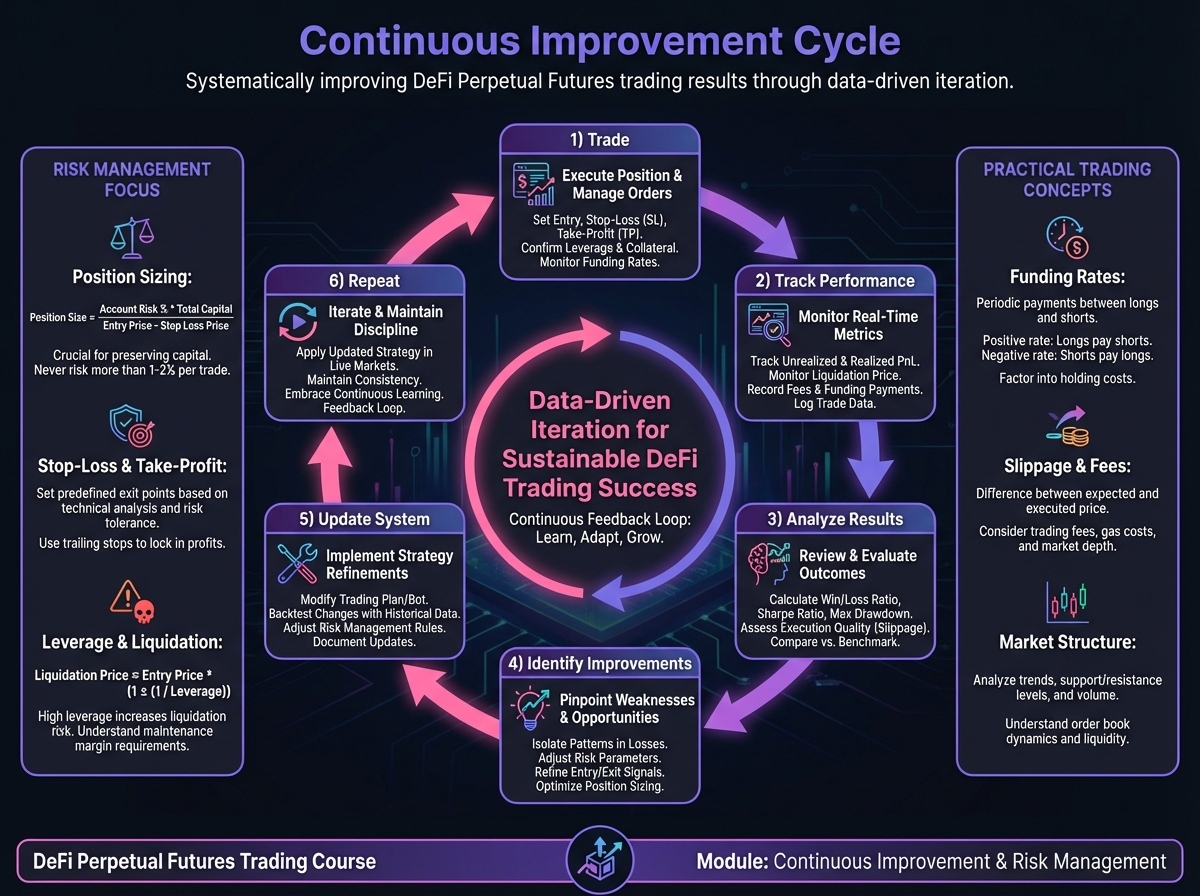
🔄 Continuous Improvement Process

Trade Journal

Record For Every Trade:

  • Entry price and time

  • Exit price and time

  • Position size and leverage

  • Reasoning (why you entered)

  • Outcome (profit/loss)

  • Lessons learned

Analyze Regularly:

  • Win rate by strategy

  • Average win vs. average loss

  • Best/worst trades

  • Common mistakes

  • Improvement areas

Performance Review

Monthly Review:

  • Total P&L

  • Win rate

  • Best strategy

  • Worst strategy

  • Risk management adherence

  • Protocol performance

Quarterly Review:

  • System effectiveness

  • Rule adherence

  • Strategy evolution

  • Protocol changes

  • Market condition impact

System Refinement

Iterate Based on:

  • Performance data

  • Market changes

  • New protocols/features

  • Lessons learned

  • Risk events

Process:

  1. Review performance

  2. Identify weaknesses

  3. Update rules/strategies

  4. Test changes

  5. Implement if successful

Continuous Improvement Cycle

🎓 Beginner's Corner: Your First System

Simple Starter System

Capital: $1,000-5,000

Rules:

  1. Use only Hyperliquid or GMX V2 (safest)

  2. Trade only ETH or BTC (most liquid)

  3. Maximum leverage: 3x

  4. Risk per trade: 2%

  5. Always set stop loss

  6. Use isolated margin only

  7. Monitor daily

Strategy:

  • Swing trading (hold 3-7 days)

  • Technical analysis entry

  • Stop loss mandatory

  • Take profit at 2:1 risk/reward

Goal: Learn mechanics, not maximize profits.

🔬 Advanced Deep-Dive: Professional Systems

Multi-Strategy Framework

Strategy Allocation:

  • Directional trading: 40%

  • Funding arbitrage: 30%

  • LP provision: 20%

  • Experimental: 10%

Risk Budget:

  • Each strategy: Independent risk budget

  • Total portfolio risk: <10%

  • Correlation considered

Automated Systems

Bot Infrastructure:

  • Price monitoring

  • Position management

  • Risk checks

  • Alert system

  • Performance tracking

Considerations:

  • Development costs

  • Maintenance requirements

  • Bug risks

  • Gas optimization

Institutional-Grade Monitoring

Tools:

  • Custom dashboards

  • Real-time alerts

  • Performance analytics

  • Risk metrics

  • Protocol monitoring

Infrastructure:

  • Dedicated monitoring

  • 24/7 availability

  • Redundant systems

  • Backup plans

📊 Real-World Example: Complete System

Trader Profile: Intermediate, $10,000 capital

Protocol Selection:

  • Primary: Hyperliquid (60% - best liquidity)

  • Secondary: GMX V2 (30% - large orders)

  • Mobile: EdgeX (10% - mobile trading)

Risk Management:

  • Risk per trade: 2% ($200)

  • Maximum positions: 3 concurrent

  • Maximum portfolio risk: 6%

  • Leverage: 3x-5x maximum

Position Sizing:

  • Formula: (Capital × 2%) ÷ (Entry - Stop)

  • Example: ($10,000 × 0.02) ÷ $100 = $2,000 position

Monitoring:

  • Daily position checks

  • Weekly portfolio review

  • Monthly performance analysis

  • Alerts for critical thresholds

Strategies:

  • Directional: 60% (swing trading)

  • Arbitrage: 30% (funding capture)

  • LP: 10% (GMX pools)

Results Tracking:

  • Monthly P&L

  • Win rate

  • Best/worst trades

  • System improvements

🎯 Key Takeaways

  • Build a systematic framework, don't trade on emotion

  • Due diligence is non-negotiable—evaluate every protocol

  • Diversify across protocols, assets, and strategies

  • Risk management rules must be followed religiously

  • Monitor actively—never set and forget

  • Track performance to identify improvements

  • Iterate and refine your system continuously

  • Start simple, scale gradually

  • Systems beat individual trades

  • Professional traders use frameworks, not luck

🚀 Next Steps

  • Complete Exercise 12 to design your personal trading system

  • Implement your system with small positions

  • Track performance and refine

  • Scale gradually as you gain experience

  • Stay updated on new protocols and features

  • Join trading communities for support

Remember: Building a professional trading system takes time. Start with the basics, learn from every trade, and continuously improve. The goal is sustainable, consistent performance, not quick wins.


Congratulations! You've completed the Perpetual Futures Trading 101 course. You now have the knowledge to trade perpetual futures safely and systematically. Apply what you've learned, start conservatively, and build your expertise over time.


← Back to Summary | [Course Complete! 🎉]

Last updated